


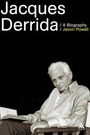
Jacques Derrida
A Biography
1st Edition
Published on 24. May 2006
264 pages
978-1-4411-3172-0 (ISBN)
Description

At the time of his death in 2004, Jacques Derrida was arguably the most influential and the most controversial thinker in contemporary philosophy. Deconstruction, the movement that he founded, has received as much criticism as admiration and provoked one of the most contentious philosophical debates of the twentieth century. Jacques Derrida: A Biography offers for the first time a complete biographical overview of this important philosopher, drawing on Derrida's own accounts of his life as well as the narratives of friends and colleagues. Powell explores Derrida's early life in Algeria, his higher education in Paris and his development as a thinker. Jacques Derrida: A Biography provides an essential and engaging account of this major philosopher's remarkable life and work.
Reviews / Votes
"...a strong overview of the work and placing it in a framework that illuminates the development of Derrida's thought over the forty years of his career."- Nancy J. Holland, Notre Dame Philosophical Review, June 27, 2007 'In attempting an intellectual biography of Derrida [Powell] is doing something unique ... He has a good grasp of the ideas circulating around deconstrution, and articulates them in a suitably reader-friendly manner without sacrificing any of their complexity or compromising their integrity.' Dr Karl Simms, Director of Studies, School of English, University of Liverpool * Blurb from reviewer * This concise biography of Derrida encompasses his life and works. Beginning with Derrida's early years in Algeria, Powell quickly moves to Derrida's intellectual development and the range of philosophical thought to which he is responding. Powell explores Derrida's writings in the context of his life and times, showing the continuity without reducing Derrida's complexities to simplified method or doctrine. Powell draws evidence from Derrida's texts, comments from colleagues and friends, and Derrida's own descriptions of his life garnered from published interviews.Since personal correspondence is not yet available, the biography lacks a private look into Derrida and instead presents him as a mystery. Much more revealing is the commentary on Derrida's oeuvre, his philosophical positions, and his response to other philosophers, both predecessors and contemporaries. Those encountered range from Husserl and Althusser to Foucault and Lacan to Nietzsche and Heidegger. The clarity of discussion of Derrida's philosophy makes this work quite accessible. The book has an unnecessary apologetic tone that reveals more about the author's milieu than Derrida's recognized importance to the discipline of philosophy. Summing Up: Recommended. Lower-/upper-level undergraduates; general readers. * Choice *More details
Edition
1. Auflage
Language
English
Place of publication
New York
United States
ISBN-13
978-1-4411-3172-0 (9781441131720)
Copyright in bibliographic data and cover images is held by Nielsen Book Services Limited or by the publishers or by their respective licensors: all rights reserved.
Schweitzer Classification
Other editions
Additional editions
Book
05/2006
Continuum International Publishing Group Ltd.
€43.51
Article exhausted; check different version
Book
05/2006
Continuum International Publishing Group Ltd.
€234.30
Shipment within 15-20 days
Person
Jason Powell has a PhD in philosophy and is the author of Jacques Derrida: A Biography and Heidegger's Contributions to Philosophy. He has served with the British Army in Iraq, Bosnia and Kosovo and now works as a freelance writer.
Content
Introduction
1. Algeria
2. Paris and ENS
3. After ENS
4. The First Book
5. Against Structuralism
6. 1967
7. Post-Structuralism
8. America: Derrida as Literature
9. Glas
10. Greph
11. Paul de Man
12. Nietzsche and Heidegger
13. The Post Card
14. The 1980s
15. 1987-90: Deconstruction and Germany
16. Autobiographical Years: 1990-91
17. The Future of Democracy: The Very Worst Moment of Capitalism
18. Derrida's World: Confronting Marx
19. The Politics of Friendship
20. Derrida's Religion
21. Thoughtful Welcoming of the Other
22. 2000 Onwards
23. Conclusion: On the Future of Thinking
Bibliography
1. Algeria
2. Paris and ENS
3. After ENS
4. The First Book
5. Against Structuralism
6. 1967
7. Post-Structuralism
8. America: Derrida as Literature
9. Glas
10. Greph
11. Paul de Man
12. Nietzsche and Heidegger
13. The Post Card
14. The 1980s
15. 1987-90: Deconstruction and Germany
16. Autobiographical Years: 1990-91
17. The Future of Democracy: The Very Worst Moment of Capitalism
18. Derrida's World: Confronting Marx
19. The Politics of Friendship
20. Derrida's Religion
21. Thoughtful Welcoming of the Other
22. 2000 Onwards
23. Conclusion: On the Future of Thinking
Bibliography
