

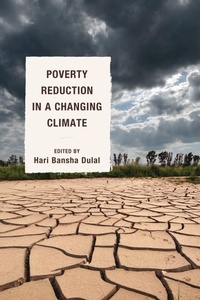
Poverty Reduction in a Changing Climate
Lexington Books (Publisher)
1st Edition
Published on 14. February 2013
430 pages
979-8-216-34802-3 (ISBN)
Description

Poverty reduction challenges in the twenty-first century are not the same as those from the previous century. The shift is due in no small part to climate change and climate-related weather disasters, such as extreme flood and drought. The magnitude and frequency of such events are only expected to increase in the coming decades, affecting more and more impoverished people across the globe.
Poverty Reduction in a Changing Climate, edited by Hari Bansha Dulal, is a work which discusses the new innovations and funding mechanisms which have emerged in response to the rise of climate-related challenges in the twenty-first century. Dulal and the text's contributors explore the synergies and implications of those innovations with respect to poverty alleviation goals. This collection brings together a range of scholars from different backgrounds, ranging from political science, economics, public policy, and environmental science, all analyzing poverty reduction challenges and opportunities from different, forward-thinking perspectives.
Poverty Reduction in a Changing Climate, edited by Hari Bansha Dulal, is a work which discusses the new innovations and funding mechanisms which have emerged in response to the rise of climate-related challenges in the twenty-first century. Dulal and the text's contributors explore the synergies and implications of those innovations with respect to poverty alleviation goals. This collection brings together a range of scholars from different backgrounds, ranging from political science, economics, public policy, and environmental science, all analyzing poverty reduction challenges and opportunities from different, forward-thinking perspectives.
More details
Edition
1. Auflage
Language
English
Place of publication
United States
Publishing group
Bloomsbury Publishing Plc
Target group
Professional and scholarly
ISBN-13
979-8-216-34802-3 (9798216348023)
Copyright in bibliographic data and cover images is held by Nielsen Book Services Limited or by the publishers or by their respective licensors: all rights reserved.
Schweitzer Classification
Other editions
Additional editions
Hari Bansha Dulal
Poverty Reduction in a Changing Climate
Book
02/2015
Lexington Books
€83.60
Shipment within 15-20 days
Persons
Hari Bansha Dulal received his doctorate in environmental science and public policy from George Mason University. He is currently a consultant for climate change and clean energy at The World Bank in Washington, D.C.
Content
About the Contributors
Preface
Part One: Inequality, Politics, and the Spatial Dimensions of Poverty
Chapter One - Markets, the State, and the Dynamics of Inequality in Latin America: Brazil, Mexico, and Uruguay, by Nora Lustig and Luis F. Lopez-Calva
Chapter Two - Politics and the Room to Maneuver: Democracy, Social Opportunity, and Poverty in India, by Subrata K. Mitra, Jivanta Schöttli, and Markus Pauli
Chapter Three - The Importance of Place and Space: The Spatial Dimensions of Poverty and Development Policy, by Kate Bird and Kate Higgins
Part Two: Poverty Reduction Challenges
Chapter Four - Assessing the Potential Impact on Poverty of Rising Cereals Prices: The Case of Mali, by George Joseph and Quentin Wodon
Chapter Five - Assessing the Potential Impact of Higher Fertilizer Use on Poverty Among Farm Households: Illustration for Rwanda, by Enrique Hennings and Quentin Wodon
Chapter Six - Poverty Reduction Challenges in South Asia, by Arup Mitra
Chapter Seven - Official Development Assistance: Does It Reduce Poverty?, by John Weiss
Part Three: Poverty Reduction Instruments, Policies, and Lessons Learnt
Chapter Eight - Bolsa Família, Its Design, and Possibilities for the Future, by Sergei Soares
Chapter Nine - The Biodiversity Conservation: An Effective Mechanism for Poverty Alleviation?, by Dilys Roe and Terry Sunderland
Chapter Ten - Tracing the REDD Bullet: Implications of Market-Based Forest Conservation Mechanisms for Poverty Alleviation in Developing Countries, by Bryan R. Bushley and Rishikesh R. Bhandary
Chapter Eleven - Banking on Social Institutions for Poverty Reduction, by Hari B. Dulal and Roberto Foa
Chapter Twelve - Climate Change Adaptation and the International Aid Regime: Prospects for Policy Convergence, by Craig Johnson
Chapter Thirteen - Lessons on Equitable Growth: Stories of Progress in Vietnam, Mauritius, and Malawi, by Milo Vandemoortele and Kate Bird
Index
Preface
Part One: Inequality, Politics, and the Spatial Dimensions of Poverty
Chapter One - Markets, the State, and the Dynamics of Inequality in Latin America: Brazil, Mexico, and Uruguay, by Nora Lustig and Luis F. Lopez-Calva
Chapter Two - Politics and the Room to Maneuver: Democracy, Social Opportunity, and Poverty in India, by Subrata K. Mitra, Jivanta Schöttli, and Markus Pauli
Chapter Three - The Importance of Place and Space: The Spatial Dimensions of Poverty and Development Policy, by Kate Bird and Kate Higgins
Part Two: Poverty Reduction Challenges
Chapter Four - Assessing the Potential Impact on Poverty of Rising Cereals Prices: The Case of Mali, by George Joseph and Quentin Wodon
Chapter Five - Assessing the Potential Impact of Higher Fertilizer Use on Poverty Among Farm Households: Illustration for Rwanda, by Enrique Hennings and Quentin Wodon
Chapter Six - Poverty Reduction Challenges in South Asia, by Arup Mitra
Chapter Seven - Official Development Assistance: Does It Reduce Poverty?, by John Weiss
Part Three: Poverty Reduction Instruments, Policies, and Lessons Learnt
Chapter Eight - Bolsa Família, Its Design, and Possibilities for the Future, by Sergei Soares
Chapter Nine - The Biodiversity Conservation: An Effective Mechanism for Poverty Alleviation?, by Dilys Roe and Terry Sunderland
Chapter Ten - Tracing the REDD Bullet: Implications of Market-Based Forest Conservation Mechanisms for Poverty Alleviation in Developing Countries, by Bryan R. Bushley and Rishikesh R. Bhandary
Chapter Eleven - Banking on Social Institutions for Poverty Reduction, by Hari B. Dulal and Roberto Foa
Chapter Twelve - Climate Change Adaptation and the International Aid Regime: Prospects for Policy Convergence, by Craig Johnson
Chapter Thirteen - Lessons on Equitable Growth: Stories of Progress in Vietnam, Mauritius, and Malawi, by Milo Vandemoortele and Kate Bird
Index
