

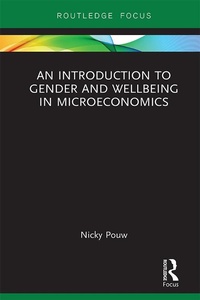
An Introduction to Gender and Wellbeing in Microeconomics
Foundations, Concepts and Policies
1st Edition
Published on 1. September 2017
164 pages
978-1-317-56278-8 (ISBN)
Description

An Introduction to Gender and Wellbeing in Microeconomics explains how to set up the basics of designing a gender-aware approach to microeconomics by constructing creative gender-aware indicators.
Using a wellbeing economics framework, the book argues that economic models should take power differences such as those inherent with gender into account, and be complemented by more qualitative analysis geared to discovering the 'how' and 'why' behind the 'what' questions.
This book will be essential reading for academic and professional researchers, as well as policy researchers in gender and economics, international development, and social and economic policy. It will be invaluable for courses relating gender to the economy, and will enable readers to get a clear and concise understanding of the gendered character of the economy and of economic policy.
Using a wellbeing economics framework, the book argues that economic models should take power differences such as those inherent with gender into account, and be complemented by more qualitative analysis geared to discovering the 'how' and 'why' behind the 'what' questions.
This book will be essential reading for academic and professional researchers, as well as policy researchers in gender and economics, international development, and social and economic policy. It will be invaluable for courses relating gender to the economy, and will enable readers to get a clear and concise understanding of the gendered character of the economy and of economic policy.
More details
Edition
1. Auflage
Language
English
Place of publication
London
United Kingdom
Publishing group
Taylor & Francis Ltd
Target group
College/higher education
Product notice
Reflowable
Illustrations
15 Tables, black and white; 24 Line drawings, black and white; 24 Illustrations, black and white
File size
1,89 MB
ISBN-13
978-1-317-56278-8 (9781317562788)
Copyright in bibliographic data and cover images is held by Nielsen Book Services Limited or by the publishers or by their respective licensors: all rights reserved.
Schweitzer Classification
Other editions
Additional editions

Nicky Pouw
An Introduction to Gender and Wellbeing in Microeconomics
Foundations, Concepts and Policies
Book
09/2017
1st Edition
Routledge
€86.10
Shipment within 15-20 days

Nicky Pouw
An Introduction to Gender and Wellbeing in Microeconomics
Foundations, Concepts and Policies
Book
09/2017
1st Edition
Routledge
€62.08
The article will not be published
Person
Nicky Pouw is an economist with over twenty years of research and teaching experience in the field of international development. She is affiliated as an Associate Professor within the Governance and Inclusive Development research programme at the University of Amsterdam in the Netherlands.
Content
Chapter 1 Introduction
References & Suggested Further Readings Chapter 1
Chapter 2 - What is Gender-Aware Economics?
2.1 What is gender and why does it matter in economics?
2.2 Gender Inequality
2.3 The paid and unpaid economy
2.4 Picturing the economy and basic economic concepts
2.5 The need for gender-responsive economic policy
2.6 Learning points Chapter 2
2.7 Assignments & Discussion Points Chapter 2
References & Suggested Further Readings Chapter 2
Chapter 3 - Wellbeing Economics Framework - with Allister McGregor
3.1 Human Wellbeing at the Centre of Economics
3.2 The Economy as a Social Process
(i) The economy as an instituted process of resource allocation
(ii) The economy as an open system
(iii) The economy as structured and layered
(iv) The economy is characterised by internal relations
(v) The economy has emergent properties
3.3 - The Wellbeing Economics Matrix (WEM)
3.4 Learning points Chapter 3
3.5 Assignments & Discussion Points Chapter 3
References & Suggested Further Readings Chapter 3
Chapter 4 - The Household Economy
4.1 The Position and Role of Households in the Economy
4.2 The Household Defined
4.3 Inequality and Power Relations in the Household
4.4 The Household Economy: activities, resources and outcomes
4.5 Modeling Individual Economic Wellbeing
4.6 Modeling Household Economic Wellbeing
4.7 Advantages of Scale in Households
4.8 The Value of Unpaid Household Work
4.9 The Measurement of Unpaid Household Work
4.10 Time-Use Data Collection
4.11 Policy Implications
4.12 Learning Points Chapter 4
4.13 Assignments & Discussion Points Chapter 4
References & Suggested Further Readings Chapter 4
Chapter 5 - Communities and Social Groups
5.1 The Position and Role of Communities and Social Groups in the Economy
5.2 The Community and Social Group Defined
5.3 Social Capital
5.3 Political Activism: Power and Voice in Communities and Social Groups
5.4 Women's and Men's Participation in Communities and Social Groups
5.5 Informal Rules and Regulations
5.6 Communities and Social Groups in the Economy: activities, resources and outcomes
5.7 Modeling Community Economic Wellbeing
5.7 The Value and Measurement of Voluntary Work
5.8 Voluntary Work Indicators
5.9 Learning Points Chapter 5
5.10 Assignments & Discussion Points Chapter 5
References & Suggested Further Readings Chapter 5
Chapter 6 - Gender and the Firm, Businesses, Entrepreneurs
6.1 The Position and Role of Firms, Businesses and Entrepreneurs in the Economy
6.2 The Firm, Business and Entrepreneur Defined
6.2 Social Entrepreneurship
6.3 Home-based Entrepreneurs
6.4 Gender-aware Typologies of Entrepreneurs
6.5 FBEs in the private sector: resources, activities and outcomes
6.6 Modeling Firm-level Economic Wellbeing
6.7 Measuring Gender Targets within FBEs
6.8 Learning Points Chapter 6
6.9 Assignments & Discussion Points Chapter 6
References & Suggested Further Readings Chapter 6
Chapter 7 - A Different Conception of Economic Performance
7.1 Broadening the Debate
7.2 Economic Performance
7.3 - Economic Growth and Beyond
7.4 The Risk of Empty Growth
7.5 Towards a more Inclusive Output Measurement
7.6 The Value of Intangibles
7.7 The Value of Natural Resources
7.8 Measuring Social Progress and Wellbeing
7.9 Learning Points Chapter 7
7.10 Assignments & Discussion Points Chapter 7
References & Suggested Further Readings Chapter 7
References & Suggested Further Readings Chapter 1
Chapter 2 - What is Gender-Aware Economics?
2.1 What is gender and why does it matter in economics?
2.2 Gender Inequality
2.3 The paid and unpaid economy
2.4 Picturing the economy and basic economic concepts
2.5 The need for gender-responsive economic policy
2.6 Learning points Chapter 2
2.7 Assignments & Discussion Points Chapter 2
References & Suggested Further Readings Chapter 2
Chapter 3 - Wellbeing Economics Framework - with Allister McGregor
3.1 Human Wellbeing at the Centre of Economics
3.2 The Economy as a Social Process
(i) The economy as an instituted process of resource allocation
(ii) The economy as an open system
(iii) The economy as structured and layered
(iv) The economy is characterised by internal relations
(v) The economy has emergent properties
3.3 - The Wellbeing Economics Matrix (WEM)
3.4 Learning points Chapter 3
3.5 Assignments & Discussion Points Chapter 3
References & Suggested Further Readings Chapter 3
Chapter 4 - The Household Economy
4.1 The Position and Role of Households in the Economy
4.2 The Household Defined
4.3 Inequality and Power Relations in the Household
4.4 The Household Economy: activities, resources and outcomes
4.5 Modeling Individual Economic Wellbeing
4.6 Modeling Household Economic Wellbeing
4.7 Advantages of Scale in Households
4.8 The Value of Unpaid Household Work
4.9 The Measurement of Unpaid Household Work
4.10 Time-Use Data Collection
4.11 Policy Implications
4.12 Learning Points Chapter 4
4.13 Assignments & Discussion Points Chapter 4
References & Suggested Further Readings Chapter 4
Chapter 5 - Communities and Social Groups
5.1 The Position and Role of Communities and Social Groups in the Economy
5.2 The Community and Social Group Defined
5.3 Social Capital
5.3 Political Activism: Power and Voice in Communities and Social Groups
5.4 Women's and Men's Participation in Communities and Social Groups
5.5 Informal Rules and Regulations
5.6 Communities and Social Groups in the Economy: activities, resources and outcomes
5.7 Modeling Community Economic Wellbeing
5.7 The Value and Measurement of Voluntary Work
5.8 Voluntary Work Indicators
5.9 Learning Points Chapter 5
5.10 Assignments & Discussion Points Chapter 5
References & Suggested Further Readings Chapter 5
Chapter 6 - Gender and the Firm, Businesses, Entrepreneurs
6.1 The Position and Role of Firms, Businesses and Entrepreneurs in the Economy
6.2 The Firm, Business and Entrepreneur Defined
6.2 Social Entrepreneurship
6.3 Home-based Entrepreneurs
6.4 Gender-aware Typologies of Entrepreneurs
6.5 FBEs in the private sector: resources, activities and outcomes
6.6 Modeling Firm-level Economic Wellbeing
6.7 Measuring Gender Targets within FBEs
6.8 Learning Points Chapter 6
6.9 Assignments & Discussion Points Chapter 6
References & Suggested Further Readings Chapter 6
Chapter 7 - A Different Conception of Economic Performance
7.1 Broadening the Debate
7.2 Economic Performance
7.3 - Economic Growth and Beyond
7.4 The Risk of Empty Growth
7.5 Towards a more Inclusive Output Measurement
7.6 The Value of Intangibles
7.7 The Value of Natural Resources
7.8 Measuring Social Progress and Wellbeing
7.9 Learning Points Chapter 7
7.10 Assignments & Discussion Points Chapter 7
References & Suggested Further Readings Chapter 7
