

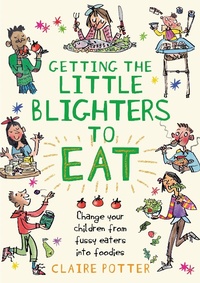
Getting the Little Blighters to Eat
Change Your Children from Fussy Eaters into Foodies
1st Edition
Published on 16. June 2016
64 pages
978-1-4729-4163-3 (ISBN)
Description

A pocket-size book of tips, techniques and ideas to prevent, cure and conquer fussy eating.
Does your child decide they don't like a food before they've even tried it? Do they say 'Yuk' to foods they used to eat happily? Would they live off chips and ice-cream and never touch a vegetable again if given the chance? Are mealtimes driving you nuts?
It's easy to think that children are naturally just fussy eaters. Yet, without realizing it, we are actually creating many of the problems ourselves with the things we do and say to our children around food. The right thing to do isn't always as obvious or as instinctive as you might think. Common habits like using pudding as a reward for eating the main course, or pestering them to eat their vegetables, actually encourage - not discourage - fussy eating!
This little book tells you how to start again. It won't give you complicated child-friendly recipes or clever ways to sneak vegetables into meals - just easy-to-follow, easy-to-remember rules to help re-programme your child into
a happy, healthy, adventurous eater.
Recommended by a leading NHS Specialist Paediatric Dietician.
Does your child decide they don't like a food before they've even tried it? Do they say 'Yuk' to foods they used to eat happily? Would they live off chips and ice-cream and never touch a vegetable again if given the chance? Are mealtimes driving you nuts?
It's easy to think that children are naturally just fussy eaters. Yet, without realizing it, we are actually creating many of the problems ourselves with the things we do and say to our children around food. The right thing to do isn't always as obvious or as instinctive as you might think. Common habits like using pudding as a reward for eating the main course, or pestering them to eat their vegetables, actually encourage - not discourage - fussy eating!
This little book tells you how to start again. It won't give you complicated child-friendly recipes or clever ways to sneak vegetables into meals - just easy-to-follow, easy-to-remember rules to help re-programme your child into
a happy, healthy, adventurous eater.
Recommended by a leading NHS Specialist Paediatric Dietician.
More details
Edition
1. Auflage
Language
English
Place of publication
London
United Kingdom
Publishing group
Bloomsbury Publishing PLC
Target group
Professional and scholarly
Illustrations
b/w illustrations
ISBN-13
978-1-4729-4163-3 (9781472941633)
Copyright in bibliographic data and cover images is held by Nielsen Book Services Limited or by the publishers or by their respective licensors: all rights reserved.
Schweitzer Classification
Other editions
Additional editions
Claire Potter
Getting the Little Blighters to Eat
Change your children from fussy eaters into foodies
Book
07/2013
Featherstone
€10.50
Shipment within 10-20 days
Person
Claire Potter is a freelance educational writer and mother of two. After some traumatic childhood experiences round the family dinner table, she set herself a parenting challenge: To create children who were non-fussy eaters and saw all food - not just chips and ice-cream - as one of life's biggest pleasures. So she had a big think and came up with a cunning plan. It worked. She now has a couple of happy, healthy, adventurous eaters: Her son was more than happy to tuck into fried wood pigeon's heart on a bushcraft course and her daughter's favourite snack is...hold your nose...dried squid. After teaming up with a specialist paediatric dietician, who works with extreme fussy eaters on a daily basis, Claire's methods have now been verified and she shares her secrets. She blogs at www.thequirkyparent.blogspot.co.uk, and you can visit her fussy eating website at stopfussyeating.uk.
Content
- Cover
- Title
- Copyright
- Contents
- Foreword
- Introduction
- Rule 1: Don't tell yourself that children are just naturally fussy
- Rule 2: Forget everything your mother (or grandmother) told you!
- Rule 3: Don't label your child a fussy eater
- Rule 4: Give up your power
- Rule 5: Stay in control of the shopping and cooking
- Rule 6: Don't use pudding as a reward or punishment
- Rule 7: Don't push them to eat everything on their plate
- Rule 8: Don't tell them to eat anything - let alone make them!
- Rule 9: Keep their diet as savoury as possible
- Rule 10: Keep offering them the foods they don't eat
- Rule 11: Don't buy into the idea of 'children's food'
- Rule 12: Don't give a running commentary at mealtimes
- Rule 13: Keep introducing new and unfamiliar foods
- Rule 14: Don't tell them what they like and dislike
- Rule 15: Don't hide the vegetables
- Rule 16: Keep preferences as preferences
- Rule 17: Ban words like 'yuck', 'ergh', 'I don't like this' and 'I don't want that'!
- Rule 18: Go easy on the praise
- Rule 19: Never stop them trying something unusual or different
- Rule 20: Relax about table manners!
- Rule 21: Have a 'sweets day' once a week - and stick to it!
- Rule 22: Let them eat at their own pace
- Rule 23: Offer the vegetables first
- Rule 24: Don't use food as emotional comfort
- Rule 25: Be a good role model
- Rule 26: Stick to 'real' food
- Rule 27: Make the dinner table a happy, relaxed, 'together' place to be
- Rule 28: Involve them in the cooking - even if it's a hassle!
- Rule 29: Have fun and adventures with food
- Rule 30: Be patient, be consistent
