

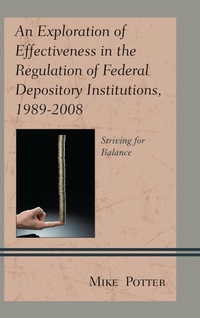
An Exploration of Effectiveness in the Regulation of Federal Depository Institutions, 1989-2008
Striving for Balance
1st Edition
Published on 19. September 2013
144 pages
979-8-216-32022-7 (ISBN)
Description

Financial services regulators are tasked with balancing the conflicting roles of empowering and policing their regulated communities. In order to be effective, agencies must be able to accomplish both tasks. This analysis examines several determinants of effectiveness among U.S. bank regulators. Using statistical and narrative analyses, it examines factors that have contributed to the regulatory effectiveness of the National Credit Union Administration, Office of the Comptroller of the Currency, and Office of Thrift Supervision. The study focused on the relationships between regulatory ability to prevent failures and influences including agency longevity, ability to manage complexity, appointee and staff qualities, mission stability, regulatory style, and resources. Agency longevity and resources had the greatest impact on effectiveness among the cases that were examined. Additionally, this study proposes a typology that suggests that more effective regulators are able to balance information from their regulated communities with a public interest orientation. This allows them to have current information regarding emerging regulatory issues but also to avoid becoming too reliant on their supervised institutions for information. By not being overly reliant or out of touch with their regulated communities, agency can better foster regulatory resiliency.
More details
Edition
1. Auflage
Language
English
Place of publication
United States
Publishing group
Bloomsbury Publishing Plc
Target group
Professional and scholarly
Illustrations
17 BW Illustrations, 30 Tables
ISBN-13
979-8-216-32022-7 (9798216320227)
Copyright in bibliographic data and cover images is held by Nielsen Book Services Limited or by the publishers or by their respective licensors: all rights reserved.
Schweitzer Classification
Other editions
Additional editions
Mike Potter
An Exploration of Effectiveness in the Regulation of Federal Depository Institutions, 1989-2008
Striving for Balance
Book
09/2013
Lexington Books
€125.30
Shipment within 10-20 days
Person
Mike Potter is assistant professor at Appalachian State University. He worked for the West Virginia State Legislature and the American Bankers Association. He holds a Ph.D. in Public Administration and Public Affairs from the Center for Public Administration and Policy at Virginia Tech. He has published articles in Administration & Society. His research interests include ethics and financial services policy.
Content
Chapter 1: Introduction
Statement of the Problem
Figure 1.1: Total Assets Under Supervision, 1998 through 2008
Figure 1.2: Mentions in the Congressional Committee Reports by Agency, 1995 through 2008
Research Question
Regulatory Effectiveness
Figure 1.3: Failure Rates Expressed as Percentage of Regulated Institutions by Agency, 1998 through 2008
Understanding Bank Failure: The Case of Superior Bank
Agency Relationships with their Regulated Communities
Figure 1.4 Ideal Regulatory Agency Policymaking
Understanding Self-funding and Charter Competition
Overview of Study
Chapter 2: The Challenge of Distilling and Examining a Theory of Regulatory Effectiveness
Table 2.1: Selected Scholarship on Regulatory Effectiveness
Working Model of Regulatory Effectiveness
Figure 2.1: Working Model of Regulatory Effectiveness
Regulatory Effectiveness
Propositions
Study Design
Table 2.2: Agency Comparison
The Agencies
National Credit Union Administration
Office of Thrift Supervision
Office of the Comptroller of the Currency
Other Regulators
Operationalizations, Data, and Data Analysis
Table 2.3: Empirical Examination: Concepts, Variables, and Data Sources
Chapter 3: The Impact of Agency Longevity on Financial Services Regulatory Effectiveness
Table 3.1: Relationships Between Longevity and Financial Resources by Agency
Overview of the Statistical Models
Agency Longevity and Failures
Table 3.2: Impact of Agency Age on Failures of Regulated Institutions
Conclusion
Chapter 4: The Impact of Ability to Manage Political Complexity, Front-line Employees,
and Political Appointee Turnover on Regulatory Effectiveness
Congressional Attention and Front-line Staff
Table 4.1: Impact of Congressional Attention and Percentage of Examiners on the Failures of Regulatory Institutions
Congressional Attention
Figure 4.1: Congressional Testimony by Agency, 1999 through 2008
Table 4.2: Relationships Between Congressional Attention and Effectiveness
Front-line Staff
Figure 4.2: Percentages of Examiners by Agency, 1998 through 2008
Table 4.3: Ratios of Examiners per Regulated Institutions by Agency, 1998 to 2008
A Narrative Analysis of Political Appointee Turnover
Table 4.4: NCUA Political Appointees, 1989 through 2008
Table 4.5: OTS Political Appointees, 1989 through 2008
Table 4.6: OCC Political Appointees, 1989 through 2008
Figure 4.3: Number of Changes in Political Appointees by Agency, 1989 through 2008
Table 4.7: Relationships between Political Turnover and Effectiveness by Agency
Conclusion
Chapter 5: Impact of Mission Stability, Regulatory Style, and Financial Resources on Regulatory Effectiveness
Mission Stability
NCUA
OTS
Figure 5.1: Mentions in the Congressional Record by Agency, 1989 through 2008
OCC
Figure 5.2: Number of Changes in Mission by Agency, 1989 through 2008
Table 5.1: Mission Changes and Regulatory Effectiveness
Regulatory Style
Non-legal Interventions
Legal Interventions
Figure 5.3: Annual Legal Intervention Percentage by Agency, 1998 through 2008
Figure 5.4: Enforcement Rates as Percentages of Regulated Institutions by Agency, 1998 through 2008
Resources
Figure 5.5: Budgets by Agency, 1995 through 2008 (in $2011)
Figure 5.6: OCC, OTS, and NCUA Budget per Institution Regulated (in $2011)
Table 5.2: Relationships Between Resources and Effectiveness
Table 5.3: Impact of Mission Stability, Regulatory Style and Resources on Regulated Institutions
General Discussion of Findings
Conclusion
Chapter 6: Conclusions
Summary of Key Findings
Figure 6.1 Revised Working Model of Regulatory Effectiveness
Normative Reflections
Figure 6.2: Regulatory Agency Policymaking
Future Research
Conclusions
References
Statement of the Problem
Figure 1.1: Total Assets Under Supervision, 1998 through 2008
Figure 1.2: Mentions in the Congressional Committee Reports by Agency, 1995 through 2008
Research Question
Regulatory Effectiveness
Figure 1.3: Failure Rates Expressed as Percentage of Regulated Institutions by Agency, 1998 through 2008
Understanding Bank Failure: The Case of Superior Bank
Agency Relationships with their Regulated Communities
Figure 1.4 Ideal Regulatory Agency Policymaking
Understanding Self-funding and Charter Competition
Overview of Study
Chapter 2: The Challenge of Distilling and Examining a Theory of Regulatory Effectiveness
Table 2.1: Selected Scholarship on Regulatory Effectiveness
Working Model of Regulatory Effectiveness
Figure 2.1: Working Model of Regulatory Effectiveness
Regulatory Effectiveness
Propositions
Study Design
Table 2.2: Agency Comparison
The Agencies
National Credit Union Administration
Office of Thrift Supervision
Office of the Comptroller of the Currency
Other Regulators
Operationalizations, Data, and Data Analysis
Table 2.3: Empirical Examination: Concepts, Variables, and Data Sources
Chapter 3: The Impact of Agency Longevity on Financial Services Regulatory Effectiveness
Table 3.1: Relationships Between Longevity and Financial Resources by Agency
Overview of the Statistical Models
Agency Longevity and Failures
Table 3.2: Impact of Agency Age on Failures of Regulated Institutions
Conclusion
Chapter 4: The Impact of Ability to Manage Political Complexity, Front-line Employees,
and Political Appointee Turnover on Regulatory Effectiveness
Congressional Attention and Front-line Staff
Table 4.1: Impact of Congressional Attention and Percentage of Examiners on the Failures of Regulatory Institutions
Congressional Attention
Figure 4.1: Congressional Testimony by Agency, 1999 through 2008
Table 4.2: Relationships Between Congressional Attention and Effectiveness
Front-line Staff
Figure 4.2: Percentages of Examiners by Agency, 1998 through 2008
Table 4.3: Ratios of Examiners per Regulated Institutions by Agency, 1998 to 2008
A Narrative Analysis of Political Appointee Turnover
Table 4.4: NCUA Political Appointees, 1989 through 2008
Table 4.5: OTS Political Appointees, 1989 through 2008
Table 4.6: OCC Political Appointees, 1989 through 2008
Figure 4.3: Number of Changes in Political Appointees by Agency, 1989 through 2008
Table 4.7: Relationships between Political Turnover and Effectiveness by Agency
Conclusion
Chapter 5: Impact of Mission Stability, Regulatory Style, and Financial Resources on Regulatory Effectiveness
Mission Stability
NCUA
OTS
Figure 5.1: Mentions in the Congressional Record by Agency, 1989 through 2008
OCC
Figure 5.2: Number of Changes in Mission by Agency, 1989 through 2008
Table 5.1: Mission Changes and Regulatory Effectiveness
Regulatory Style
Non-legal Interventions
Legal Interventions
Figure 5.3: Annual Legal Intervention Percentage by Agency, 1998 through 2008
Figure 5.4: Enforcement Rates as Percentages of Regulated Institutions by Agency, 1998 through 2008
Resources
Figure 5.5: Budgets by Agency, 1995 through 2008 (in $2011)
Figure 5.6: OCC, OTS, and NCUA Budget per Institution Regulated (in $2011)
Table 5.2: Relationships Between Resources and Effectiveness
Table 5.3: Impact of Mission Stability, Regulatory Style and Resources on Regulated Institutions
General Discussion of Findings
Conclusion
Chapter 6: Conclusions
Summary of Key Findings
Figure 6.1 Revised Working Model of Regulatory Effectiveness
Normative Reflections
Figure 6.2: Regulatory Agency Policymaking
Future Research
Conclusions
References
