

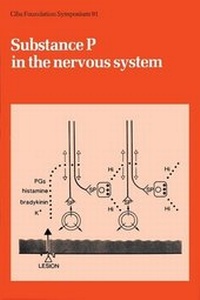
Substance P in the Nervous system
Published on 14. September 2009
384 pages
978-0-470-71842-1 (ISBN)
Description

The Novartis Foundation Series is a popular collection of the proceedings from Novartis Foundation Symposia, in which groups of leading scientists from a range of topics across biology, chemistry and medicine assembled to present papers and discuss results. The Novartis Foundation, originally known as the Ciba Foundation, is well known to scientists and clinicians around the world.
More details
Other editions
Additional editions
Ciba Foundation
Ciba Foundation Symposium 91 - Substance P In The Nervous system
Software
05/2008
Wiley
€82.61
No shipping information available

Ciba Foundation
Ciba Foundation Symposium 91 - Substance P in the Nervous system
Book
12/1982
Wiley
Unfortunately, price unknown
Withdrawn from sale
Persons
Ruth Porter is the editor of Substance P in the Nervous System, published by Wiley.
Maeve O'Connor is the editor of Substance P in the Nervous System, published by Wiley.
Content
1 - Substance P in the nervous system [Seite 5]
1.1 - Contents [Seite 7]
1.1.1 - Introduction [Seite 13]
1.1.2 - Chemical neurotransmission-yesterday and today [Seite 15]
1.1.3 - Role of substance P as a sensory transmitter in spinal cord and sympathetic ganglia [Seite 25]
1.1.3.1 - Discussion [Seite 42]
1.1.4 - Substance P in peripheral sensory processes [Seite 47]
1.1.4.1 - Discussion [Seite 61]
1.1.5 - Localization of substance P in neuronal pathways [Seite 67]
1.1.5.1 - Discussion [Seite 91]
1.1.6 - Distribution of substance P in brain and periphery and its posible role as a co-transmitter [Seite 96]
1.1.6.1 - Discussion [Seite 112]
1.1.7 - Regulation of substance P expression and metabolism in vivo and in vitro [Seite 119]
1.1.7.1 - Discussion [Seite 131]
1.1.8 - GENERAL DISCUSSION [Seite 135]
1.1.8.1 - Coexistence of transmitters [Seite 135]
1.1.9 - Substance P in nerve tissue in the gut [Seite 141]
1.1.9.1 - Discussion [Seite 149]
1.1.10 - Biosynthesis, axonal transport and turnover of neuronal substance P [Seite 157]
1.1.10.1 - Discussion [Seite 172]
1.1.11 - Enzymic inactivation of substance P in the central nervous system [Seite 177]
1.1.11.1 - Discussion [Seite 192]
1.1.12 - Substance P receptors in the nervous system and possible receptor subtypes [Seite 198]
1.1.12.1 - Discussion [Seite 207]
1.1.13 - Relation of substance P to pain transmission: neurophysiological evidence [Seite 218]
1.1.13.1 - Discussion [Seite 230]
1.1.14 - Substance P in nociceptive sensory neurons [Seite 237]
1.1.14.1 - Discussion [Seite 252]
1.1.15 - If substance P fails to fulfil the criteria as a neurotransmitter in somatosensory afferents, what might be its function? [Seite 261]
1.1.15.1 - Discussion [Seite 273]
1.1.16 - Modulation of cholinergic transmission by substance P [Seite 279]
1.1.16.1 - Discussion [Seite 289]
1.1.17 - The striatonigral substance P pathway and dopaminergic mechanisms [Seite 293]
1.1.17.1 - Discussion [Seite 304]
1.1.18 - Relation of substance P to stress and catecholamine metabolism [Seite 308]
1.1.18.1 - Discussion [Seite 315]
1.1.19 - Behavioural effects of substance P through dopaminergic pathways in the brain [Seite 319]
1.1.19.1 - Discussion [Seite 331]
1.1.20 - FINAL GENERAL DISCUSSION [Seite 336]
1.1.20.1 - Substance P antagonists [Seite 336]
1.1.20.2 - tumour cell lines and substance P [Seite 339]
1.1.20.3 - substance P and other tachykinins [Seite 341]
1.1.20.4 - substance P and clinical pain syndromes [Seite 343]
1.1.20.5 - substance P and neuronal systems [Seite 345]
1.1.21 - Index of contributors [Seite 350]
1.1.22 - Subject index [Seite 352]
1.1 - Contents [Seite 7]
1.1.1 - Introduction [Seite 13]
1.1.2 - Chemical neurotransmission-yesterday and today [Seite 15]
1.1.3 - Role of substance P as a sensory transmitter in spinal cord and sympathetic ganglia [Seite 25]
1.1.3.1 - Discussion [Seite 42]
1.1.4 - Substance P in peripheral sensory processes [Seite 47]
1.1.4.1 - Discussion [Seite 61]
1.1.5 - Localization of substance P in neuronal pathways [Seite 67]
1.1.5.1 - Discussion [Seite 91]
1.1.6 - Distribution of substance P in brain and periphery and its posible role as a co-transmitter [Seite 96]
1.1.6.1 - Discussion [Seite 112]
1.1.7 - Regulation of substance P expression and metabolism in vivo and in vitro [Seite 119]
1.1.7.1 - Discussion [Seite 131]
1.1.8 - GENERAL DISCUSSION [Seite 135]
1.1.8.1 - Coexistence of transmitters [Seite 135]
1.1.9 - Substance P in nerve tissue in the gut [Seite 141]
1.1.9.1 - Discussion [Seite 149]
1.1.10 - Biosynthesis, axonal transport and turnover of neuronal substance P [Seite 157]
1.1.10.1 - Discussion [Seite 172]
1.1.11 - Enzymic inactivation of substance P in the central nervous system [Seite 177]
1.1.11.1 - Discussion [Seite 192]
1.1.12 - Substance P receptors in the nervous system and possible receptor subtypes [Seite 198]
1.1.12.1 - Discussion [Seite 207]
1.1.13 - Relation of substance P to pain transmission: neurophysiological evidence [Seite 218]
1.1.13.1 - Discussion [Seite 230]
1.1.14 - Substance P in nociceptive sensory neurons [Seite 237]
1.1.14.1 - Discussion [Seite 252]
1.1.15 - If substance P fails to fulfil the criteria as a neurotransmitter in somatosensory afferents, what might be its function? [Seite 261]
1.1.15.1 - Discussion [Seite 273]
1.1.16 - Modulation of cholinergic transmission by substance P [Seite 279]
1.1.16.1 - Discussion [Seite 289]
1.1.17 - The striatonigral substance P pathway and dopaminergic mechanisms [Seite 293]
1.1.17.1 - Discussion [Seite 304]
1.1.18 - Relation of substance P to stress and catecholamine metabolism [Seite 308]
1.1.18.1 - Discussion [Seite 315]
1.1.19 - Behavioural effects of substance P through dopaminergic pathways in the brain [Seite 319]
1.1.19.1 - Discussion [Seite 331]
1.1.20 - FINAL GENERAL DISCUSSION [Seite 336]
1.1.20.1 - Substance P antagonists [Seite 336]
1.1.20.2 - tumour cell lines and substance P [Seite 339]
1.1.20.3 - substance P and other tachykinins [Seite 341]
1.1.20.4 - substance P and clinical pain syndromes [Seite 343]
1.1.20.5 - substance P and neuronal systems [Seite 345]
1.1.21 - Index of contributors [Seite 350]
1.1.22 - Subject index [Seite 352]
