

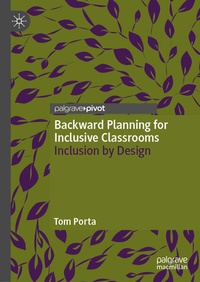
Backward Planning for Inclusive Classrooms
Description

This book offers scholars and educators in primary and secondary education a practical, evidence-based method for designing curriculum and delivering high-quality, inclusive learning experiences. By synthesising the principles of Differentiation, Universal Design for Learning and Understanding by Design, it introduces the Inclusion by Design framework - a clear, research-informed approach to curriculum planning that is inclusive from the outset. This method equips educators with the skills to proactively address the full range of student diversity and complexity in their classrooms, ensuring that all students can access, engage with and succeed in the curriculum. This book will be of interest to researchers, teacher educators and practitioners dedicated to advancing inclusive educational practice.
More details
Other editions
Additional editions
Person
Tom Porta is a lecturer in Education at Adelaide University, Australia. His research focuses on inclusive education, differentiation, curriculum design, and inclusive pedagogy. Tom has been recognised for his research impact with a commendation for grant excellence from the Faculty of ABLE and was awarded the 2024 School of Education Early Career Researcher Award. He is the 2025 recipient of the ACEL 'new voice' in educational leadership research scholarship. Before entering academia, Tom spent a decade teaching in primary and secondary schools across Adelaide.
Content
Chapter 1: Introduction.- Chapter 2: Inclusive Education Nationally and Internationally.- Chapter 3: Knowing Your Curriculum: Setting High Expectations.- Chapter 4: Knowing Your Students: Understanding Diversity in the Classroom.- Chapter 5: The Role of Assessment: Determining Quality Evidence.- Chapter 6: Planning for Differentiation: Crafting Intentional and Intuitive Learning Experiences.- Chapter 7: Reflective Practice: A Cycle of Continuous Improvement.- Chapter 8: Bringing it all Together: Sustaining an Inclusive Classroom.
