

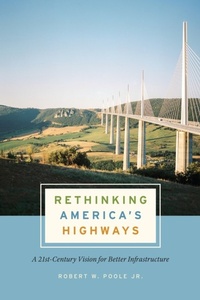
Rethinking America's Highways
A 21st-Century Vision for Better Infrastructure
1st Edition
Published on 22. December 2022
375 pages
978-0-226-55760-1 (ISBN)
Description

A transportation expert makes a provocative case for changing the nation's approach to highways, offering "bold, innovative thinking on infrastructure" (Rick Geddes, Cornell University).
Americans spend hours every day sitting in traffic. And the roads they idle on are often rough and potholed, with exits, tunnels, guardrails, and bridges in terrible disrepair. According to transportation expert Robert Poole, this congestion and deterioration are outcomes of the way America manages its highways. Our twentieth-century model overly politicizes highway investment decisions, short-changing maintenance and often investing in projects whose costs exceed their benefits.
In Rethinking America's Highways, Poole examines how our current model of state-owned highways came about and why it is failing to satisfy its customers. He argues for a new model that treats highways themselves as public utilities-like electricity, telephones, and water supply.
If highways were provided commercially, Poole argues, people would pay for highways based on how much they used, and the companies would issue revenue bonds to invest in facilities people were willing to pay for. Arguing for highway investments to be motivated by economic rather than political factors, this book makes a carefully-reasoned and well-documented case for a new approach to highways.
Americans spend hours every day sitting in traffic. And the roads they idle on are often rough and potholed, with exits, tunnels, guardrails, and bridges in terrible disrepair. According to transportation expert Robert Poole, this congestion and deterioration are outcomes of the way America manages its highways. Our twentieth-century model overly politicizes highway investment decisions, short-changing maintenance and often investing in projects whose costs exceed their benefits.
In Rethinking America's Highways, Poole examines how our current model of state-owned highways came about and why it is failing to satisfy its customers. He argues for a new model that treats highways themselves as public utilities-like electricity, telephones, and water supply.
If highways were provided commercially, Poole argues, people would pay for highways based on how much they used, and the companies would issue revenue bonds to invest in facilities people were willing to pay for. Arguing for highway investments to be motivated by economic rather than political factors, this book makes a carefully-reasoned and well-documented case for a new approach to highways.
All prices
More details
Other editions
Additional editions
Book
06/2018
University of Chicago Press
€32.24
Shipment within 10-20 days
Person
Robert W. Poole Jr. is director of transportation policy at Reason Foundation, a public policy think tank, and is the author or editor of five previous books on public policy.
Content
- Intro
- Contents
- Preface
- Chapter 1. Our Troubled Highway System
- Chapter 2. How the Private Sector Is Reinventing America's Freeways
- Chapter 3. Where America's 20th-Century Highway Model Came From
- Chapter 4. The Rediscovery of Toll Road Companies Overseas
- Chapter 5. Toll Concessions Return to America
- Chapter 6. The Benefits of Long-Term P3 Concessions
- Chapter 7. Critics and Controversy: Opposition to Tolling and Long-Term Concessions
- Chapter 8. Highways as Network Utilities
- Chapter 9. Transforming the Interstate Highways
- Chapter 10. Transforming Urban Freeways
- Chapter 11. Challenges to the New Vision for US Highways
- Chapter 12. A New Future for US Highways
- Acknowledgments
- Notes
- Index
