

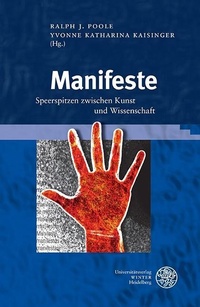
Manifeste
Speerspitzen zwischen Kunst und Wissenschaft
Published in January 2015
XIX, 199 pages
978-3-8253-7492-1 (ISBN)
Description

Manifeste sind 'Speerspitzen' zwischen Kunst, Literatur, Politik und Theorie. Das Manifest ist dabei eine hybride Textsorte, die sich zwischen literarischem Sketch, ästhetischer Agitation, politischer Propaganda und theoretischer Programmatik positioniert. Besonders mit den modernistischen Avantgarden des frühen 20. Jahrhunderts zielt das Manifest auf den Bruch mit Traditionen und ruft zu radikal Neuem auf. Das Manifest wird hierbei zusehends zu einem Ort der Verhandlung über den Nexus zwischen Wissenschaft und Kunst.
Im Zuge der gesellschaftlichen Befreiungsbewegungen der 1960er und 1970er Jahre erlebt die Textsorte eine Renaissance, die besonders auch mit dem institutionellen Wandel an den Universitäten einhergeht. Das Manifest als Agenda bleibt daher attraktiv, um den Gestus des Neuen und der Veränderung zu transportieren. Als Form ist das Manifest weiterhin beliebt, da es neben einer prägnanten Kürze Raum zum Experiment bietet.
Im Zuge der gesellschaftlichen Befreiungsbewegungen der 1960er und 1970er Jahre erlebt die Textsorte eine Renaissance, die besonders auch mit dem institutionellen Wandel an den Universitäten einhergeht. Das Manifest als Agenda bleibt daher attraktiv, um den Gestus des Neuen und der Veränderung zu transportieren. Als Form ist das Manifest weiterhin beliebt, da es neben einer prägnanten Kürze Raum zum Experiment bietet.
More details
Other editions
Additional editions
Book
01/2015
1st Edition
Universitätsverlag Winter
€45.00
No shipping information available
Content
- Intro
- Inhalt
- Ralph J. POOLE, Manifeste: Speerspitzen zwischen Kunst und Wissenschaft. Eine Einleitung
- Politik, Geschichte und Umwelt
- Clemens PECK, Zion festschreiben, Zion überschreiben. Zur medialen Praxis von Theodor Herzls Der Judenstaat
- Robert SEYFERT, Avantgardistische Manifeste: Anti-Historismus, Retro-Historismus, Trans-Historismus
- Yvonne KAISINGER, Defending Nature: Rachel Carson's Silent Spring as Environmental Manifesto
- Literatur
- Charlton PAYNE, Decisions. Alfred Andersch's Manifesto of the Gruppe 47
- Christof DECKER, Post-Modernism, Freiburg 1968: Observations on the German Reception of Leslie A. Fiedler's "Revolutionary Ideas
- Ilka SAAL, Performing the Manifest: Don DeLillo, 9/11, and the American Temporality of Crisis
- Annette KECK, Relevanter Realismus oder: Was soll der Roman? Dean, Hettche, Politycki, Schindhelm in DIE ZEIT 2005
- Medien
- Beate OCHSNER, Hätte ich das Kino - Ein Kinomanifest von Carlo Mierendorff
- Dirk NAGUSCHEWSKI, Das "Manifest von Niamey" (1982). (K)ein Aufbruch für das afrikanische Kino
- Martina THIELE, Neue Medien - neue Manifeste
- Heide VOLKENING, Mädchen Mütter Monster. Manifeste von Tiqqun und Lady Gaga
- Tanz und Performance
- Nicole HAITZINGER, Performance und Manifest. Performance als Manifest
- Sandra CHATTERJEE with contributions from Cynthia LING LEE, Shyamala MOORTY, and Anjali TATA, Yes to Process! Co-creating Post Natyam Collective's Manifesto
- Autorenverzeichnis
