
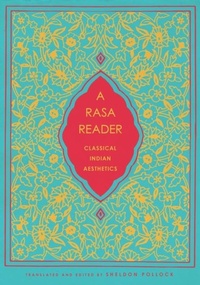
A Rasa Reader
Description
Alles über E-Books | Antworten auf Fragen rund um E-Books, Kopierschutz und Dateiformate finden Sie in unserem Info- & Hilfebereich.
From the early years of the Common Era to 1700, Indian intellectuals explored with unparalleled subtlety the place of emotion in art. Their investigations led to the deconstruction of art's formal structures and broader inquiries into the pleasure of tragic tales. Rasa, or taste, was the word they chose to describe art's aesthetics, and their passionate effort to pin down these phenomena became its own remarkable act of creation.
This book is the first in any language to follow the evolution of rasa from its origins in dramaturgical thought-a concept for the stage-to its flourishing in literary thought-a concept for the page. A Rasa Reader incorporates primary texts by every significant thinker on classical Indian aesthetics, many never translated before. The arrangement of the selections captures the intellectual dynamism that has powered this debate for centuries. Headnotes explain the meaning and significance of each text, a comprehensive introduction summarizes major threads in intellectual-historical terms, and critical endnotes and an extensive bibliography add further depth to the selections. The Sanskrit theory of emotion in art is one of the most sophisticated in the ancient world, a precursor of the work being done today by critics and philosophers of aesthetics. A Rasa Reader's conceptual detail, historical precision, and clarity will appeal to any scholar interested in a full portrait of global intellectual development.
A Rasa Reader is the inaugural book in the Historical Sourcebooks in Classical Indian Thought series, edited by Sheldon Pollock. These text-based books guide readers through the most important forms of classical Indian thought, from epistemology, rhetoric, and hermeneutics to astral science, yoga, and medicine. Each volume provides fresh translations of key works, headnotes to contextualize selections, a comprehensive analysis of major lines of development within the discipline, and exegetical and text-critical endnotes, as well as a bibliography. Designed for comparativists and interested general readers, Historical Sourcebooks is also a great resource for advanced scholars seeking authoritative commentary on challenging works.
All prices
More details
Other editions
Additional editions

Person
Content
Preface Acknowledgments English Translations of Sanskrit Titles List of Abbreviations Introduction: An Intellectual History of Rasa 1. The Foundational Text, c. 300, and Early Theorists, 650-1025 2. The Great Synthesis of Bhoja, 1025-1055 3. An Aesthetic Revolution, 900-1000 4. Abhinavagupta and His School, 1000-1200 5. Continuing the Controversies Beyond Kashmir, 1200-1400 6. Rasa in the Early Modern World, 1200-1650 English-Sanskrit Glossary Notes Bibliography Index

System requirements
File format: ePUB
Copy protection: Adobe-DRM (Digital Rights Management)
System requirements:
- Computer (Windows; MacOS X; Linux): Install the free reader Adobe Digital Editions prior to download (see eBook Help).
- Tablet/smartphone (Android; iOS): Install the free app Adobe Digital Editions or the app PocketBook before downloading (see eBook Help).
- E-reader: Bookeen, Kobo, Pocketbook, Sony, Tolino and many more (not Kindle).
The file format ePub works well for novels and non-fiction books – i.e., „flowing” text without complex layout. On an e-reader or smartphone, line and page breaks automatically adjust to fit the small displays.
This eBook uses Adobe-DRM, a „hard” copy protection. If the necessary requirements are not met, unfortunately you will not be able to open the eBook. You will therefore need to prepare your reading hardware before downloading.
Please note: We strongly recommend that you authorise using your personal Adobe ID after installation of any reading software.
For more information, see our ebook Help page.
File format: PDF
Copy-Protection: Adobe-DRM (Digital Rights Management)
System requirements:
- Computer (Windows; MacOS X; Linux): Install the free reader Adobe Digital Editions prior to download (see eBook Help).
- Tablet/smartphone (Android; iOS): Install the free app Adobe Digital Editions or the app PocketBook before downloading (see eBook Help).
- E-reader: Bookeen, Kobo, Pocketbook, Sony, Tolino and many more (only limited: Kindle).
The file format PDF always displays a book page identically on any hardware. This makes PDF suitable for complex layouts such as those used in textbooks and reference books (images, tables, columns, footnotes). Unfortunately, on the small screens of e-readers or smartphones, PDFs are rather annoying, requiring too much scrolling.
This eBook uses Adobe-DRM, a „hard” copy protection. If the necessary requirements are not met, unfortunately you will not be able to open the eBook. You will therefore need to prepare your reading hardware before downloading.
Please note: We strongly recommend that you authorise using your personal Adobe ID after installation of any reading software.
For more information, see our eBook Help page.
File format: ePUB
Copy protection: Watermark-DRM (Digital Rights Management)
System requirements:
- Computer (Windows; MacOS X; Linux): Use a reading software that can process the file format ePUB: e.g., Adobe Digital Editions or FBReader – both free (see eBook Help).
- Tablet/Smartphone (Android; iOS): Before downloading, install the free app Adobe Digital Editions (see eBook Help).
- E-reader: Bookeen, Kobo, Pocketbook, Sony, Tolino and many more (not Kindle).
The file format ePUB works well for novels and non-fiction books – i.e., „flowing” text without complex layout. On an e-reader or smartphone, line and page breaks automatically adjust to fit the small displays.
This eBook uses Watermark-DRM, a „soft” copy protection. This means that there are no technical restrictions to prevent illegal distribution. However, there is a personalised watermark embedded in the eBook that can be used to identify the purchaser of the eBook in the event of misuse and to provide evidence for legal purposes.
For more information, see our eBook Help page.
