

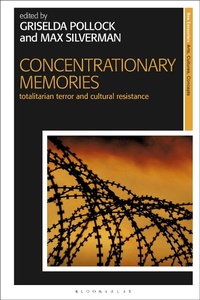
Concentrationary Memories
Totalitarian Terror and Cultural Resistance
1st Edition
Published on 25. August 2015
336 pages
978-1-78673-443-3 (ISBN)
Description

Concentrationary Memories has, as its premise , the idea at the heart of Alain Resnais's film Night and Fog (1955) that the concentrationary plague unleashed on the world by the Nazis in the 1930s and 1940s is not simply confined to one place and one time but is now a permanent presence shadowing modern life. It further suggests that memory (and, indeed art in general) must be invoked to show this haunting of the present by this menacing past so that we can read for the signs of terror and counter its deformation of the human.
Through working with political and cultural theory on readings of film, art, photographic and literary practices, Concentrationary Memories analyses different cultural responses to concentrationary terror in different sites in the post-war period, ranging from Auschwitz to Argentina. These readings show how those involved in the cultural production of memories of the horror of totalitarianism sought to find forms, languages and image systems which could make sense of and resist the post-war condition in which, as Hannah Arendt famously stated 'everything is possible' and 'human beings as human beings become superfluous.' Authors include Nicholas Chare, Isabelle de le Court, Thomas Elsaesser, Benjamin Hannavy Cousen, Matthew John, Claire Launchbury, Sylvie Lindeperg, Laura Malosetti Costa, Griselda Pollock, Max Silverman, Glenn Sujo, Annette Wieviorka and John Wolfe Ackerman.
Through working with political and cultural theory on readings of film, art, photographic and literary practices, Concentrationary Memories analyses different cultural responses to concentrationary terror in different sites in the post-war period, ranging from Auschwitz to Argentina. These readings show how those involved in the cultural production of memories of the horror of totalitarianism sought to find forms, languages and image systems which could make sense of and resist the post-war condition in which, as Hannah Arendt famously stated 'everything is possible' and 'human beings as human beings become superfluous.' Authors include Nicholas Chare, Isabelle de le Court, Thomas Elsaesser, Benjamin Hannavy Cousen, Matthew John, Claire Launchbury, Sylvie Lindeperg, Laura Malosetti Costa, Griselda Pollock, Max Silverman, Glenn Sujo, Annette Wieviorka and John Wolfe Ackerman.
Reviews / Votes
Concentrationary Memories rests on a provocative, carefully theorized consideration of the nature of the 'concentrationary' universe, extending and reframing terms and ideas introduced by Hannah Arendt, on the one hand, and lesser known but significant figures in the French context such as David Rousset, Robert Antelme and Jean Cayrol. As its editors note, the first word of their title is unfamiliar in English, and this is perhaps a sign of the need for renewed and close attention to the phenomenon named by the French writer Rousset in 1946. The volume answers this need with care and a justly high level of critical vigilance. Without deflecting the importance attached to the term holocaust and to the issues and concerns of the racial genocides of the twentieth-century, the volume shifts attention towards the politics of deportation and internment, and pursues vital questions about the adequacy and nature of aesthetic responses, questions which bear upon the nature and concept of representation. A crucial emphasis of the volume is on the 'permanent presence' of the concentrationary, since its inception; the volume thus includes powerful and essential analyses of the phenomenon across examples in literature, film and photography since the liberation of the camps, and in varying global contexts. The 11 essays in the volume are supported by an extensive introduction by the editors, a contribution in its own right to ongoing debates about politics and representation, and the politics of representation. Given this focus, the meticulous attention to the presentation of the substantial number of images which feature in the volume is unsurprising, and deserves special recognition. This is a unique project, insofar as it breaks new ground in the establishment of a new object of enquiry and research, and goes some way into the exploration of this territory. The volume makes a substantial contribution to research on the legacies of the political evils of the last century and will be essential reading for anyone concerned with it and by it. The book makes a clear case that this includes all of us. * Patrick ffrench, King's College, University of London, UK *More details
Series
Edition
1. Auflage
Language
English
Place of publication
London
United Kingdom
Publishing group
Bloomsbury Publishing PLC
Target group
College/higher education
Illustrations
88 bw illus
ISBN-13
978-1-78673-443-3 (9781786734433)
Copyright in bibliographic data and cover images is held by Nielsen Book Services Limited or by the publishers or by their respective licensors: all rights reserved.
Schweitzer Classification
Other editions
Additional editions
Griselda Pollock | Max Silverman
Concentrationary Memories
Totalitarian Terror and Cultural Resistance
Book
09/2021
Bloomsbury Visual Arts
€35.00
Shipment within 15-20 days
Griselda Pollock | Max Silverman
Concentrationary Memories
Totalitarian Terror and Cultural Resistance
Book
12/2012
I.B. Tauris
€193.45
Shipment within 10-20 days
Persons
Griselda Pollock is Professor of Social and Critical Histories of Art and Director of the Centre for Cultural Analysis, Theory and History at the University of Leeds, UK. She is Editor, with Anthony Bryant, of "Digital and Other Virtualities: Renegotiating the Image" and of "Visual Politics of Psychoanalysis: Art and the Image in Post-Traumatic Cultures" (both I.B. Tauris) and is Series Editor of Tauris' "New Encounters" Series. Max Silverman is Professor of Modern French Studies at the University of Leeds. His recent publications include "Palimpsestic Memory: the Holocaust and Colonialism in French and Francophone Fiction and Film" (Berghahn, 2013). Griselda Pollock and Max Silverman are joint authors of "Concentrationary Cinema: Aesthetics as Political Resistance in Alain Resnais's 'Night and Fog', " which won the Kraszna-Krausz Award for Best Book on the Moving Image, 2011.
Content
Concentrationary Memories Series Preface
Griselda Pollock & Max Silverman
Table of Contents
List of Illustrations
Acknowledgements
Introduction
The Politics of Memory: From Concentrationary Memory to Concentrationary Memories
Griselda Pollock & Max Silverman:
Part 1: Theorising the Political Space and Beyond
Chapter 1 The Memory of Politics: Hannah Arendt, Carl Schmitt and the Possibility of Encounter
John Wolfe Ackerman
Part 2: Mediations of Memory
Chapter 2 Migration and Motif: the (Parapractic) Memories of an Image
Thomas Elsaesser
Chapter 3 The Two Stages of the Eichmann Trial
Sylvie Lindeperg & Annette Wieviorka
Chapter 4 Brushing the Film Against the Grain: Locating Jean Cayrol's Lazarean Figure in Alain Resnais's Muriel ou le temps d'un retour
Matthew John
Part 3: Camp Visions
Chapter 5 Symbol Re-formation: Concentrationary Memory in Charlotte Delbo's Auschwitz and After
Nicholas Chare
Chapter 6 A New Visual Structure for the Unthinkable: The Surrealist Aesthetic and the Concentrationary Sublime in Lee Miller's Photographs of Buchenwald and Dachau
Isabelle de le Court
Chapter 7 Muselmann: a distilled image of the Lager?
Glenn Sujo
Chapter 8 Nameless before the Concentrationary Void: Charlotte Salomon's Leben? oder Theater? 1941-42 after Gurs
Griselda Pollock
Part 4: Beyond the Limits
Chapter 9 Animated Memory: Ari Folman's Waltz with Bashir
Claire Launchbury
Chapter 10 Isn't this where...? Projections on Pink Floyd The Wall: Tracing the Concentrationary Image
Benjamin Hannavy Cousen
Chapter 11 Memory Work in Argentina 1976-2006
Laura Malosetti Costa
Notes on Contributors
Bibliography
Index
Griselda Pollock & Max Silverman
Table of Contents
List of Illustrations
Acknowledgements
Introduction
The Politics of Memory: From Concentrationary Memory to Concentrationary Memories
Griselda Pollock & Max Silverman:
Part 1: Theorising the Political Space and Beyond
Chapter 1 The Memory of Politics: Hannah Arendt, Carl Schmitt and the Possibility of Encounter
John Wolfe Ackerman
Part 2: Mediations of Memory
Chapter 2 Migration and Motif: the (Parapractic) Memories of an Image
Thomas Elsaesser
Chapter 3 The Two Stages of the Eichmann Trial
Sylvie Lindeperg & Annette Wieviorka
Chapter 4 Brushing the Film Against the Grain: Locating Jean Cayrol's Lazarean Figure in Alain Resnais's Muriel ou le temps d'un retour
Matthew John
Part 3: Camp Visions
Chapter 5 Symbol Re-formation: Concentrationary Memory in Charlotte Delbo's Auschwitz and After
Nicholas Chare
Chapter 6 A New Visual Structure for the Unthinkable: The Surrealist Aesthetic and the Concentrationary Sublime in Lee Miller's Photographs of Buchenwald and Dachau
Isabelle de le Court
Chapter 7 Muselmann: a distilled image of the Lager?
Glenn Sujo
Chapter 8 Nameless before the Concentrationary Void: Charlotte Salomon's Leben? oder Theater? 1941-42 after Gurs
Griselda Pollock
Part 4: Beyond the Limits
Chapter 9 Animated Memory: Ari Folman's Waltz with Bashir
Claire Launchbury
Chapter 10 Isn't this where...? Projections on Pink Floyd The Wall: Tracing the Concentrationary Image
Benjamin Hannavy Cousen
Chapter 11 Memory Work in Argentina 1976-2006
Laura Malosetti Costa
Notes on Contributors
Bibliography
Index
