

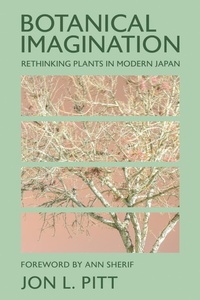
Botanical Imagination
Description

Botanical Imagination explores the complicated legacy and enduring lure of plant life in modern Japanese literature and media. Using critical plant studies, Jon L. Pitt examines an unlikely group of writers and filmmakers in modern Japan, finding in their works a desire to "become botanical" in both content and form. For nearly one hundred years, a botanical imagination grew in response to moments of crisis in Japan's modern history.
Pitt shows how artists were inspired to seek out botanical knowledge in order to construct new forms of subjectivity and attempt to resist certain forms of state violence. As he follows plants through the tangled histories of imperialism and state control, Pitt also uncovers the ways plants were used in the same violence that drove artists to turn to the botanical as a model of resistance in the first place. Botanical Imagination calls on us to rethink plants as significant but ambivalent actors and to turn to the botanical realm as a site of potentiality.
More details
Other editions
Additional editions

Person
Jon L. Pitt is Assistant Professor of East Asian Studies at the University of California, Irvine. He is the translator of Hiromi Ito's Tree Spirits Grass Spirits.
Content
Introduction: Botanical Potential
1. Botanical Families: Osaki Midori, Moss, and Evolutionary Resemblance
2. Botanical Allegory: Metamorphosis and Colonial Memory in Abe Kobo's Dendrocacalia
3. Botanical Media: Haniya Yutaka, Hashimoto Ken, Ito Seiko, and the Search for Dead Spirits
4. Botanical Regeneration: Fire and Disturbance Ecology in the Films of Yanagimachi Mitsuo and Kawase Naomi
5. Botanical Migration: Naturalization and Empathy in the Poetry and Prose of Hiromi Ito
Epilogue: Thale Cress, Herbivore Men, and A World Without Love
