


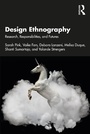
Design Ethnography
Research, Responsibilities, and Futures
1st Edition
Published on 30. June 2022
236 pages
978-1-000-59203-0 (ISBN)
Description

This book advances the practice and theory of design ethnography. It presents a methodologically adventurous and conceptually robust approach to interventional and ethical research design, practice and engagement.
The authors, specialising in design ethnography across the fields of anthropology, sociology, human geography, pedagogy and design research, draw on their extensive international experience of collaborating with engineers, designers, creative practitioners and specialists from other fields. They call for, and demonstrate the benefits of, ethnographic and conceptual attention to design as part of our personal and public everyday lives, society, institutions and activism.
Design Ethnography is essential reading for researchers, scholars and students seeking to reshape the way we research, live and design ethically and responsibly into yet unknown futures.
The authors, specialising in design ethnography across the fields of anthropology, sociology, human geography, pedagogy and design research, draw on their extensive international experience of collaborating with engineers, designers, creative practitioners and specialists from other fields. They call for, and demonstrate the benefits of, ethnographic and conceptual attention to design as part of our personal and public everyday lives, society, institutions and activism.
Design Ethnography is essential reading for researchers, scholars and students seeking to reshape the way we research, live and design ethically and responsibly into yet unknown futures.
Reviews / Votes
"For the first time in a long time I felt a tingle of excitement when I read this book. Design ethnography contends that while we cannot predict the future, nor ensure it, we can imagine better possibilities, and work towards realising them. This takes ethnographic projects beyond traditional constraints (of time, discipline, subject/object distinctions, and theoretical stances) towards collaboration, flexibility, imagination, and long-term engagement. The authors convince us of the potential of design ethnography because they themselves have played in the future-oriented spaces of stakeholders.This exciting book is a stunning achievement of the emphasis on both practice and the practical. I will recommend it to the many professionals I teach who hope their research will contribute to better futures."- Karen O'Reilly, Professor Emeritus of Sociology at Loughborough University, UK."Design Ethnography: Research, Responsibility and Futures is a product of the collective design imagination at its best. It argues for a genuine encounter between ethnography and design that is experiential, collaborative, embodied, and engaged. Based on a sophisticated relational perspective, Design Ethnography bypasses the traditional object- and project-oriented epistemology and ontology of design, while advocating for situated and interdisciplinary research agendas that are at once critical, interventional, and pluralistic. Written by a highly accomplished all-women team associated with the Emerging Technologies Research Lab in Melbourne, this wonderfully innovative volume develops a design approach for skillfully navigating the perilous situations of the present to enable alternative worlds and futures. The book will be of great value to designers and those concerned with science and technology as much as to scholars and students in the emergent and vibrant communities at the interfaces of design, the social sciences, and policy-oriented fields." - Arturo Escobar, Professor Emeritus of Anthropology at the University of North Carolina, Chapel Hill, USA.
More details
Edition
1. Auflage
Language
English
Place of publication
London
United Kingdom
Publishing group
Taylor & Francis Ltd
Target group
College/higher education
Illustrations
10 Halftones, color; 38 Halftones, black and white; 10 Illustrations, color; 38 Illustrations, black and white
ISBN-13
978-1-000-59203-0 (9781000592030)
Copyright in bibliographic data and cover images is held by Nielsen Book Services Limited or by the publishers or by their respective licensors: all rights reserved.
Schweitzer Classification
Other editions
Additional editions

Book
06/2022
1st Edition
Routledge
€224.00
Shipment within 15-20 days
Book
06/2022
1st Edition
Routledge
€51.00
Shipment within 15-20 days
Persons
Sarah Pink is Professor and Director of the Emerging Technologies Research Lab in the Faculty of Information Technology and the Faculty of Art, Design and Architecture at Monash University, Australia.
Vaike Fors is Professor in Design Ethnography at the School of Information Technology at Halmstad University in Sweden and adjunct in the Emerging Technologies Research Lab at Monash University, Australia.
Debora Lanzeni is Research Fellow in the Emerging Technologies Research Lab and member of the Faculty of Information Technology at Monash University, Australia.
Melisa Duque is Research Fellow in the Emerging Technologies Research Lab and member of the Faculty of Art, Design and Architecture at Monash University, Australia.
Shanti Sumartojo is Associate Professor of Design Research in the Emerging Technologies Research Lab and member of the Faculty of Art, Design and Architecture at Monash University, Australia.
Yolande Strengers is Associate Professor in the Emerging Technologies Research Lab and member of the Faculty of Information Technology at Monash University, Australia.
Vaike Fors is Professor in Design Ethnography at the School of Information Technology at Halmstad University in Sweden and adjunct in the Emerging Technologies Research Lab at Monash University, Australia.
Debora Lanzeni is Research Fellow in the Emerging Technologies Research Lab and member of the Faculty of Information Technology at Monash University, Australia.
Melisa Duque is Research Fellow in the Emerging Technologies Research Lab and member of the Faculty of Art, Design and Architecture at Monash University, Australia.
Shanti Sumartojo is Associate Professor of Design Research in the Emerging Technologies Research Lab and member of the Faculty of Art, Design and Architecture at Monash University, Australia.
Yolande Strengers is Associate Professor in the Emerging Technologies Research Lab and member of the Faculty of Information Technology at Monash University, Australia.
Content
Chapter 1: Approach, Chapter 2: Techniques, Chapter 3: Evaluating, Chapter 4: Prototyping, Chapter 5: Experimenting, Chapter 6: Transforming, Chapter 7: Revaluing, Chapter 8: Futuring, Chapter 9: Workshopping, Chapter 10: Engaging.
