

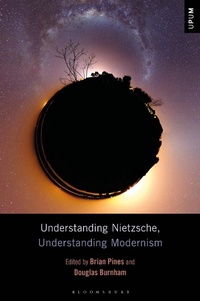
Understanding Nietzsche, Understanding Modernism
1st Edition
Published on 21. February 2019
344 pages
978-1-5013-3916-5 (ISBN)
Description

Friedrich Nietzsche believed his own work represented the dawning of a new historical era, and, despite the fact that he lived most of his sane life suffering in obscurity, it is not an exaggeration to say that his vision helped lay the foundations for modernism in style, substance and attitude. Nietzsche was himself devoted to the modern, for he reinterpreted every philosophy, every historical figure and event, every movement that came before him. This reconceptualization of the past through new, modern eyes opened up Nietzsche's thinking to exploring daring possibilities for the future. This prophetic boldness, which is so unique to his style, seduced the modernist generation across the spectrum. He was read by early Zionists as well as by Nazi racial theorists; by Thomas Mann and as well as by Salvador Dali. His influence stretched from psychoanalysis to anarchist politics.
Understanding Nietzsche, Understanding Modernism traces the effect of Nietzsche's thinking upon a diverse set of problems: from ontology, to politics, to musical and literary aesthetics. The first section of the volume is a series of essays, each exploring a major work of Nietzsche's, explaining its significance while contributing new interpretations of the text. The middle portion connects Nietzsche's thought to the various strands of modernism in which it reveals itself. The final section is a glossary of key terms that Nietzsche uses throughout his works. An excellent resource for any scholar attempting to conceptualize the foundations of modernism or the historical importance of Nietzsche, this volume seeks to outline the philosopher's works and their reception amongst the generations that immediately followed his passing.
Understanding Nietzsche, Understanding Modernism traces the effect of Nietzsche's thinking upon a diverse set of problems: from ontology, to politics, to musical and literary aesthetics. The first section of the volume is a series of essays, each exploring a major work of Nietzsche's, explaining its significance while contributing new interpretations of the text. The middle portion connects Nietzsche's thought to the various strands of modernism in which it reveals itself. The final section is a glossary of key terms that Nietzsche uses throughout his works. An excellent resource for any scholar attempting to conceptualize the foundations of modernism or the historical importance of Nietzsche, this volume seeks to outline the philosopher's works and their reception amongst the generations that immediately followed his passing.
Reviews / Votes
Perhaps no other intellectual figure has exerted such a powerful influence on philosophical, literary, and cultural modernism as Friedrich Nietzsche. This volume, edited by Brian Pines and Douglas Burnham, showcases essays that illuminate well the character of this influence and in all its audacious and dazzling glory. * Keith Ansell-Pearson, Professor of Philosophy, University of Warwick, UK * Approaching the massive profile of Nietzsche's work from a plethora of new, partly text-specific, and partly overarching angles, Brian Pines and Douglas Burnham have put together a volume that both suggests and initiates a complex conversation with our twenty-first-century present, an environment still far from being captured in a conceptually transparent and consensual way. They thus decisively leave behind a state of discussion that was locked in the sterile question of whether Nietzsche's thought had a place within 'modernity' as a straight line of progress. * Hans Ulrich Gumbrecht, Albert Guerard Professor in Literature, Emeritus, Stanford University, USA *More details
Series
Edition
1. Auflage
Language
English
Place of publication
New York
United States
Publishing group
Bloomsbury Publishing PLC (Digital)
Target group
Professional and scholarly
ISBN-13
978-1-5013-3916-5 (9781501339165)
Copyright in bibliographic data and cover images is held by Nielsen Book Services Limited or by the publishers or by their respective licensors: all rights reserved.
Schweitzer Classification
Other editions
Additional editions
Brian Pines | Douglas Burnham
Understanding Nietzsche, Understanding Modernism
Book
08/2020
Bloomsbury Academic USA
€60.84
Shipment within 15-20 days
Brian Pines | Douglas Burnham
Understanding Nietzsche, Understanding Modernism
Book
02/2019
Bloomsbury Academic USA
€193.13
Shipment within 15-20 days
Persons
Brian Pines teaches courses in the Philosophy of Religion at Monterey Peninsula College in California, USA.
Douglas Burnham is Professor of Philosophy and Head of the University Graduate School at Staffordshire University, UK. He has written extensively on Nietzsche, including Nietzsche's The Birth of Tragedy: A Reader's Guide (2010) and The Nietzsche Dictionary (2014), both published by Bloomsbury.
Douglas Burnham is Professor of Philosophy and Head of the University Graduate School at Staffordshire University, UK. He has written extensively on Nietzsche, including Nietzsche's The Birth of Tragedy: A Reader's Guide (2010) and The Nietzsche Dictionary (2014), both published by Bloomsbury.
Content
Series Preface
Notes on Contributors
Acknowledgments
List of Abbreviations
Introduction: The Heroism of Friedrich Nietzsche
Brian Pines (Independent Researcher, USA)
Part 1 Conceptualizing Nietzsche
1. Nonhuman Transcendence: Art and Non-Anthropocentrism in The Birth of Tragedy
Patricia Valderrama (Independent Researcher, USA)
2. Nietzsche's Dawn of Morality: Daybreak and the Modernist Impulse
Siobhan Lyons (Macquarie University, Australia)
3. Ticklish Truths: Poetry, Chance, and Laughter in The Gay Science
Scott J Cowan (University of California, Berkeley, USA)
4. "What do you matter?": Nietzsche's Zarathustra, Individualism and Modernism
Douglas Burnham (Staffordshire University, UK)
5. Der Antichrist: A Book for Barbarians, Slaves, and Cave Dwellers
Brian Pines (Independent Researcher, USA)
6. The Twilight of the Idols and the Dawn of Modernity
Karl Laderoute (University of Lethbridge, Canada)
Part 2 Nietzsche and Modernist Culture
7. Peacocks and Buffalos: Nietzsche and the Problems of Modern Spectacle
Yunus Tuncel (The New School, USA)
8. Not another Image of Torment: Nietzsche Eternal Recurrence and Theatricality
Jeremy Killian (Coastal Carolina University, USA)
9. The Birth of Dada, Out of the Spirit of Nihilism
Kaitlyn Creasy (Butler University, USA)
10. Nietzsche's Decadent Modernism
Adrian Switzer (University of Missouri-Kansas City, USA)
11. Nietzsche's Relation with Psychoanalysis: from Freud to Surrealist Modernism, Bataille, and Lacan
Tim Themi (University of Melbourne, Australia)
12. Nietzsche, Jung and Modern Militancy
Ritske Rensma (University of Utrecht, the Netherlands)
13. Streams of Becoming: Nietzsche, Physiology and Literary Modernism
Jill Marsden (University of Bolton, UK)
14. Death shall have no Dominion: Dylan Thomas, Friedrich Nietzsche and Tragic Joy
James Luchte (Independent Researcher, UK)
15. The Crisis of Philosophy in Modernity: From Perspectivism to Essayism
Sebastian Huesch (Aix-Marseille Universite, France)
16. Mann >Modernism< Nietzsche
Bill Mcdonald (University of Redlands, USA)
Part 3 Glossary
17. Dionysiac
Douglas Burnham (Staffordshire University, UK)
18. Decadence
Jack Brookes (Independent Researcher, USA)
19. From Zoroaster to Zarathustra
Matthew John Grabowski (Independent Researcher, USA)
20. Figuration and Imagery
Gill Zimmerman (Zeppelin University, Germany)
21. Danger
Scott J Cowan (University of Milwaukee, Wisconsin, USA) and Brian Pines (Independent Researcher, USA)
22. The Eternal Recurrence
Karl Laderoute (University of Lethbridge, Canada)
23. The Will to Power
Karl Laderoute (University of Lethbridge, Canada)
24. The Revaluation of all Values
Brian Pines (Independent Researcher, USA)
Index
Notes on Contributors
Acknowledgments
List of Abbreviations
Introduction: The Heroism of Friedrich Nietzsche
Brian Pines (Independent Researcher, USA)
Part 1 Conceptualizing Nietzsche
1. Nonhuman Transcendence: Art and Non-Anthropocentrism in The Birth of Tragedy
Patricia Valderrama (Independent Researcher, USA)
2. Nietzsche's Dawn of Morality: Daybreak and the Modernist Impulse
Siobhan Lyons (Macquarie University, Australia)
3. Ticklish Truths: Poetry, Chance, and Laughter in The Gay Science
Scott J Cowan (University of California, Berkeley, USA)
4. "What do you matter?": Nietzsche's Zarathustra, Individualism and Modernism
Douglas Burnham (Staffordshire University, UK)
5. Der Antichrist: A Book for Barbarians, Slaves, and Cave Dwellers
Brian Pines (Independent Researcher, USA)
6. The Twilight of the Idols and the Dawn of Modernity
Karl Laderoute (University of Lethbridge, Canada)
Part 2 Nietzsche and Modernist Culture
7. Peacocks and Buffalos: Nietzsche and the Problems of Modern Spectacle
Yunus Tuncel (The New School, USA)
8. Not another Image of Torment: Nietzsche Eternal Recurrence and Theatricality
Jeremy Killian (Coastal Carolina University, USA)
9. The Birth of Dada, Out of the Spirit of Nihilism
Kaitlyn Creasy (Butler University, USA)
10. Nietzsche's Decadent Modernism
Adrian Switzer (University of Missouri-Kansas City, USA)
11. Nietzsche's Relation with Psychoanalysis: from Freud to Surrealist Modernism, Bataille, and Lacan
Tim Themi (University of Melbourne, Australia)
12. Nietzsche, Jung and Modern Militancy
Ritske Rensma (University of Utrecht, the Netherlands)
13. Streams of Becoming: Nietzsche, Physiology and Literary Modernism
Jill Marsden (University of Bolton, UK)
14. Death shall have no Dominion: Dylan Thomas, Friedrich Nietzsche and Tragic Joy
James Luchte (Independent Researcher, UK)
15. The Crisis of Philosophy in Modernity: From Perspectivism to Essayism
Sebastian Huesch (Aix-Marseille Universite, France)
16. Mann >Modernism< Nietzsche
Bill Mcdonald (University of Redlands, USA)
Part 3 Glossary
17. Dionysiac
Douglas Burnham (Staffordshire University, UK)
18. Decadence
Jack Brookes (Independent Researcher, USA)
19. From Zoroaster to Zarathustra
Matthew John Grabowski (Independent Researcher, USA)
20. Figuration and Imagery
Gill Zimmerman (Zeppelin University, Germany)
21. Danger
Scott J Cowan (University of Milwaukee, Wisconsin, USA) and Brian Pines (Independent Researcher, USA)
22. The Eternal Recurrence
Karl Laderoute (University of Lethbridge, Canada)
23. The Will to Power
Karl Laderoute (University of Lethbridge, Canada)
24. The Revaluation of all Values
Brian Pines (Independent Researcher, USA)
Index
