

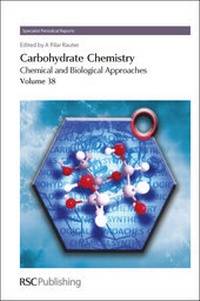
Carbohydrate Chemistry
Volume 38
1st Edition
Published on 31. August 2012
450 pages
978-1-84973-476-9 (ISBN)
Description

In this volume, glycochemistry and glycobiology have been combined to demonstrate the contribution of organic chemistry, modern analytics, biological and biochemical expertise to the increasingly important field of glycomincs. A polysaccharide immunomodulator with therapeutic implications, carbohydrate vaccines, new findings emphasizing the influence of carbohydrate decoration on the regulation of inflammatory response and new therapeutic approaches in the treatment of acute and chronic inflammatory diseases, recent approachesin the treatment of acute and chronic inflammatory diseases, recent progress on glycoengineering based on a glycosylation, and key aspects of the glycosylation changes associated with bladder cancer are amongst the subjects presented in this volume.
The contribution of glycochemistry to innovation in glycosciences is shown with chapters covering highly functionalized exo-glycals for the generation of molecular diversity in a chemoselective manner, imino sugar glycosidase inhibitors, carbasugars, multivalent glycoconjugates, including glycodendrimers, glyconanotubes, and glyconanoparticles, and their uses in medicinal chemistry, as well as artificial saccharide-based and saccharide functionalized gene delivery systems. Siderphores based on monosaccharides (which have proven effective for Gram-negative bacteria and mycobacteria), and the so-called smart materials, (which can modulate and control cell behaviour), complete the volume.
Volume 38 of Carbohydrate Chemistry - Chemical and Biological Apporaches contains contributions ranging from glycochemistry to glycobiology. This collection demonstrates in a meaningful way how the interdisciplinary approach of an international glyconetwork can advance the field of carbohydrate research in Europe and worldwide.
The contribution of glycochemistry to innovation in glycosciences is shown with chapters covering highly functionalized exo-glycals for the generation of molecular diversity in a chemoselective manner, imino sugar glycosidase inhibitors, carbasugars, multivalent glycoconjugates, including glycodendrimers, glyconanotubes, and glyconanoparticles, and their uses in medicinal chemistry, as well as artificial saccharide-based and saccharide functionalized gene delivery systems. Siderphores based on monosaccharides (which have proven effective for Gram-negative bacteria and mycobacteria), and the so-called smart materials, (which can modulate and control cell behaviour), complete the volume.
Volume 38 of Carbohydrate Chemistry - Chemical and Biological Apporaches contains contributions ranging from glycochemistry to glycobiology. This collection demonstrates in a meaningful way how the interdisciplinary approach of an international glyconetwork can advance the field of carbohydrate research in Europe and worldwide.
More details
Series
Edition
1. Auflage
Language
English
Place of publication
Cambridge
United Kingdom
Target group
Professional and scholarly
ISBN-13
978-1-84973-476-9 (9781849734769)
DOI
10.1039/9781849734769
Copyright in bibliographic data and cover images is held by Nielsen Book Services Limited or by the publishers or by their respective licensors: all rights reserved.
Schweitzer Classification
Other editions
Additional editions
Book
08/2012
Royal Society of Chemistry
€419.50
Shipment within 3-4 weeks
Persons
Amelia Pilar Rauter is Head of Carbohydrate Chemistry Group in the Chemistry and Biochemistry department of the University of Lisbon, Portugal. Thisbe K Lindhorst is Professor of Organic and Bioorganic Chemistry at the University of Kiel, Germany.
Content
1. Applications of glycobiology: biological and immunological effects of a chemically modified amylose-derivative;
2. Lipopolysaccharide structure and biological activity of Cystic fibrosis pathogens;
3. Synthesis of inner core lipopolysaccharide structures for the development of vaccines and antibiotics against Gram-negative bacterial infections;
4. Synthetic Glycopeptides in Vaccine Development and Antibody Epitope Mapping;
5. Posttranslational sialylation and its impact on leukocyte recruitment during inflammation;
6. Glycoengineering of protein-based therapeutics;
7. Exploring CDG diagnostic tools;
8. Bladder cancer: glycosylation insights;
9. Levansucrases of Pseudomonas bacteria: novel approaches for protein expression, assay of enzymes, fructooligosaccharides and heterooligofructans;
10. Recent advances on the application of NMR methods to study the conformation, dynamics and molecular recognition features of carbohydrates;
11. Glycosidase inhibitors: versatile tools in glycobiology;
12. An overview of key routes for the transformation of sugars into carbasugars and related compounds;
13. Multivalent glycoconjugates in Medicinal Chemistry;
14. Glycotransporters for gene delivery;
15. Furanose-based templates in the chemoselective generation of molecular diversity;
16. Synthesis of carbohydrate-based artificial siderophores and their biological applications;
17. Smart biomaterials: the contribution of glycoscience
2. Lipopolysaccharide structure and biological activity of Cystic fibrosis pathogens;
3. Synthesis of inner core lipopolysaccharide structures for the development of vaccines and antibiotics against Gram-negative bacterial infections;
4. Synthetic Glycopeptides in Vaccine Development and Antibody Epitope Mapping;
5. Posttranslational sialylation and its impact on leukocyte recruitment during inflammation;
6. Glycoengineering of protein-based therapeutics;
7. Exploring CDG diagnostic tools;
8. Bladder cancer: glycosylation insights;
9. Levansucrases of Pseudomonas bacteria: novel approaches for protein expression, assay of enzymes, fructooligosaccharides and heterooligofructans;
10. Recent advances on the application of NMR methods to study the conformation, dynamics and molecular recognition features of carbohydrates;
11. Glycosidase inhibitors: versatile tools in glycobiology;
12. An overview of key routes for the transformation of sugars into carbasugars and related compounds;
13. Multivalent glycoconjugates in Medicinal Chemistry;
14. Glycotransporters for gene delivery;
15. Furanose-based templates in the chemoselective generation of molecular diversity;
16. Synthesis of carbohydrate-based artificial siderophores and their biological applications;
17. Smart biomaterials: the contribution of glycoscience
