

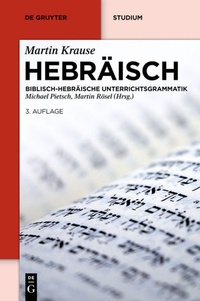
Hebräisch
Biblisch-Hebräische Unterrichtsgrammatik
1st Edition
Published on 29. May 2012
XVI, 376 pages
978-3-11-028846-9 (ISBN)
Description

Die Grammatik ist als begleitendes Lehrbuch für den Hebräischunterricht konzipiert. Es gewährt den Lehrenden einen möglichst großen Freiraum für die Auswahl und Anwendung unterschiedlicher Lehrmethoden. Den Studierenden wird durch eine übersichtliche Strukturierung des Unterrichtsstoffes das Lernen, Nachschlagen und Wiederholen erleichtert. Die Konzeption verzichtet auf eine Gliederung in Lektionen und geht bei der Erarbeitung des Stoffes von Anfang an von den biblischen Texten aus. Dem Werk sind ein umfangreicher Textteil sowie ein aufwendig gestaltetes Vokabular beigegeben.
More details
Series
Edition
3., erweiterte Aufl.
Language
German
Place of publication
Berlin/Boston
Germany
Target group
College/higher education
Wissenschaftler, Bibliotheken, Institute, Studenten, Dozenten
Edition type
Digital original
Illustrations
1 Abbildung
1 ill.
File size
2,65 MB
ISBN-13
978-3-11-028846-9 (9783110288469)
Schweitzer Classification
Other editions
New editions
E-Book
06/2010
2nd Edition
De Gruyter
€34.95
Available for download
Additional editions
Book
05/2012
1st Edition
De Gruyter
€29.95
Article exhausted; check for reprint
Persons
Martin Krause und Michael Pietsch, Universität Hamburg; Martin Rösel, Universität Rostock.
Content
1 - Vorwort [Seite 5]
2 - Inhaltsverzeichnis [Seite 7]
3 - Einführung [Seite 9]
4 - Abkürzungsverzeichnis [Seite 13]
5 - § 0 Allgemeines [Seite 17]
5.1 - 0.1 Zur Sprache [Seite 17]
5.2 - 0.2 Zur Schrift [Seite 19]
6 - § 1 Das Alphabet [Seite 21]
6.1 - 1.1 Schreibung und Aussprache [Seite 22]
6.2 - 1.2 Konsonantengruppen [Seite 24]
7 - § 2 Die Vokalbuchstaben [Seite 26]
8 - § 3 Die Punktation [Seite 27]
8.1 - 3.1 Die Vokalzeichen [Seite 28]
8.2 - 3.2 Die Aussprachezeichen [Seite 37]
8.3 - 3.3 Die Lese- und Betonungszeichen [Seite 42]
8.4 - 3.4 Textkritische Zeichen [Seite 49]
9 - § 4 Lautwandel und Vokalisation [Seite 52]
9.1 - 4.1 Konsonanten-Veränderungen [Seite 52]
9.2 - 4.2 Vokale - Entstehung und Wandel [Seite 56]
9.3 - 4.3 Vokal-Veränderungen [Seite 59]
9.4 - 4.4 Problem- und Sonderfälle [Seite 70]
10 - § 5 Text, Satz, Wort und Element [Seite 73]
10.1 - 5.0 Vorbemerkung [Seite 73]
10.2 - 5.1 Text [Seite 75]
10.3 - 5.2 Satz [Seite 80]
10.4 - 5.3 Wort und Element [Seite 93]
11 - § 6 Nomen und Pronomen [Seite 107]
11.1 - 6.1 Allgemeines [Seite 107]
11.2 - 6.2 Zur Herkunft der Nomina [Seite 108]
11.3 - 6.3 Kasus [Seite 110]
11.4 - 6.4 Constructus-Verbindung [Seite 111]
11.5 - 6.5 Zur Determination [Seite 114]
11.6 - 6.6 Numerus [Seite 117]
11.7 - 6.7 Genus [Seite 118]
11.8 - 6.8 Suffixe am Nomen [Seite 119]
11.9 - 6.9 Nomen-Analysehilfe [Seite 120]
12 - § 7 Nomina mit veränderlichen Vokalen, Nomina besonderer Bildung und Zahlwörter [Seite 122]
12.1 - 7.1 Segolata [Seite 122]
12.2 - 7.2 Nomina mit zwei veränderlichen Vokalen [Seite 125]
12.3 - 7.3 Nomina mit verdoppeltem Endkonsonanten [Seite 126]
12.4 - 7.4 Nomina mit einem veränderlichen Vokal in der vorletzten Silbe [Seite 127]
12.5 - 7.5 Nomina mit einem veränderlichen Vokal in der letzten oder einzigen Silbe [Seite 127]
12.6 - 7.6 Nomina besonderer Bildung [Seite 128]
12.7 - 7.7 Zahlwörter [Seite 130]
13 - § 8 Das Verb [Seite 133]
13.1 - 8.1 Allgemeines [Seite 133]
13.2 - 8.2 Präformativ- und Afformativkonjugationen [Seite 135]
13.3 - 8.3 Zum Gebrauch der Konjugationen [Seite 136]
13.4 - 8.4 Zu den Nominalformen [Seite 140]
13.5 - 8.5 Die Modi [Seite 144]
13.6 - 8.6 Die Stämme [Seite 146]
13.7 - 8.7 Die Suffixe am Verb [Seite 149]
14 - § 9 Verba laryngalis bzw. . [Seite 155]
14.1 - 9.1 Verba Primae (I) laryngalis [Seite 155]
14.2 - 9.2 Verba Mediae (II) laryngalis bzw. . [Seite 156]
14.3 - 9.3 Verba Tertiae (III) laryngalis [Seite 157]
14.4 - 9.4 Zusammenfassung [Seite 159]
15 - § 10 Das Schwache Verb [Seite 161]
15.1 - 10.1 Die Verbklassen und ihre Hauptkennzeichen [Seite 161]
15.2 - 10.2 Verba Primae (I) 'álæf = ... [Seite 164]
15.3 - 10.3 Verba Primae (I) nun = ... [Seite 166]
15.4 - 10.4 Verba Primae (I) yod/waw = ./... [Seite 170]
15.5 - 10.5 Verba Mediae (II) geminatae bzw. vocalis = . - Verben [Seite 176]
15.6 - 10.6 Verba Tertiae (III yod/he) infirmae = ... [Seite 186]
15.7 - 10.7 Verba Tertiae (III) 'álæf = ... [Seite 194]
15.8 - 10.8 Doppelt schwache Verben [Seite 195]
15.9 - 10.9 Faustregeln zum Erkennen schwacher Verbformen [Seite 200]
16 - Auflösungen zu den Formbestimmungen [Seite 205]
17 - Einführungs- und Basistexte [Seite 225]
18 - Vokabular [Seite 249]
19 - Sondervokabular [Seite 293]
19.1 - Partikeln in alphabetischer Reihenfolge [Seite 293]
19.2 - Sprachliche Wendungen [Seite 297]
20 - Alphabetisches Vokabular [Seite 313]
21 - Tabellen [Seite 349]
22 - Stichwortverzeichnis und Glossar [Seite 378]
2 - Inhaltsverzeichnis [Seite 7]
3 - Einführung [Seite 9]
4 - Abkürzungsverzeichnis [Seite 13]
5 - § 0 Allgemeines [Seite 17]
5.1 - 0.1 Zur Sprache [Seite 17]
5.2 - 0.2 Zur Schrift [Seite 19]
6 - § 1 Das Alphabet [Seite 21]
6.1 - 1.1 Schreibung und Aussprache [Seite 22]
6.2 - 1.2 Konsonantengruppen [Seite 24]
7 - § 2 Die Vokalbuchstaben [Seite 26]
8 - § 3 Die Punktation [Seite 27]
8.1 - 3.1 Die Vokalzeichen [Seite 28]
8.2 - 3.2 Die Aussprachezeichen [Seite 37]
8.3 - 3.3 Die Lese- und Betonungszeichen [Seite 42]
8.4 - 3.4 Textkritische Zeichen [Seite 49]
9 - § 4 Lautwandel und Vokalisation [Seite 52]
9.1 - 4.1 Konsonanten-Veränderungen [Seite 52]
9.2 - 4.2 Vokale - Entstehung und Wandel [Seite 56]
9.3 - 4.3 Vokal-Veränderungen [Seite 59]
9.4 - 4.4 Problem- und Sonderfälle [Seite 70]
10 - § 5 Text, Satz, Wort und Element [Seite 73]
10.1 - 5.0 Vorbemerkung [Seite 73]
10.2 - 5.1 Text [Seite 75]
10.3 - 5.2 Satz [Seite 80]
10.4 - 5.3 Wort und Element [Seite 93]
11 - § 6 Nomen und Pronomen [Seite 107]
11.1 - 6.1 Allgemeines [Seite 107]
11.2 - 6.2 Zur Herkunft der Nomina [Seite 108]
11.3 - 6.3 Kasus [Seite 110]
11.4 - 6.4 Constructus-Verbindung [Seite 111]
11.5 - 6.5 Zur Determination [Seite 114]
11.6 - 6.6 Numerus [Seite 117]
11.7 - 6.7 Genus [Seite 118]
11.8 - 6.8 Suffixe am Nomen [Seite 119]
11.9 - 6.9 Nomen-Analysehilfe [Seite 120]
12 - § 7 Nomina mit veränderlichen Vokalen, Nomina besonderer Bildung und Zahlwörter [Seite 122]
12.1 - 7.1 Segolata [Seite 122]
12.2 - 7.2 Nomina mit zwei veränderlichen Vokalen [Seite 125]
12.3 - 7.3 Nomina mit verdoppeltem Endkonsonanten [Seite 126]
12.4 - 7.4 Nomina mit einem veränderlichen Vokal in der vorletzten Silbe [Seite 127]
12.5 - 7.5 Nomina mit einem veränderlichen Vokal in der letzten oder einzigen Silbe [Seite 127]
12.6 - 7.6 Nomina besonderer Bildung [Seite 128]
12.7 - 7.7 Zahlwörter [Seite 130]
13 - § 8 Das Verb [Seite 133]
13.1 - 8.1 Allgemeines [Seite 133]
13.2 - 8.2 Präformativ- und Afformativkonjugationen [Seite 135]
13.3 - 8.3 Zum Gebrauch der Konjugationen [Seite 136]
13.4 - 8.4 Zu den Nominalformen [Seite 140]
13.5 - 8.5 Die Modi [Seite 144]
13.6 - 8.6 Die Stämme [Seite 146]
13.7 - 8.7 Die Suffixe am Verb [Seite 149]
14 - § 9 Verba laryngalis bzw. . [Seite 155]
14.1 - 9.1 Verba Primae (I) laryngalis [Seite 155]
14.2 - 9.2 Verba Mediae (II) laryngalis bzw. . [Seite 156]
14.3 - 9.3 Verba Tertiae (III) laryngalis [Seite 157]
14.4 - 9.4 Zusammenfassung [Seite 159]
15 - § 10 Das Schwache Verb [Seite 161]
15.1 - 10.1 Die Verbklassen und ihre Hauptkennzeichen [Seite 161]
15.2 - 10.2 Verba Primae (I) 'álæf = ... [Seite 164]
15.3 - 10.3 Verba Primae (I) nun = ... [Seite 166]
15.4 - 10.4 Verba Primae (I) yod/waw = ./... [Seite 170]
15.5 - 10.5 Verba Mediae (II) geminatae bzw. vocalis = . - Verben [Seite 176]
15.6 - 10.6 Verba Tertiae (III yod/he) infirmae = ... [Seite 186]
15.7 - 10.7 Verba Tertiae (III) 'álæf = ... [Seite 194]
15.8 - 10.8 Doppelt schwache Verben [Seite 195]
15.9 - 10.9 Faustregeln zum Erkennen schwacher Verbformen [Seite 200]
16 - Auflösungen zu den Formbestimmungen [Seite 205]
17 - Einführungs- und Basistexte [Seite 225]
18 - Vokabular [Seite 249]
19 - Sondervokabular [Seite 293]
19.1 - Partikeln in alphabetischer Reihenfolge [Seite 293]
19.2 - Sprachliche Wendungen [Seite 297]
20 - Alphabetisches Vokabular [Seite 313]
21 - Tabellen [Seite 349]
22 - Stichwortverzeichnis und Glossar [Seite 378]
