

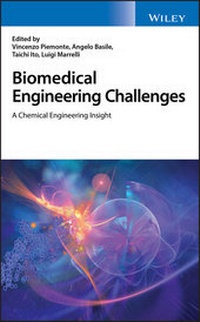
Biomedical Engineering Challenges
Description

In the past 50 years remarkable achievements have been advanced in the fields of biomedical and chemical engineering. With contributions from leading chemical engineers, Biomedical Engineering Challenges reviews the recent research and discovery that sits at the interface of engineering and biology. The authors explore the principles and practices that are applied to the ever-expanding array of such new areas as gene-therapy delivery, biosensor design, and the development of improved therapeutic compounds, imaging agents, and drug delivery vehicles.
Filled with illustrative case studies, this important resource examines such important work as methods of growing human cells and tissues outside the body in order to repair or replace damaged tissues. In addition, the text covers a range of topics including the challenges faced with developing artificial lungs, kidneys, and livers; advances in 3D cell culture systems; and chemical reaction methodologies for biomedical imagining analysis. This vital resource:
* Covers interdisciplinary research at the interface between chemical engineering, biology, and chemistry
* Provides a series of valuable case studies describing current themes in biomedical engineering
* Explores chemical engineering principles such as mass transfer, bioreactor technologies as applied to problems such as cell culture, tissue engineering, and biomedical imaging
Written from the point of view of chemical engineers, this authoritative guide offers a broad-ranging but concise overview of research at the interface of chemical engineering and biology.
More details
Other editions
Additional editions
Persons
Vincenzo Piemonte is Associate Professor at University Campus Biomedico of Rome, Faculty of Engineering, Italy. His research activity is primarily focused on the study of Transport phenomena in the artificial and bioartificial organs; new biotreatment technology platform for the elimination of toxic pollutants from water and soil.
Angelo Basile is Senior Researcher at the Institute on Membrane Technology of the Italian National Research Council (ITM-CNR), Rende, Italy. His research activity is primarily focused on membrane applications in several fields.
Taichi Ito is Associate Professor at the University of Tokyo, School of Medicine and Engineering, Japan. His research activity is primarily focused on the study of biomimetic membranes; anti-peritoneal barrier membranes; hemostats; artificial oxygen carriers; scaffolds for tissue engineering and hydrogels for drug delivery of anti-cancer drugs.
Luigi Marrelli is Full professor of Chemical Reactors and of Applied Thermodynamics at University Campus Biomedico of Rome, Faculty of Engineering, Italy. His main research activity deals with thermodynamics of fluid phase equilibria and with kinetics of chemical and biochemical reactions. Some of the results obtained have been applied in the field of artificial and bio-artificial organs.
Content
List of Contributors xi
Preface xiii
1 Introduction 1
Luigi Marrelli
References 6
2 Artificial Kidney: The New Challenge 9
Pasquale Berloco, Simone Novelli, and Renzo Pretagostini
2.1 Introduction 9
2.2 Kidney Transplantation Statistics 11
2.3 Transplantation Costs 12
2.4 Post?-Transplant Costs 12
2.5 Renal Replacement Devices 13
2.6 Implantable Artificial Kidney: Prototype Developments 16
2.7 Kidney Tissue Engineering 17
2.8 Next Steps 20
2.9 Conclusion 21
List of Acronyms 22
References 23
3 Current Status and New Challenges of the Artificial Liver 27
Hiroshi Mizumoto, Nana Shirakigawa, and Hiroyuki Ijima
3.1 Introduction 27
3.2 Non?-Biological Artificial Liver 28
3.2.1 Classification and Clinical Study 29
3.2.2 PE and HDF 29
3.2.2.1 High?-Volume Therapeutic PE 29
3.2.2.2 High?-Flow Dialysate Continuous HDF 29
3.2.2.3 PE with Online HDF 30
3.2.3 Blood Purification with Albumin Dialysis 30
3.2.3.1 Single-Pass Albumin Dialysis 30
3.2.3.2 Molecular Adsorbent Recirculating System 31
3.2.3.3 Fractionated Plasma Separation and Adsorption (Prometheus(TM)) 32
3.2.3.4 Hepa Wash 32
3.2.4 Selective Plasma Filtration Therapy 32
3.2.4.1 Biologic?-Detoxifilter/Plasma Filter 32
3.2.4.2 Selective Plasma?-Exchange Therapy 32
3.2.4.3 Plasma Filtration with Dialysis 33
3.2.5 Clinical Observations of Various Combinations 33
3.3 Bioartificial Liver 35
3.3.1 Bioartificial Liver Support System 35
3.3.2 Cell Source for BAL 37
3.4 New Stream for Artificial Liver 40
3.4.1 Tissue Engineering for Liver Construction 40
3.4.2 Whole Organ Engineering for the Transplantable Artificial Liver 41
3.5 Conclusion and Future Trends 43
List of Acronyms 44
References 45
4 A Chemical Engineering Perspective on Blood Oxygenators 55
Luisa Di Paola
4.1 Introduction 55
4.2 A Historical Note 57
4.3 Chemical Engineering Principles in Blood Oxygenators 60
4.4 Chemical Engineering Process Analogues of ECMO Systems 65
4.5 New Challenges 67
4.6 Conclusion 69
List of Symbols 69
References 69
5 Model Predictive Control for the Artificial Pancreas 75
M. Capocelli, L. De Santis, A. Maurizi, P. Pozzilli, and Vincenzo Piemonte
5.1 Introduction 75
5.2 Phenomenological Models 78
5.2.1 Background and Two?-Compartmental Models 78
5.2.2 Three?-Compartment Models 79
5.3 Black?-Block Approach 85
5.4 Conclusions 90
Nomenclature 91
References 92
6 Multiscale Synthetic Biology: From Molecules to Ecosystems 97
Luisa Di Paola and Alessandro Giuliani
6.1 Introduction: An Historical?-Epistemological Perspective 97
6.2 Applications 99
6.2.1 Protein Synthetic Biology 99
6.2.2 Tissue Engineering and Artificial Organs 108
6.2.3 Biotechnology and Ecology Applications 109
6.3 Conclusions 111
List of Symbols 112
References 112
7 Chemical Reaction Engineering Methodologies for Biomedical Imaging Analysis 119
Masahiro Kawahara
7.1 Introduction 119
7.2 Magnetic Resonance Imaging (MRI) 119
7.2.1 1H?-MRI 120
7.2.2 19F?-MRI 121
7.2.3 MRI using Magnetization Transfer 122
7.3 Positron Emission Tomography (PET) and Single Photon Emission Computed Tomography (SPECT) 123
7.3.1 PET 123
7.3.2 SPECT 125
7.4 Fluorescence Imaging 126
7.4.1 Fluorescent Proteins 126
7.4.2 Small Organic Fluorophores 128
7.5 Conclusion 131
List of Abbreviations 131
References 132
8 Noninvasive and Label?-Free Characterization of Cells for Tissue Engineering Purposes 145
Shunsuke Tomita
8.1 Introduction 145
8.2 Multivariate Analyses 146
8.2.1 Principal Component Analysis (PCA) 147
8.2.2 Linear Discriminant Analysis (LDA) 148
8.2.3 Hierarchical Clustering Analysis (HCA) 148
8.2.4 Other Multivariate Analyses 149
8.3 Vibrational Spectroscopic Features 149
8.3.1 Cell Characterization Based on Whole?-Cell Analysis by Raman Spectroscopy 151
8.3.2 Cell Characterization Based on Subcellular Analysis by Raman Spectroscopy 153
8.3.3 Raman?-Based Cell Characterization Toward Biomedical Applications 157
8.4 Morphological Features 160
8.4.1 Cell Characterization Based on Unstained Microscopic Images of Single Cells 160
8.4.2 Cell Characterization Based on Unstained Microscopic Images of Cell Populations 162
8.5 Secreted Molecule Features 165
8.5.1 Cell Characterization Based on Response Signatures 165
8.6 Conclusion and Outlook 167
List of Acronyms 168
References 168
9 TMS?-EEG: Methods and Challenges in the Analysis of Brain Connectivity 175
Elisa Kallioniemi, Mervi Könönen, and Sara Määttä
9.1 Introduction 175
9.1.1 Transcranial Magnetic Stimulation 175
9.1.2 Electroencephalography 176
9.1.3 Combined TMS and Electroencephalography 178
9.1.4 Data Acquisition 178
9.1.5 Artifacts and Their Prevention 180
9.2 Signal Processing Methods 181
9.2.1 Preprocessing 181
9.2.2 Connectivity Analysis Methods in TMS?-EEG 182
9.2.3 Time Domain Methods 183
9.2.4 Frequency Domain Methods 183
9.3 TMS?-EEG Applications in Studies of Connectivity 184
9.3.1 General Aspects 184
9.3.2 TMS?-Evoked Potentials (TEPs) 185
9.3.3 TMS?-Induced Oscillations 186
9.3.4 Clinical Perspectives 187
9.3.4.1 Alzheimer's Disease 187
9.3.4.2 Schizophrenia 188
9.3.4.3 Disorders of Consciousness 189
9.4 Conclusions and Future Trends 189
List of Acronyms 190
References 190
10 Thermal Treatments of Tumors: Principles and Methods 199
P. Saccomandi, E. Schena, M. Diana, J. Marescaux, and G. Costamagna
10.1 Introduction 199
10.2 Effects of Temperature on Living Tissue 199
10.2.1 Hyperthermal Tissue Destruction 200
10.2.2 Cold Temperature for Tissue Destruction 202
10.3 Physical Principles of Thermal Treatments 203
10.3.1 Hyperthermal Treatments 203
10.3.1.1 High?-Intensity Focused Ultrasound Ablation 203
10.3.1.2 Radiofrequency Ablation (RFA) 204
10.3.1.3 Microwave Ablation (MWA) 205
10.3.1.4 Laser Ablation (LA) 206
10.3.2 Cryoablation 207
10.4 Mathematical Modeling of Thermal Therapies 209
10.5 Temperature Monitoring During Thermal Treatments 211
10.5.1 Invasive (Contact) Thermometric Techniques 212
10.5.2 Non?-Invasive (Contactless) Thermometric Techniques 215
10.6 Conclusions 218
List of Acronyms 219
List of Symbols 219
References 220
Index 229
1
Introduction
Luigi Marrelli
Department of Engineering, University Campus Biomedico of Rome, Italy
Biomedical Engineering (BE) is a complex applied science that has applications in the fields of medicine concerning diagnosis, therapy and rehabilitation. As in all sectors of technology characterized by complexity, the capability of solving problems and developing new devices for therapy and rehabilitation or to devise innovative techniques for diagnosis and treatment of pathologies requires synergy of various forms of expertise. This need is especially felt in BE where the subject of research is the human body with its complex operations: molecular mechanisms, chemical and biochemical intracellular reactions, control systems, functions of human organs and so on.
Despite the complexity of the biological system that doctors and biomedical engineers must relate to, the elements of which the human body is composed and the functions they perform have a close affinity with the operations carried out in a chemical plant [1] where some raw materials undergo a series of transformations (reactions, separation operations, mass and heat exchanges, etc.) in order to obtain useful products and energy. In the last century, this analogy has led to striking graphic representations of the human body and of its functions as an industrial plant. It is worth mentioning the picture [2] named "Der Mensch als Industriepalast," a creation by Fritz Kahn, a German doctor, science writer and pioneer of information graphics.
Indeed, the human body is composed of a solid structure of support and a casing that encloses a series of organs with functions of mass exchange, synthesis and transformation, and are connected to each other by a network of ducts passed through by fluids. A pumping system equipped with valves has the task of ensuring blood circulation in the vascular circuit. The digestive system, through complex chemical reactions, transforms ingested raw materials into useful substances and energy needed for the operation of the whole system. The muscular system can be regarded as a set of actuators responsible for moving several parts of the body whereas the peripheral nervous system supplies sensory stimuli coming from the environment to the central nervous system that supervises the control and processing of various functions in a similar way to what happens in the system of sensors, monitoring and automatic control in an industrial plant.
Beyond this evocative picture, however, the analogy suggests the idea that many sophisticated techniques of chemical engineering (CE) could be usefully applied to face the technical challenges of BE. Since the beginnings of its history, CE has dealt with unit operations for the separation of mixtures, humidification of gases, chemical reactors, mass, heat and momentum transport, properties of materials and so on, on the basis of scientific fundamentals that are phase equilibria thermodynamics, chemical and biochemical kinetics, transport phenomena, automatic control and mathematical tools needed to better understand many complex phenomena and to represent the behavior of equipment through theoretical or semi-empirical models useful for the simulation and the optimization of the process. Therefore, CE can provide skills to the solution of problems that BE has to face and, vice versa by a cross-fertilization process, can receive from BE valuable input for the development of innovative methods and processes deduced from the behavior of biological systems.
The fields where CE can provide fundamental contributions are numerous and range from the macroscale of artificial and bio-artificial organs to the nanoscale of chemical-physical properties of materials of cell micro-reactors. Furthermore, also in the industrial biotechnology and pharmaceutical fields, CE points out its potentiality in the large-scale production of drugs and in sophisticated methods of targeted drug delivery.
Organs like the kidney, liver or heart-lung system have, among their functions, those of cleaning the blood from toxins or excesses of substances and of exchanging oxygen and carbon dioxide. When native organs are not able to correctly perform these functions for pathological reasons, an artificial kidney, artificial liver or lung oxygenation unit can substitute or at least support the damaged vital functions and allow the patient to stay alive indefinitely or, at least, long enough for the possibility of carrying out transplantation or revival of the native organ. Nowadays, ultrafiltration technology by selective membranes is an acquired asset in CE that can provide a key contribution to the development of increasingly effective and low-cost artificial organs. Some chapters of the present book are devoted to artificial organs and their behavior.
However, just separation operations and selective transport are not enough in many cases to mimic the functions of the native organ: complex organs such as the liver or pancreas carry out synthesis functions and biochemical reactions not currently reproducible by artificial systems. This need has led to the development of bio-artificial or hybrid organs in which the artificial component is coupled with a biological element; that is, a cell tissue able to perform functions not reproducible by a totally artificial system.
Therefore, hybrid organs are characterized by the presence of a kind of bioreactor where cells are kept in the optimal conditions for their survival and, in particular, to perform the functions of which they are responsible. The use of living cells as engineering materials is the basis of the so-called tissue engineering [3] where chemical engineering, material science and life sciences skills are involved. In the field of tissue engineering, the scaffold or support technology provides an important step in the growth and differentiation of the desired tissue. Even in this case, chemical reaction engineering and theory of reactors, the typical hallmarks of chemical engineers' activity, play a fundamental role in modeling, designing and properly running the bioreactor used for growing the new tissue.
A technology still under study is the development of an artificial pancreas. The purpose of this device is monitoring and properly releasing insulin, a hormone produced by ß cells of the pancreatic islets of Langerhans, that regulates the absorption of glucose from blood and its conversion into glycogen or triglycerides. If ß cells do not work, insulin can no longer be synthesized or secreted into the blood resulting in a high blood glucose concentration (type 1 diabetes). In order to solve this problem, chemical engineers are working on a computerized device able to monitor continuously blood glucose levels and to actuate micro-pumps for delivering insulin contained in a small reservoir. Chapter 5 of the present book is devoted to the artificial pancreas.
A well-known field of CE deals with scale-up techniques; that is, similar criteria needed to develop an industrial plant from information on the behavior of a pilot or bench scale plant. In the past, these techniques have already provided fundamental results for designing and running plants devoted to manufacturing products essential to human health. A typical early example is the process of producing penicillin on an industrial scale, suggested at the end of the World War II by Margaret Hutchinson Rousseau [4], a young chemical engineer. The industrial production process is based on an aerobic submerged fermentation. When penicillin was first made, the fungus Penicillum notatum was used and the yield of the process was about 1 mg/dm3. Nowadays, using a different mold species (Penicillum chrysogenum) and by improving fermentation operating conditions and downstream processing, such as extraction techniques, a yield of 50 g/dm3 is reached.
The opposite side of the coin is represented by scale-down techniques; that is, by the techniques to implement micro-devices [5, 6]. These devices are composed of a network of microchannels connecting micro-reactors, mixers, pumps and valves contained in vessels whose dimensions are in the order of micrometers with controlled volumes down to picolitres. At this scale, fluid transport in capillaries is laminar and the resulting very high surface area to volume ratio affects mass and heat transfer rates and catalytic reaction rates that depend on the interface area. Microfluidic devices (lab-on-chip assemblies) are increasingly used to carry out chemical and biochemical reactions for applications in the genomic field, immunoassays, sensors, drug discovery, new catalyst development and many other forthcoming uses.
Properties of materials is another field where CE together with material science can provide an important contribution to BE. Scaffolds used in tissue engineering have to be biocompatible and biodegradable [1] to allow their use in contact with biological material and their absorption by the surrounding tissues when scaffolds are used in implantable devices. In any case, the degradation rate of the support must be compatible with the rate of making new tissue and with the integration of this one with the surrounding tissues. A very important property of the scaffold is its porosity and the distribution of pore sizes to allow three-dimensional tissue growth. A fractal geometry approach has proven to be useful for the characterization of these properties.
The knowledge of rheological properties of biological fluids [7] is another essential requirement for a proper design of extracorporeal...
