

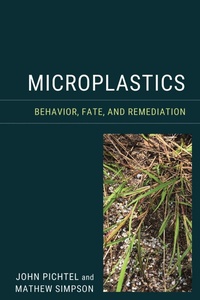
Microplastics
Behavior, Fate, and Remediation
1st Edition
Published on 8. March 2023
416 pages
979-8-89205-402-7 (ISBN)
Description

An in-depth look at what microplastics are, how prevalent they are, and what can be done about them for a professional and academic audience.
The first part of the book provides an overview of plastics types, how they are released to the environment, and how they interact with organisms. This part also provides a background for several salient aspects of microplastics hazards (e.g., attachment of toxic chemicals, toxicity to organisms). Special attention will be paid to how microplastics decompose in the environment (which is significant in terms of mobility of toxicity). Subsequent chapters address how to sample and identify microplastics. The second part of the book examines technologies for removal of microplastics from water, wastewater, and soil. Biological, chemical, and physical technologies are presented--technologies that can destroy minute plastics or convert them into benign products. Theory of operation, practical considerations, and possible environmental impacts of their use are discussed.
Key aspects include:
* technologies available for removal of microplastics from wastewater and surface water;
* how various toxins which are sorbed to microplastics adversely affect wastewater treatment processes;
* technologies at the pilot- and field stage for removal of microplastics from sediment; and
* the distribution of microplastics in the atmosphere.
Written by John Pichtel, author of the acclaimed Fundamentals of Site Remediation, and Mathew Simpson.
The first part of the book provides an overview of plastics types, how they are released to the environment, and how they interact with organisms. This part also provides a background for several salient aspects of microplastics hazards (e.g., attachment of toxic chemicals, toxicity to organisms). Special attention will be paid to how microplastics decompose in the environment (which is significant in terms of mobility of toxicity). Subsequent chapters address how to sample and identify microplastics. The second part of the book examines technologies for removal of microplastics from water, wastewater, and soil. Biological, chemical, and physical technologies are presented--technologies that can destroy minute plastics or convert them into benign products. Theory of operation, practical considerations, and possible environmental impacts of their use are discussed.
Key aspects include:
* technologies available for removal of microplastics from wastewater and surface water;
* how various toxins which are sorbed to microplastics adversely affect wastewater treatment processes;
* technologies at the pilot- and field stage for removal of microplastics from sediment; and
* the distribution of microplastics in the atmosphere.
Written by John Pichtel, author of the acclaimed Fundamentals of Site Remediation, and Mathew Simpson.
More details
Other editions
Additional editions
Book
03/2023
Bernan Press
€116.30
Shipment within 3-4 weeks
Persons
John Pichtel, PhD, is professor of environment, geology and natural resources at Ball State University in Muncie, Indiana, where he has been on the faculty since 1987. His primary research and professional activities have been in remediation of contaminated sites, management of hazardous materials, and environmental chemistry. Dr. Pichtel teaches courses in environmental site assessment, site remediation, emergency response to hazmat incidents, and management of solid and hazardous wastes.
Mathew Simpson is a PhD candidate in environment, geology and natural resources at Ball State University. His research focuses on the characterization and ecotoxicology of microplastics in freshwater ecosystems. Mr. Simpson has experience in water-quality studies developing water, sanitation, and hygiene programs and in phase 1 and 2 environmental site assessments.
Mathew Simpson is a PhD candidate in environment, geology and natural resources at Ball State University. His research focuses on the characterization and ecotoxicology of microplastics in freshwater ecosystems. Mr. Simpson has experience in water-quality studies developing water, sanitation, and hygiene programs and in phase 1 and 2 environmental site assessments.
