

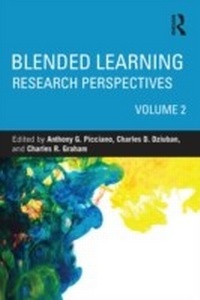
Blended Learning
Research Perspectives, Volume 2
1st Edition
Published on 7. November 2013
376 pages
978-1-134-74202-8 (ISBN)
Description

Blended learning, which combines the strength of face-to-face and technology-enhanced learning, is increasingly being seen as one of the most important vehicles for education reform today. Blended learning allows both teacher and learner access to radically increased possibilities for understanding how we transmit and receive information, how we interact with others in educational settings, how we build knowledge, and how we assess what we have taught or learned.
Blended Learning: Research Perspectives, Volume 2 provides readers with the most current, in-depth collection of research perspectives on this vital subject, addressing institutional issues, design and adoption issues, and learning issues, as well as an informed meditation on future trends and research in the field. As governments, foundations, schools, and colleges move forward with plans and investments for vast increases in blended learning environments, a new examination of the existing research on the topic is essential reading for all those involved in this educational transformation.
Blended Learning: Research Perspectives, Volume 2 provides readers with the most current, in-depth collection of research perspectives on this vital subject, addressing institutional issues, design and adoption issues, and learning issues, as well as an informed meditation on future trends and research in the field. As governments, foundations, schools, and colleges move forward with plans and investments for vast increases in blended learning environments, a new examination of the existing research on the topic is essential reading for all those involved in this educational transformation.
Reviews / Votes
"The research explored in this volume, spanning engagement, pedagogical practice, and learning outcomes will ensure that blended learning is well understood and of high quality." -Diana Oblinger, President and CEO, EDUCAUSE"The thoughtful essays in this book highlight the myriad choices as well as challenges that instructors and learners face each day as they utilize web-based tools." - Curt Bonk, President of CourseShare, LLC, and Professor of Instructional Systems Technology, Indiana University
"A most important contribution to the scholarship of teaching and learning with technology." - A. Frank Mayadas, President Emeritus, The Sloan Consortium
"Provides invaluable insights into the continued development of blended learning." -Dr. Randy Garrison, Professor, Faculty of Education, University of Calgary, and Co-author of Blended Learning in Higher Education
"Will serve as an important reference and guide in the years ahead." -Malcolm Brown, Director, EDUCAUSE Learning Initiative
"Describes the impact of different implementations of blended learning on the learner, the instructor, and the institution...laying the foundation for the 'new norm' in education." -Phillip D. Long, Professor, University of Queensland
"A diverse set of voices whose research areas and insightful conclusions will be of crucial help in designing blended learning for an increasingly blended world." -Gardner Campbell, Ph.D., Director, Center for Innovation in Learning, Virginia Tech
More details
Language
English
Place of publication
London
United Kingdom
Publishing group
Taylor & Francis Ltd
Target group
College/higher education
Illustrations
64 s/w Tabellen
64 Tables, black and white
File size
4,13 MB
ISBN-13
978-1-134-74202-8 (9781134742028)
Copyright in bibliographic data and cover images is held by Nielsen Book Services Limited or by the publishers or by their respective licensors: all rights reserved.
Schweitzer Classification
Other editions
Additional editions
Anthony G. Picciano | Charles D. Dziuban | Charles R. Graham
Blended Learning
Research Perspectives, Volume 2
Book
11/2013
1st Edition
Routledge
€207.30
Shipment within 15-20 days
Anthony G. Picciano | Charles D. Dziuban | Charles R. Graham
Blended Learning
Research Perspectives, Volume 2
Book
11/2013
1st Edition
Routledge
€75.80
Shipment within 15-20 days
Persons
Anthony G. Picciano is a Professor and Executive Officer in the PhD Program in Urban Education at the Graduate Center of the City University of New York (CUNY).
Charles D. Dziuban is Director of the Research Initiative for Teaching Effectiveness at the University of Central Florida.
Charles R. Graham is a Professor of Instructional Psychology & Technology at Brigham Young University. He also currently serves as the Associate Dean for the David O. McKay School of Education.
Charles D. Dziuban is Director of the Research Initiative for Teaching Effectiveness at the University of Central Florida.
Charles R. Graham is a Professor of Instructional Psychology & Technology at Brigham Young University. He also currently serves as the Associate Dean for the David O. McKay School of Education.
Content
Preface
Chapter 1: Introduction to Blended Learning: Research Perspectives II -Anthony Picciano
Section I: Blended Learning Models and Scale
Chapter 2: Developing Models and Theory for Blended Learning Research -Charles R. Graham, Curtis R. Henrie, Andrew S. Gibbons
Chapter 3: Scaling Blended Learning Evaluation Beyond the University -Patsy D. Moskal, Thomas B. Cavanagh
Chapter 4: Investigating Informal Blending at the University of Illinois Springfield -William Bloemer, Karen Swan
Section II: Evaluation
Chapter 5: SCOPe-ing out Interactions in Blended Environments -Susan J. Wegmann, Kelvin Thompson
Chapter 6: Student Perspectives on Blended Learning Through the Lens of Social, Teaching and Cognitive Presence -Janelle DeCarrico Voegele
Chapter 7: To be or not to be: Student and Faculty Perceptions of Engagement in a Blended Bachelor of Education Program -Norman Vaughan, Allana LeBlanc, Jim Zimmer, Irene Naested, Jodi Nickel, Stefan Sikora, Gladys Sterenberg, Kevin O'Connor
Chapter 8: A Five-Year Study of Sustaining Blended Learning Initiatives to Enhance Academic Engagement in Computer and Information Sciences Campus Courses -Laurie P. Dringus, Amon B. Seagull
Chapter 9: Trial and Error: Iteratively Improving Research on Blended Learning -D. Christopher Brooks, Jodi R. Sandfort
Chapter 10: Practice Makes Perfect? Assessing the Effectiveness of Online Practice Exams in Blended Learning Biology Classes -J. D. Walker, D. Christopher Brooks, Kyle Hammond, Bruce A. Fall, Richard W. Peifer, Rogene Schnell, Janet L. Schottel
Section III: Faculty Issues
Chapter 11: Implementation of Blended Learning for the Improvement of Student Learning -Jeannette E. Riley, Catherine Gardner, Sarah Cosgrove, Neal Olitsky, Caitlin O'Neil, Chan Du
Chapter 12: The Impact of Instructional Development and Training for Blended Teaching on Course Effectiveness -Tanya M. Joosten, Dylan Barth, Lindsey Harness, Nicole L. Weber
Chapter 13: Growing Your Own Blended Faculty: A Review of Current Faculty Development Practices in Traditional, Not-for-Profit Higher Education Institutions -Amy P. Ginsberg, Elizabeth Ciabocchi
Chapter 14: Choice Does Matter: Faculty Lessons Learned Teaching Adults in a Blended Program -Karen Skibba
Section IV: Studying Non-Traditional Learners
Chapter 15: Variation in Adult Learners' Experiences of Blended Learning in Higher Education -Paige McDonald
Chapter 16: Educating Warrior diplomats: Blended and Unconventional Learning for Special Operations Forces -Katherine M. Tyler, Kent C. Dolasky
Section V: International Perspectives
Chapter 17: "Are you working in the kitchen"? - European Perspectives on Blended Learning -Anders Norberg, Isa Jahnke
Chapter 18: Out of Hours: Online and Blended Learning Workload in Australian Universities -Yoni Ryan, Belinda Tynan, Andrea Lamont-Mills
Section VI: Blended Learning in K-12 Environments
Chapter 19: Blended Learning in the K-12 Education Sector -Heather Staker, Michael B. Horn
Chapter 20: Blended Learning in New York City: The iLearnNYC Program -Anne-Marie Hoxie, Jennifer Stillman, Kara Chesal
Chapter 21: Blending it All Together -Charles D. Dziuban, Joel L. Hartman, George L. Mehaffy
Chapter 1: Introduction to Blended Learning: Research Perspectives II -Anthony Picciano
Section I: Blended Learning Models and Scale
Chapter 2: Developing Models and Theory for Blended Learning Research -Charles R. Graham, Curtis R. Henrie, Andrew S. Gibbons
Chapter 3: Scaling Blended Learning Evaluation Beyond the University -Patsy D. Moskal, Thomas B. Cavanagh
Chapter 4: Investigating Informal Blending at the University of Illinois Springfield -William Bloemer, Karen Swan
Section II: Evaluation
Chapter 5: SCOPe-ing out Interactions in Blended Environments -Susan J. Wegmann, Kelvin Thompson
Chapter 6: Student Perspectives on Blended Learning Through the Lens of Social, Teaching and Cognitive Presence -Janelle DeCarrico Voegele
Chapter 7: To be or not to be: Student and Faculty Perceptions of Engagement in a Blended Bachelor of Education Program -Norman Vaughan, Allana LeBlanc, Jim Zimmer, Irene Naested, Jodi Nickel, Stefan Sikora, Gladys Sterenberg, Kevin O'Connor
Chapter 8: A Five-Year Study of Sustaining Blended Learning Initiatives to Enhance Academic Engagement in Computer and Information Sciences Campus Courses -Laurie P. Dringus, Amon B. Seagull
Chapter 9: Trial and Error: Iteratively Improving Research on Blended Learning -D. Christopher Brooks, Jodi R. Sandfort
Chapter 10: Practice Makes Perfect? Assessing the Effectiveness of Online Practice Exams in Blended Learning Biology Classes -J. D. Walker, D. Christopher Brooks, Kyle Hammond, Bruce A. Fall, Richard W. Peifer, Rogene Schnell, Janet L. Schottel
Section III: Faculty Issues
Chapter 11: Implementation of Blended Learning for the Improvement of Student Learning -Jeannette E. Riley, Catherine Gardner, Sarah Cosgrove, Neal Olitsky, Caitlin O'Neil, Chan Du
Chapter 12: The Impact of Instructional Development and Training for Blended Teaching on Course Effectiveness -Tanya M. Joosten, Dylan Barth, Lindsey Harness, Nicole L. Weber
Chapter 13: Growing Your Own Blended Faculty: A Review of Current Faculty Development Practices in Traditional, Not-for-Profit Higher Education Institutions -Amy P. Ginsberg, Elizabeth Ciabocchi
Chapter 14: Choice Does Matter: Faculty Lessons Learned Teaching Adults in a Blended Program -Karen Skibba
Section IV: Studying Non-Traditional Learners
Chapter 15: Variation in Adult Learners' Experiences of Blended Learning in Higher Education -Paige McDonald
Chapter 16: Educating Warrior diplomats: Blended and Unconventional Learning for Special Operations Forces -Katherine M. Tyler, Kent C. Dolasky
Section V: International Perspectives
Chapter 17: "Are you working in the kitchen"? - European Perspectives on Blended Learning -Anders Norberg, Isa Jahnke
Chapter 18: Out of Hours: Online and Blended Learning Workload in Australian Universities -Yoni Ryan, Belinda Tynan, Andrea Lamont-Mills
Section VI: Blended Learning in K-12 Environments
Chapter 19: Blended Learning in the K-12 Education Sector -Heather Staker, Michael B. Horn
Chapter 20: Blended Learning in New York City: The iLearnNYC Program -Anne-Marie Hoxie, Jennifer Stillman, Kara Chesal
Chapter 21: Blending it All Together -Charles D. Dziuban, Joel L. Hartman, George L. Mehaffy
