


The Impact of Technology on the Criminal Justice System
A Psychological Overview
1st Edition
Published on 26. February 2024
476 pages
978-1-003-84826-4 (ISBN)
Description

This comprehensive volume explores the impact of emerging technologies designed to fight crime and terrorism.
It first reviews the latest advances in detecting deception, interrogation, and crime scene investigation, before then transitioning to the role of technology in collecting and evaluating evidence from lay witnesses, police body cameras, and super-recognizers. Finally it explores the role of technology in the courtroom with a particular focus social media, citizen crime sleuths, virtual court, and child witnesses. It shines light on emerging issues, such as whether new norms have been created in the emergence of new technologies and how human behaviour has shifted in response. Based on a global range of contributions, this volume provides an overview of the technological explosion in the field of law enforcement and discusses its successes and failures in fighting crime.
It is valuable reading for advanced students in forensic or legal psychology and for practitioners, researchers, and scholars in law, criminal justice, and criminology.
It first reviews the latest advances in detecting deception, interrogation, and crime scene investigation, before then transitioning to the role of technology in collecting and evaluating evidence from lay witnesses, police body cameras, and super-recognizers. Finally it explores the role of technology in the courtroom with a particular focus social media, citizen crime sleuths, virtual court, and child witnesses. It shines light on emerging issues, such as whether new norms have been created in the emergence of new technologies and how human behaviour has shifted in response. Based on a global range of contributions, this volume provides an overview of the technological explosion in the field of law enforcement and discusses its successes and failures in fighting crime.
It is valuable reading for advanced students in forensic or legal psychology and for practitioners, researchers, and scholars in law, criminal justice, and criminology.
More details
Edition
1. Auflage
Language
English
Place of publication
London
United Kingdom
Publishing group
Taylor & Francis Ebooks
Target group
College/higher education
Professional and scholarly
Product notice
Reflowable
Illustrations
2 Tables, black and white; 3 Line drawings, black and white; 8 Halftones, black and white; 11 Illustrations, black and white
ISBN-13
978-1-003-84826-4 (9781003848264)
Copyright in bibliographic data and cover images is held by Nielsen Book Services Limited or by the publishers or by their respective licensors: all rights reserved.
Schweitzer Classification
Other editions
Additional editions

Emily Pica | David Ross | Joanna Pozzulo
The Impact of Technology on the Criminal Justice System
A Psychological Overview
Book
02/2024
1st Edition
Routledge
€107.40
Shipment within 10-20 days
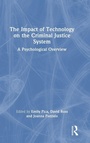
Emily Pica | David Ross | Joanna Pozzulo
The Impact of Technology on the Criminal Justice System
A Psychological Overview
Book
02/2024
1st Edition
Routledge
€208.00
Shipment within 10-20 days
Persons
Emily Pica is an associate professor in the Department of Psychological Science and Counseling, Austin Peay State University, USA. Her current research interests involve investigating ways in which we can improve eyewitness identification accuracy, as it is one of the leading causes of wrongful convictions. Additionally, she examines which factors may be more (or less) influential in jurors' decision making.
David Ross, is a UC Foundation Professor of Psychology at the University of Tennessee at Chattanooga. He studies factors that impact the accuracy of eyewitness memory in children and adults. He has helped exonerate the wrongly imprisoned based on errors in eyewitness identification and works to prevent wrongful convictions by training law enforcement on collecting identification evidence according to research-based guidelines.
Joanna Pozzulo is Chancellor's Professor in the Department of Psychology at Carleton University, Canada, Director of the Mental Health and Well-Being Research and Training Hub (MeWeRTH), and director of the Laboratory for Child Forensic Psychology. The primary goal of her research is to understand how memory in the context of witnessing crime differs across the lifespan, focusing on the young eyewitness.
David Ross, is a UC Foundation Professor of Psychology at the University of Tennessee at Chattanooga. He studies factors that impact the accuracy of eyewitness memory in children and adults. He has helped exonerate the wrongly imprisoned based on errors in eyewitness identification and works to prevent wrongful convictions by training law enforcement on collecting identification evidence according to research-based guidelines.
Joanna Pozzulo is Chancellor's Professor in the Department of Psychology at Carleton University, Canada, Director of the Mental Health and Well-Being Research and Training Hub (MeWeRTH), and director of the Laboratory for Child Forensic Psychology. The primary goal of her research is to understand how memory in the context of witnessing crime differs across the lifespan, focusing on the young eyewitness.
Content
Part 1: Advances in Detecting Deception, Interrogation, and Crime Scene Investigation 1. Do Automated and Virtual Interrogation and Deception Detection Systems Work? 2. The Emergence of Police Real-Time Crime Centers 3. Facial Recognition Software for Lead Generation and Lineup Construction 4. Advances and Future Prospects in Evolving Face Matching Technologies for Crime Prevention and Investigation 5. Insanity Evaluations in the Age of Neuroimaging 6. A Decade of Evolution in the Forensic Investigative Field: A South African Overview Part 2: Collecting and Evaluating Eyewitness Evidence from Lay Witnesses, Police Body Cameras, and Super-recognizers 7. Who are you looking at? Using eye tracking to understand eyewitness decision making 8. Understanding Eyewitness Testimony with Virtual Reality 9. Facial Composite Technology and Eyewitness Identification 10. Technological Advances in the Administration of Lineups 11. Using Body-Worn Camera Footage to Remember Use-of-Force Incidents 12. "Super-recognisers" and the Legal System Part 3: Technology in the Courtroom: Social Media, Citizen Crime Sleuths, Virtual Court, and Child Witnesses 13. Digitally-Networked Sleuthing: Online Platforms, Netizen Detectives, and Bottom-up Investigations 14. The Virtual Court: Implications for Eyewitnesses and Beyond 15. The Impact of Technology on Jurors' Decisions 16. The CSI Effect and its Impact on the Legal System, Policy, and Practice 17. Is Facial Recognition Software a Solution to the Negative Effects of Social Media on Eyewitness Testimony? 18. Developmental Psychology and Law in the Digital Era: Emerging Trends, Challenges, and Opportunities
