

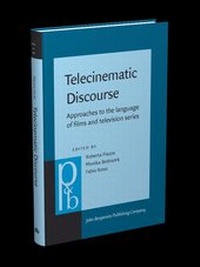
Telecinematic Discourse
Approaches to the language of films and television series
1st Edition
Published on 20. July 2011
XI, 315 pages
978-90-272-8515-7 (ISBN)
Description

This cutting-edge collection of articles provides the first organised reflection on the language of films and television series across British, American and Italian cultures. The volume suggests new directions for research and applications, and offers a variety of methodologies and perspectives on the complexities of "telecinematic" discourse - a hitherto virtually unexplored area of investigation in linguistics.
The papers share a common vision of the big and small screen: the belief that the discourses of film and television offer a re-presentation of our world. As such, telecinematic texts reorganise and recreate language (together with time and space) in their own way and with respect to specific socio-cultural conventions and media logic. The volume provides a multifaceted, yet coherent insight into the diegetic - as it revolves around narrative - as opposed to mimetic - as referring to other non-narrative and non-fictional genres - discourses of fictional media. The collection will be of interest to researchers, tutors and students in pragmatics, stylistics, discourse analysis, corpus linguistics, communication studies and related fields.
The papers share a common vision of the big and small screen: the belief that the discourses of film and television offer a re-presentation of our world. As such, telecinematic texts reorganise and recreate language (together with time and space) in their own way and with respect to specific socio-cultural conventions and media logic. The volume provides a multifaceted, yet coherent insight into the diegetic - as it revolves around narrative - as opposed to mimetic - as referring to other non-narrative and non-fictional genres - discourses of fictional media. The collection will be of interest to researchers, tutors and students in pragmatics, stylistics, discourse analysis, corpus linguistics, communication studies and related fields.
More details
Other editions
Additional editions
Roberta Piazza | Monika Bednarek | Fabio Rossi
Telecinematic Discourse
Approaches to the language of films and television series
Book
07/2011
John Benjamins Publishing Co
€100.70
Shipment within 10-15 days
Persons
Content
Contributors
Chapter 1. Introduction: Analysing telecinematic discourse
Roberta Piazza, Monika Bednarek and Fabio Rossi
Part I. Cinematic discourse
Chapter 2. Discourse analysis of film dialogues: Italian comedy between linguistic realism and pragmatic non-realism
Fabio Rossi
Chapter 3. Using film as linguistic specimen: Theoretical and practical issues
Michael Alvarez-Pereyre
Chapter 4. Multimodal realisations of mind style in Enduring Love
Rocio Montoro
Chapter 5. Pragmatic deviance in realist horror films: A look at films by Argento and Fincher
Roberta Piazza
Chapter 6. Emotion and empathy in Martin Scorsese's Goodfellas: A case study of the "funny guy" scene
Derek Bousfield and Dan McIntyre
Chapter 7. Quantifying the emotional tone of James Bond films: An application of the Dictionary of Affect in Language
Rose Ann Kozinski
Chapter 8. Structure and function in the generic staging of film trailers: A multimodal analysis
Carmen Daniela Maier
Part II. Televisual discourse
Chapter 9. "I don't know what they're saying half the time, but I'm hooked on the series": Incomprehensible dialogue and integrated multimodal characterisation in The Wire
Michael Toolan
Chapter 10. The stability of the televisual character: A corpus stylistic case study
Monika Bednarek
Chapter 11. Star Trek: Voyager's Seven of Nine: A case study of language and character in a televisual text
Susan Mandala
Chapter 12. Relationship impression formation: How viewers know people on the screen are friends
Claudia Bubel
Chapter 13. Genre, performance and Sex and the City
Brian Paltridge, Angela Thomas and Jianxin Liu
Chapter 14. Bumcivilian: Systemic aspects of humorous communication in comedies
Alexander Brock
References
List of tables
List of figures
Index of films and TV series
Index
Chapter 1. Introduction: Analysing telecinematic discourse
Roberta Piazza, Monika Bednarek and Fabio Rossi
Part I. Cinematic discourse
Chapter 2. Discourse analysis of film dialogues: Italian comedy between linguistic realism and pragmatic non-realism
Fabio Rossi
Chapter 3. Using film as linguistic specimen: Theoretical and practical issues
Michael Alvarez-Pereyre
Chapter 4. Multimodal realisations of mind style in Enduring Love
Rocio Montoro
Chapter 5. Pragmatic deviance in realist horror films: A look at films by Argento and Fincher
Roberta Piazza
Chapter 6. Emotion and empathy in Martin Scorsese's Goodfellas: A case study of the "funny guy" scene
Derek Bousfield and Dan McIntyre
Chapter 7. Quantifying the emotional tone of James Bond films: An application of the Dictionary of Affect in Language
Rose Ann Kozinski
Chapter 8. Structure and function in the generic staging of film trailers: A multimodal analysis
Carmen Daniela Maier
Part II. Televisual discourse
Chapter 9. "I don't know what they're saying half the time, but I'm hooked on the series": Incomprehensible dialogue and integrated multimodal characterisation in The Wire
Michael Toolan
Chapter 10. The stability of the televisual character: A corpus stylistic case study
Monika Bednarek
Chapter 11. Star Trek: Voyager's Seven of Nine: A case study of language and character in a televisual text
Susan Mandala
Chapter 12. Relationship impression formation: How viewers know people on the screen are friends
Claudia Bubel
Chapter 13. Genre, performance and Sex and the City
Brian Paltridge, Angela Thomas and Jianxin Liu
Chapter 14. Bumcivilian: Systemic aspects of humorous communication in comedies
Alexander Brock
References
List of tables
List of figures
Index of films and TV series
Index
