

Wealth and Climate Competitiveness
Description

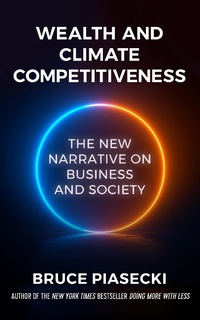
A new book from New York Timesbestselling author Bruce Piasecki, Wealth and Climate Competitivenessexplores how wealth, both private and corporate, can assist the path to climate competitiveness. Many of the central concerns of the twenty-first century-racial inequity, white supremacy movements, greater inclusiveness of diverse peoples-are rooted in facing and overcoming prejudices, both common and hidden. Another great challenge-the role of wealth and innovation in solving the climate crisis-is also riddled with disabling prejudices about how corporations work, and about the rights and needs of consumers and world citizens. In his twenty-first book, Wealth and Climate Competitiveness: The New Narrative on Business and Society,Bruce Piasecki argues that a set of five recurring prejudices, from 1900 to 2020, have held up real progress on climate action. Using the examples of select firms like Trane Technologies, and oil giants like the transforming bp, Piasecki sets out to define climate competitiveness as a path to solutions that decarbonize, decentralize, and digitize our near future. Climate competitiveness involves a responsible, steady, resolve-based focus on lessons derived from human behavior and social movements. By using Robin Hood as a narrative example, this book is designed to give you a deep understanding of the changed landscape we now face, and how you can resolve to embrace climate competitiveness to drive your personal success, and the corporate and institutional success of our world.
More details
Other editions
Additional editions
Content
- Intro
- Praise for Wealth and Climate Competitiveness
- Title Page
- Other Titles by Bruce Piasecki
- Contents
- Acknowledgments
- Introduction: What is Climate Competitiveness?
- Passage 1: On Money, People, and Rules
- Passage 2: The Five Prejudices
- Passage 3: The Distortions Prejudices Create
- Passage 4: Private Wealth and Corporate Sprawl
- Passage 5: The Rich as "Robber Barons"-A Lasting Nineteenth-Century Prejudice
- Passage 6: Why Trane Technologies is an Exception
- Passage 7: Speculative Capitalists as Birds of Prey -A Lasting Twentieth-Century Prejudice on Climate and Wealth
- Passage 8: Five Leading Firms Active on Climate Competitiveness
- Passage 9: There is a Paradox in Advancing History
- Passage 10: The Creative Force in Social Movements
- Passage 11: The Fabulous Birth of Leisure Class Capitalism
- Passage 12: Why bp is Transforming with Consequence to Many
- Passage 13: What is Social Response Capitalism
- Passage 14: A Few Tales that Defeat the Popular Prejudices
- Passage 15: Seeking a Balance Between Past Mistakes and Present Predicaments
- Passage 16: What Robin Hood Tells Us About Climate Competitiveness
- Passage 17: The New Narrative
- Passage 18: The Elephant in the Room
- Afterword: Humility as the Best Finale
- Postscript by Bill Novelli, Founder Porter Novelli, former CEO of AARP, author of Good Business
- Annotated Bibliography
- Copyright
