

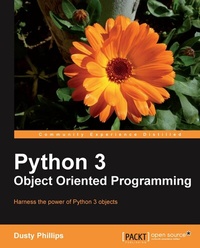
Python 3 Object Oriented Programming
Harness the power of Python 3 objects
Published on 13. January 2025
404 pages
978-1-84951-127-8 (ISBN)
Description

If you feel it'AEos time you learned object-oriented programming techniques, this is the perfect book for you. Clearly written with practical exercises, it'AEos the painless way to learn how to harness the power of OOP in Python.
Key Features
Learn how to do Object Oriented Programming in Python using this step-by-step tutorial
Design public interfaces using abstraction, encapsulation, and information hiding
Turn your designs into working software by studying the Python syntax
Raise, handle, define, and manipulate exceptions using special error objects
Implement Object Oriented Programming in Python using practical examples
Book DescriptionObject Oriented Programming is a very important aspect of modern programming languages. The basic principles of Object Oriented Programming are relatively easy to learn. Putting them together into working designs can be challenging.This book makes programming more of a pleasure than a chore using powerful Python 3 object-oriented features of Python 3. It clearly demonstrates the core OOP principles and how to correctly implement OOP in Python. Object Oriented Programming ranks high in importance among the many models Python supports. Yet, many programmers never bother learning the powerful features that make this language object oriented.The book teaches when and how OOP should be correctly applied. It emphasizes not only the simple syntax of OOP in Python, but also how to combine these objects into well-designed software.This book will introduce you to the terminology of the object-oriented paradigm, focusing on object-oriented design with step-by-step examples. It will take you from simple inheritance, one of the most useful tools in the object-oriented programmer's toolbox, all the way through to cooperative inheritance, one of the most complicated. You will be able to raise, handle, define, and manipulate exceptions.You will be able to integrate the object-oriented and the not-so-object-oriented aspects of Python. You will also be able to create maintainable applications by studying higher level design patterns. You'll learn the complexities of string and file manipulation, and how Python distinguishes between binary and textual data. Not one, but two very powerful automated testing systems will be introduced to you. You'll understand the joy of unit testing and just how easy they are to create. You'll even study higher level libraries such as database connectors and GUI toolkits and how they apply object-oriented principles.What you will learn
Implement objects in Python by creating classes and defining methods
Separate different objects into a taxonomy of classes, and describe the properties and behaviors of those objects via the class interface
Design public interfaces using abstraction, encapsulation, and information hiding
Turn your designs into working software by learning the Python syntax
Share implementation using inheritance
Add functionality to the existing classes and built-ins using inheritance
Share similar code between classes by abstracting it into a parent class
Raise, handle, define, and manipulate exceptions using special error objects
Understand when to use object-oriented features, and more importantly when not to
Learn what design patterns are, and why they are different in Python
Uncover the simplicity of unit testing and why it s so important in Python
Utilize common Python 3 modules, libraries, and frameworks
Who this book is forIf you're new to Object Oriented Programming techniques, or if you have basic Python skills and wish to learn in depth how and when to correctly apply Object Oriented Programming in Python, this is the book for you.If you are an object-oriented programmer for other languages, you too will find this book a useful introduction to Python, as it uses terminology you are already familiar with.Python 2 programmers seeking a leg up in the new world of Python 3 will also find the book beneficial, and you need not necessarily know Python 2.
Key Features
Learn how to do Object Oriented Programming in Python using this step-by-step tutorial
Design public interfaces using abstraction, encapsulation, and information hiding
Turn your designs into working software by studying the Python syntax
Raise, handle, define, and manipulate exceptions using special error objects
Implement Object Oriented Programming in Python using practical examples
Book DescriptionObject Oriented Programming is a very important aspect of modern programming languages. The basic principles of Object Oriented Programming are relatively easy to learn. Putting them together into working designs can be challenging.This book makes programming more of a pleasure than a chore using powerful Python 3 object-oriented features of Python 3. It clearly demonstrates the core OOP principles and how to correctly implement OOP in Python. Object Oriented Programming ranks high in importance among the many models Python supports. Yet, many programmers never bother learning the powerful features that make this language object oriented.The book teaches when and how OOP should be correctly applied. It emphasizes not only the simple syntax of OOP in Python, but also how to combine these objects into well-designed software.This book will introduce you to the terminology of the object-oriented paradigm, focusing on object-oriented design with step-by-step examples. It will take you from simple inheritance, one of the most useful tools in the object-oriented programmer's toolbox, all the way through to cooperative inheritance, one of the most complicated. You will be able to raise, handle, define, and manipulate exceptions.You will be able to integrate the object-oriented and the not-so-object-oriented aspects of Python. You will also be able to create maintainable applications by studying higher level design patterns. You'll learn the complexities of string and file manipulation, and how Python distinguishes between binary and textual data. Not one, but two very powerful automated testing systems will be introduced to you. You'll understand the joy of unit testing and just how easy they are to create. You'll even study higher level libraries such as database connectors and GUI toolkits and how they apply object-oriented principles.What you will learn
Implement objects in Python by creating classes and defining methods
Separate different objects into a taxonomy of classes, and describe the properties and behaviors of those objects via the class interface
Design public interfaces using abstraction, encapsulation, and information hiding
Turn your designs into working software by learning the Python syntax
Share implementation using inheritance
Add functionality to the existing classes and built-ins using inheritance
Share similar code between classes by abstracting it into a parent class
Raise, handle, define, and manipulate exceptions using special error objects
Understand when to use object-oriented features, and more importantly when not to
Learn what design patterns are, and why they are different in Python
Uncover the simplicity of unit testing and why it s so important in Python
Utilize common Python 3 modules, libraries, and frameworks
Who this book is forIf you're new to Object Oriented Programming techniques, or if you have basic Python skills and wish to learn in depth how and when to correctly apply Object Oriented Programming in Python, this is the book for you.If you are an object-oriented programmer for other languages, you too will find this book a useful introduction to Python, as it uses terminology you are already familiar with.Python 2 programmers seeking a leg up in the new world of Python 3 will also find the book beneficial, and you need not necessarily know Python 2.
All prices
More details
Edition
Digital original
Language
English
Place of publication
Birmingham
United Kingdom
Edition type
Digital original
File size
1,50 MB
ISBN-13
978-1-84951-127-8 (9781849511278)
Copyright in bibliographic data and cover images is held by Nielsen Book Services Limited or by the publishers or by their respective licensors: all rights reserved.
Schweitzer Classification
Other editions
Additional editions
Book
07/2010
Packt Publishing
€89.50
Shipment within 3-4 weeks
Person
Phillips Dusty :
Dusty Phillips is a Canadian software developer and an author currently living in New Brunswick. He has been active in the open-source community for 2 decades and has been programming in Python for nearly as long. He holds a master's degree in computer science and has worked for Facebook, the United Nations, and several startups.
Dusty Phillips is a Canadian software developer and an author currently living in New Brunswick. He has been active in the open-source community for 2 decades and has been programming in Python for nearly as long. He holds a master's degree in computer science and has worked for Facebook, the United Nations, and several startups.
Content
Table of Contents
Object-oriented Design
Objects in Python
When Objects are Alike
Expecting the Unexpected
When to Use Object-oriented Programming
Python Data Structures
Python Object-oriented Shortcuts
Python Design Patterns I
Python Design Patterns II
Files and Strings
Testing Object-oriented Programs
Common Python 3 Libraries
Object-oriented Design
Objects in Python
When Objects are Alike
Expecting the Unexpected
When to Use Object-oriented Programming
Python Data Structures
Python Object-oriented Shortcuts
Python Design Patterns I
Python Design Patterns II
Files and Strings
Testing Object-oriented Programs
Common Python 3 Libraries

