

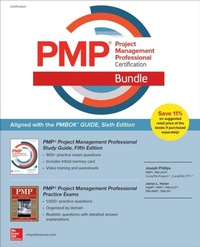
PMP Project Management Professional Certification Bundle
1st Edition
Published on 17. August 2018
1276 pages
978-1-260-44053-9 (ISBN)
Available for download
Description

Aligned with the PMBOK (R) Guide, Sixth Edition, this highly-effective, money-saving study bundle will prepare you for the the 2018 PMP exam This integrated study system gathers a wide variety of exam-focused resources to use in preparation for the latest version of the challenging PMP exam. Designed to help readers pass the exam with ease, PMP Project Management Certification Bundle includes two best-selling study guides along with electronic content. This bundle includes PMP Project Management Professional Study Guide, Fifth Edition-a proven, in-depth exam review that fully covers every objective and provides 600+ comprehensive practice exam questions and in-depth answer explanations. Also included is PMP Project Management Professional Practice Exams, which provides more than 1,000 rigorous practice exam questions logically organized by domain. Finally, the Total Tester test engine included with both books provides full-length, timed simulated exams or customized quizzes that target selected chapters or exam objectives.*Aligned with the PMBOK Guide, sixth edition*Exclusive content includes a full color laminated memory card for portable study, author videos, worksheets, and review *Written by experts in project management certification and training
More details
Content
- Cover
- Copyright Page
- Contents
- PMP Project Management Professional Study Guide, Fifth Edition
- Cover
- Title Page
- Copyright Page
- Dedication
- Contents at Aglance
- Contents
- Preface
- Acknowledgments
- Introduction
- Exam Readiness Checklist
- Part I Project Initiation
- 1 Introducing Project Management
- The PMBOK Guide, This Book, and the PMP Exam
- All About the PMBOK Guide
- All About This Book
- All About the PMP Exam
- Code of Ethics and Professional Conduct
- Defining What a Project Is-and Is Not
- Projects Create Unique Products, Services, or Results
- Projects Are Temporary
- Projects Change Things and Environments
- Projects Create Business Value
- Consider the Project Initiation Context
- Defining Project Management
- Tailoring the Project Process
- Examining Related Areas of Project Management
- Exploring Program Management
- Consider Project Portfolio Management
- Implementing Subprojects
- Projects vs. Operations
- Projects and Business Value
- Revving Through the Project Life Cycle
- Working with a Project Life Cycle
- Project Phase Deliverables
- Defining Project Management Data and Information
- Understanding Data and Information
- Reviewing a Project Business Case
- Creating a Project Benefits Management Plan
- Certification Summary
- Key Terms
- Two-Minute Drill
- Q&A Self Test
- Self Test Answers
- 2 Managing Projects in Different Environments
- Utilizing Enterprise Environmental Factors
- Reviewing Internal Enterprise Environmental Factors
- Reviewing External Enterprise Environmental Factors
- Leveraging Organizational Process Assets
- Recognizing Common Organizational Process Assets
- Utilizing Organizational Knowledge Repositories
- Working with Organizational Systems
- Examine Organizational Governance Frameworks
- Consider Portfolio, Programs, and Project Governance
- Relying on General Management Skills
- Considering Organizational Culture
- Completing Projects in Different Organizational Structures
- Working in an Organic, or a Simple, Structure
- Managing Projects in Functional Organizations
- Dealing with Multidivisional Structures
- Managing in Matrix Structures
- Serving in a Virtual Organization
- Managing Projects in Hybrid Organizations
- Operating Under Project Management Offices
- Certification Summary
- Key Terms
- Two-Minute Drill
- Q&A Self Test
- Self Test Answers
- 3 Serving as a Project Manager
- Defining the Project Management Role
- Leading the Project Team
- Communicating Project Information
- Negotiating Project Terms and Conditions
- Active Problem Solving
- Exploring the Project Manager Influence
- Influencing the Project
- Influencing the Organization
- Managing Social, Economic, and Environmental Project Influences
- Considering International Influences
- Reviewing Cultural and Industry Influences
- Building the Project Management Competencies
- Considering Your Skills and Competencies
- Exploring the PMI Talent Triangle
- Recognizing Politics in Project Management
- Leading and Managing the Project
- Exploring Leadership Styles
- Applying a Leadership Personality
- Performing Project Integration
- Examining Process-Level Integration
- Examining Cognitive-Level Integration
- Examining Context-Level Integration
- Certification Summary
- Key Terms
- Two-Minute Drill
- Q&A Self Test
- Self Test Answers
- Part II PMP Exam Essentials: Knowledge
- 4 Implementing Project Integration Management
- Exploring Project Integration Management
- Considering Trends for Project Integration Management
- Tailoring Project Integration Management
- Considering Project Integration Management in Agile Environments
- Developing the Project Charter
- Creating the Project Charter
- Examining Benefit Measurement Methods
- Examining Constrained Optimization Methods
- Developing the Project Management Plan
- Understanding the Project Plan's Purpose
- Preparing to Develop the Project Plan
- Applying Tools and Techniques for Project Plan Development
- Examining the Typical Project Plan
- Directing and Managing the Project Work
- Applying Corrective Action
- Considering Preventive Actions
- Managing Defect Repair
- Managing Change Requests
- Implementing Tools and Techniques for Project Execution
- Examining the Outputs of Project Plan Execution
- Managing Project Knowledge
- Preparing to Manage Knowledge
- Reviewing Knowledge Management Tools and Techniques
- Reviewing the Results of Knowledge Management
- Monitoring and Controlling the Project Work
- Preparing for Monitoring and Controlling Processes
- Creating Work Performance Information
- Reviewing the Final Inputs for Monitoring and Controlling
- Using Monitoring and Controlling Tools and Techniques
- Examining the Results of Project Work
- Performing Integrated Change Control
- Implementing Tools and Techniques for Integrated Change Control
- Deciding on Project Changes
- Revisiting Planning Processes
- Evaluating the Outputs of Integrated Change Control
- Closing the Project or Phase
- Preparing to Close the Project or Phase
- Closing the Project or Phase
- Reviewing the Results of Project Closure
- Certification Summary
- Key Terms
- Two-Minute Drill
- Q&A Self Test
- Self Test Answers
- 5 Managing the Project Scope
- Exploring Project Scope Management
- Tailoring Project Scope Management
- Planning Project Scope Management
- Project Scope vs. Product Scope
- Creating the Scope Management Plan
- Using Scope Planning Tools and Techniques
- Creating the Scope Management Plan
- Collecting and Eliciting Requirements
- Interview the Stakeholders
- Leading a Focus Group
- Relying on Surveys
- Leveraging Data Analysis
- Making Group Decisions on Requirements
- Using Group Decisions
- Hosting a Requirements Workshop
- Utilizing a Context Diagram
- Creating Prototypes
- Observing Stakeholders
- Benchmarking the Requirements
- Managing the Requirements
- Defining the Project Scope
- Examining the Inputs to Scope Definition
- Consulting with Experts
- Finding Alternatives
- Facilitating Meetings and Workshops
- Using Product Analysis
- Examining the Project Scope Statement
- Reviewing the Project Document Updates
- Creating the Work Breakdown Structure
- Using a Work Breakdown Structure Template
- Decomposing the Project Deliverables
- Defining the Scope Baseline
- Validating the Scope
- Examining the Inputs to Scope Validation
- Inspecting the Project Work
- Formally Accepting the Project Deliverables
- Controlling the Scope
- Examining the Inputs to Scope Control
- Considering the Results of Controlling Scope
- Certification Summary
- Key Terms
- Two-Minute Drill
- Q&A Self Test
- Self Test Answers
- 6 Introducing Project Schedule Management
- Exploring Project Schedule Management
- Tailoring Project Schedule Management
- Considerations for Agile and Adaptive Environments
- Creating the Schedule Management Plan
- Building the Schedule Management Plan
- Exploring the Schedule Management Plan
- Defining the Activities
- Getting to Work: Defining the Activities
- Relying on Templates
- Decomposing the Project Work Packages
- Using Rolling Wave Planning
- Using Planning Components
- Compiling the Activity List
- Documenting the Activity Attributes
- Finalizing Activity Definition
- Sequencing Activities
- Considering the Inputs to Activity Sequencing
- Creating Network Diagrams
- Using the Precedence Diagramming Method
- Determining the Activity Dependencies
- Considering Leads and Lags
- Utilizing Network Templates
- Examining the Sequencing Outputs
- Using a Project Network Diagram
- Updating the Project Documents
- Estimating Activity Durations
- Considering the Activity Duration Estimates Inputs
- Estimating the Project Work Considerations
- Considering Resource Availability
- Considering the Calendars
- Creating a Resource Breakdown Structure
- Updating the Activity List
- Applying Expert Judgment
- Creating an Analogy
- Applying Parametric Estimates
- Creating a Three-Point Estimate
- Creating a Bottom-Up Estimate
- Using the Delphi Technique
- Using the Fist-to-Five Approach
- Factoring in Reserve Time
- Evaluating the Estimates
- Developing the Schedule
- Revisiting the Project Network Diagram
- Relying on Activity Duration Estimates
- Evaluating the Project Constraints
- Reevaluating the Assumptions
- Evaluating the Risk Management Register
- Examining the Activity Attributes
- Defining the Project Timeline
- Performing Schedule Network Analysis
- Calculating Float in a PND
- Encountering Scheduling on the PMP Exam
- Optimizing Resource Utilization
- Applying Duration Compression
- Using a Project Simulation
- Using Project Management Software
- Relying on a Project Coding Structure
- Examining the Project Schedule
- Utilizing the Schedule Management Plan
- Updating the Resource Requirements
- Planning the Schedule in Agile Environments
- Reviewing the Results of Developing the Schedule
- Controlling the Schedule
- Managing the Inputs to Schedule Control
- Measuring Project Performance
- Examining the Schedule Variance
- Updating the Project Schedule
- Applying Corrective Action
- Writing the Lessons Learned
- Certification Summary
- Key Terms
- Two-Minute Drill
- Q&A Self Test
- Self Test Answers
- 7 Introducing Project Cost Management
- Exploring Project Cost Management
- Tailoring the Project Cost Management Approach
- Planning the Project Costs
- Considering the Cost Planning Inputs
- Creating the Cost Management Plan
- Estimating the Project Costs
- Considering the Cost Estimating Inputs
- Estimating Project Costs
- Using Analogous Estimating
- Using Parametric Estimating
- Using Bottom-Up Estimating
- Creating a Three-Point Cost Estimate
- Analyzing Data for Cost Estimating
- Using Computer Software
- Making Decisions in Cost Estimating
- Analyzing Cost Estimating Results
- Refining the Cost Estimates
- Considering the Supporting Detail
- Creating a Project Budget
- Developing the Project Budget
- Creating the Cost Baseline
- Establishing Project Funding Requirements
- Implementing Cost Control
- Considering Cost Control Inputs
- Managing Changes to Costs
- Measuring Project Performance
- Finding the Variances
- Calculating the Cost Performance Index
- Finding the Schedule Performance Index
- Preparing for the Estimate at Completion
- Calculating the To-Complete Performance Index
- Finding the Estimate to Complete
- Finding the Variance at Completion
- The Five EVM Formula Rules
- Additional Planning
- Using Computers
- Considering the Cost Control Results
- Creating Change Requests
- Updating Lessons Learned
- Certification Summary
- Key Terms
- Two-Minute Drill
- Q&A Self Test
- Self Test Answers
- 8 Introducing Project Quality Management
- Looking at the Big Quality Picture
- Accepting the Quality Management Approach
- Quality vs. Grade
- Implementing Quality Project Management
- Tailoring Quality in Project Management
- Considering Quality in Agile Environments
- Preparing for Quality
- Determining the Quality Policy
- Reviewing the Scope Baseline
- Consider Schedule and Costs
- Reviewing the Standards and Regulations
- Planning for Quality Management
- Applying Benchmarking Practices
- Brainstorming and Interviews
- Using a Benefit/Cost Analysis
- Considering the Cost of Quality
- Utilizing Multicriteria Decision Analysis Tools
- Representing Data in Quality Management Planning
- Planning for Testing and Inspection
- Creating the Quality Management Plan
- Identifying the Quality Metrics
- Managing Quality
- Preparing to Manage Quality
- Managing Quality for a Project
- Completing a Quality Audit
- Utilizing the Design for X Approach
- Implementing Problem-Solving Techniques
- Reviewing the Results of Managing Quality
- Implementing Control Quality
- Preparing for Quality Control
- Inspecting Results
- Data Representation Tools
- Creating a Control Chart
- Creating Pareto Diagrams
- Creating a Histogram
- Creating a Run Chart
- Creating a Scatter Diagram
- Completing a Statistical Sampling
- Revisiting Flowcharting
- Applying Trend Analysis
- The Results of Quality Control
- Certification Summary
- Key Terms
- Two-Minute Drill
- Q&A Self Test
- Self Test Answers
- 9 Introducing Project Resource Management
- Exploring Project Resource Management
- Reviewing Project Resource Management Foundations
- Exploring Trends in Managing Resources
- Preparing for Resource Planning
- Identifying the Resource Requirements
- Completing Organizational Planning
- Charting the Project Resources
- Creating the Role and Responsibility Assignments
- Relying on Templates
- Applying Resource Practices
- Relating to Organizational Theories
- Creating a Resource Management Plan
- Creating a Team Charter
- Estimating Project Activity Resources
- Preparing to Estimate Activity Resources
- Estimating the Resources for Activities
- Reviewing the Results of Estimating Activity Resources
- Acquiring the Project Resources
- Preparing to Acquire Project Resources
- Acquiring the Resources
- Negotiating for Resources
- Recruiting Project Team Members
- Working with Preassigned Staff
- Acquiring Human Resources
- Working with Virtual Teams
- Reviewing the Outputs of Acquiring Resources
- Developing the Project Team
- Preparing to Develop the Project Team
- Dealing with Team Locales
- Creating Team-Building Activities
- Naturally Developing Project Teams
- Relying on General Management Skills
- Rewarding the Project Team
- Training the Project Team
- Completing Project Performance Appraisals
- Examining the Results of Team Development
- Managing the Project Team
- Dealing with Team Disagreements
- Controlling Resources
- Preparing to Control Resources
- Reviewing the Tools and Techniques to Control Resources
- Reviewing the Results of Controlling Resources
- Certification Summary
- Key Terms
- Two-Minute Drill
- Q&A Self Test
- Self Test Answers
- 10 Introducing Project Communications Management
- Communicating in Projects
- Consider Communication Activities
- Tailoring Communications in Project Management
- Communicating in Agile Environments
- Planning Communications
- Considering the Project Management Plan and Charter
- Leveraging Enterprise Environmental Factors
- Identifying Communication Requirements
- Exploring Communication Technologies
- Examining Communication Skills
- Creating Successful Communications
- Creating the Communications Management Plan
- Managing Project Communications
- Exploring Communication Technology and Methods
- Distributing Information
- Examining the Results of Communication Management
- Monitoring Project Communications
- Preparing for Communications Monitoring
- Reviewing the Monitoring Communications Tools and Techniques
- Reporting Project Performance
- Reviewing Project Performance
- Completing Trend Analysis
- Examining the Results of Performance Reporting
- Certification Summary
- Key Terms
- Two-Minute Drill
- Q&A Self Test
- Self Test Answers
- 11 Introducing Project Risk Management
- Building a Strong Risk Understanding
- Reviewing Project Risk Considerations
- Tailoring Risk Management in Projects
- Planning for Risk Management
- Examining Stakeholder Tolerance
- Relying on Risk Management Policies
- Creating the Risk Management Plan
- Examining the Risk Management Plan
- Creating Risk Categories
- Using a Risk Management Plan Template
- Identifying Risks
- Preparing for Risk Identification
- Identifying the Project Risks
- Reviewing Project Documents
- Testing the Assumptions
- Brainstorming the Project
- Using Checklists
- Identifying Risks Through Interviews
- Analyzing SWOT
- Utilizing Diagramming Techniques
- Using Prompt Lists
- Creating a Risk Register
- Creating a Risk Report
- Using Qualitative Risk Analysis
- Preparing for Qualitative Risk Analysis
- Completing Qualitative Analysis
- Applying Probability and Impact
- Creating a Probability-Impact Matrix
- Building a Hierarchical Chart
- Examining the Results of Qualitative Risk Analysis
- Preparing for Quantitative Risk Analysis
- Considering the Inputs for Quantitative Analysis
- Interviewing Stakeholders and Experts
- Applying Sensitivity Analysis
- Finding the Expected Monetary Value
- Using a Decision Tree
- Using a Project Simulation
- Examining the Results of Quantitative Risk Analysis
- Planning for Risk Responses
- Preparing for Risk Response
- Creating Risk Responses
- Escalating the Risk Event
- Avoiding the Negative Risk and Threats
- Transferring the Negative Risk
- Mitigating the Negative Risk
- Managing the Positive Risks and Opportunities
- Accepting a Risk
- Creating a Project Contingency Response
- Examining the Results of Risk Response Planning
- Working with Residual Risks
- Accounting for Secondary Risks
- Creating Contracts for Risk Response
- Justifying Risk Reduction
- Updating the Project Plan
- Implementing Risk Responses
- Preparing to Implement Risk Responses
- Reviewing the Tools and Techniques for Implementing Risk Responses
- Examining the Results of Implementing Risk Responses
- Monitoring Risks
- Preparing for Risk Monitoring
- Completing Risk Monitoring
- Completing Risk Response Audits
- Completing Periodic Risk Reviews
- Using Earned Value Analysis
- Measuring Technical Performance
- Completing Additional Risk Planning
- Examining the Results of Risk Monitoring
- Certification Summary
- Key Terms
- Two-Minute Drill
- Q&A Self Test
- Self Test Answers
- 12 Introducing Project Procurement Management
- Building the Project Procurement Foundation
- Considering Procurement Practices for Projects
- Tailoring the Procurement Processes
- Planning for Purchases
- Evaluating the Market Conditions
- Referring to the Scope Baseline
- Relying on the Project Management Plan
- Teaming with Other Organizations
- Planning for the Project Requirements
- Completing Procurement Planning
- Determining to Make or Buy
- Using Expert Judgment
- Determining the Contract Type
- Summary of Contract Types
- Using the Statement of Work
- Determining the Source Selection Criteria
- Reviewing the Procurement Management Plan
- Creating the Procurement Documents
- Conducting Procurements
- Procuring Goods and Services
- Examining the Results of Contracting
- Selecting the Seller
- Preparing for Source Selection
- Completing the Seller Selection Process
- Examining the Results of Conducting Procurement
- Controlling Procurements
- Preparing for Contract Administration
- Completing Contract Administration
- Inspecting and Auditing the Procurement Process
- Reviewing the Results of Procurement Control
- Certification Summary
- Key Terms
- Two-Minute Drill
- Q&A Self Test
- Self Test Answers
- 13 Introducing Project Stakeholder Management
- Building a Strong Stakeholder Management Foundation
- Leading Stakeholder Management
- Tailoring the Stakeholder Management Processes
- Identifying the Project Stakeholders
- Preparing for Stakeholder Identification
- Performing Stakeholder Identification
- Visualizing Stakeholder Influence
- Reviewing the Results of Stakeholder Identification
- Planning for Stakeholder Management
- Organizing the Planning
- Analyzing Stakeholder Engagement
- Building the Stakeholder Management Plan
- Managing Stakeholder Engagement
- Engaging Stakeholders
- Examining Results of Stakeholder Engagement
- Monitoring Stakeholder Engagement
- Taking Action for Stakeholder Engagement
- Completing Stakeholder Engagement Monitoring
- Reviewing the Results of Monitoring Stakeholder Engagement
- Certification Summary
- Key Terms
- Two-Minute Drill
- Q&A Self Test
- Self Test Answers
- 14 The PMI Code of Ethics and Professional Conduct
- Responsibilities to the Profession
- Complying with Rules and Policies
- Applying Honesty to the Profession
- Advancing the Profession
- Responsibilities to the Customer and to the Public
- Enforcing Project Management Truth and Honesty
- Eliminating Inappropriate Actions
- Respecting Others
- Certification Summary
- Key Terms
- Two-Minute Drill
- Q&A Self Test
- Self Test Answers
- Part III Appendices
- A Critical Exam Information
- Exam Test-Passing Tips
- Days Before the Exam
- Practice the Testing Process
- Testing Tips
- Answer Every Question-Once
- Use the Process of Elimination
- Everything You Must Know
- The 49 Project Management Processes
- Magic PMP Formulas
- Earned Value Management Formulas
- Quick PMP Facts
- B About the Download
- System Requirements
- Installing and Running Total Tester
- Total Tester Premium Practice Exam Softwarester
- McGraw-Hill Professional Media Center Download
- Video Training from the Author
- Technical Support
- Total Seminars Technical Support
- McGraw-Hill Education Content Support
- Glossary
- Index
- PMP Project Management Professional Practice Exams
- Cover
- Title Page
- Copyright Page
- Dedication
- Contents
- Acknowledgments
- Introduction
- Chapter 1 PMP Foundations
- Questions
- Quick Answer Key
- Answers
- Chapter 2 The Initiating Domain
- Questions
- Quick Answer Key
- Answers
- Chapter 3 The Planning Domain
- Questions
- Quick Answer Key
- Answers
- Chapter 4 The Executing Domain
- Questions
- Quick Answer Key
- Answers
- Chapter 5 The Monitoring and Controlling Domain
- Questions
- Quick Answer Key
- Answers
- Chapter 6 The Closing Domain
- Questions
- Quick Answer Key
- Answers
- Chapter 7 Project Management Institute (PMI) Code of Ethics and Professional Conduct
- Questions
- Quick Answer Key
- Answers
- Appendix A Pre-Assessment Test
- Instructions
- Questions
- Quick Answer Key
- Answers
- Analyzing Your Results
- Appendix B About the Online Content
- System Requirements
- Single User License Terms and Conditions
- Total Tester Online
- Technical Support

