

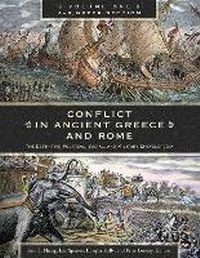
Conflict in Ancient Greece and Rome
The Definitive Political, Social, and Military Encyclopedia [3 Volumes]
1st Edition
Published on 27. June 2016
1504 pages
978-1-61069-020-1 (ISBN)
Available for download
Description

The complex role warfare played in ancient Greek and Roman civilizations is examined through coverage of key wars and battles; important leaders, armies, organizations, and weapons; and other noteworthy aspects of conflict.
Conflict in Ancient Greece and Rome: The Definitive Political, Social, and Military Encyclopedia is an outstandingly comprehensive reference work on its subject. Covering wars, battles, places, individuals, and themes, this thoroughly cross-referenced three-volume set provides essential support to any student or general reader investigating ancient Greek history and conflicts as well as the social and political institutions of the Roman Republic and Empire.
The set covers ancient Greek history from archaic times to the Roman conquest and ancient Roman history from early Rome to the fall of the Western Roman Empire in 476 CE. It features a general foreword, prefaces to both sections on Greek history and Roman history, and maps and chronologies of events that precede each entry section. Each section contains alphabetically ordered articles-including ones addressing topics not traditionally considered part of military history, such as "noncombatants" and "war and gender"-followed by cross-references to related articles and suggested further reading. Also included are glossaries of Greek and Latin terms, topically organized bibliographies, and selected primary documents in translation.
Conflict in Ancient Greece and Rome: The Definitive Political, Social, and Military Encyclopedia is an outstandingly comprehensive reference work on its subject. Covering wars, battles, places, individuals, and themes, this thoroughly cross-referenced three-volume set provides essential support to any student or general reader investigating ancient Greek history and conflicts as well as the social and political institutions of the Roman Republic and Empire.
The set covers ancient Greek history from archaic times to the Roman conquest and ancient Roman history from early Rome to the fall of the Western Roman Empire in 476 CE. It features a general foreword, prefaces to both sections on Greek history and Roman history, and maps and chronologies of events that precede each entry section. Each section contains alphabetically ordered articles-including ones addressing topics not traditionally considered part of military history, such as "noncombatants" and "war and gender"-followed by cross-references to related articles and suggested further reading. Also included are glossaries of Greek and Latin terms, topically organized bibliographies, and selected primary documents in translation.
More details
Language
English
Place of publication
United States
Publishing group
Bloomsbury Publishing Plc
Target group
Interest Age: From 7 to 17 years
Illustrations
98 bw illus
ISBN-13
978-1-61069-020-1 (9781610690201)
Copyright in bibliographic data and cover images is held by Nielsen Book Services Limited or by the publishers or by their respective licensors: all rights reserved.
Schweitzer Classification
Other editions
Additional editions
Sara Elise Phang | Iain Spence Ph.D. | Douglas Kelly Ph.D.
Conflict in Ancient Greece and Rome
The Definitive Political, Social, and Military Encyclopedia [3 volumes]
Book
06/2016
ABC-CLIO
€365.50
Shipment within 3-4 weeks
Persons
Sara E. Phang, PhD, is an independent scholar who is currently employed as a librarian.
Iain Spence, CSC, RFD, PhD, prior to retirement was head of the School of Classics, History, Philosophy and Religion at the University of New England, Australia.
Douglas Kelly, PhD, taught in classics and ancient history for many years at Macquarie University in Sydney and at the Australian National University in Canberra, Australia.
Peter Londey, PhD, is a lecturer in the Centre for Classical Studies at the Australian National University, Canberra, Australia.
Iain Spence, CSC, RFD, PhD, prior to retirement was head of the School of Classics, History, Philosophy and Religion at the University of New England, Australia.
Douglas Kelly, PhD, taught in classics and ancient history for many years at Macquarie University in Sydney and at the Australian National University in Canberra, Australia.
Peter Londey, PhD, is a lecturer in the Centre for Classical Studies at the Australian National University, Canberra, Australia.
Content
Volume 1
Preface,
Acknowledgments,
Part 1: Conflict in Ancient Greece,
Introduction: Conflict in Ancient Greece,
Reader Information and Abbreviations,
Chronology of Conflict in Ancient Greece,
Guide to Related Topics: Greek Section,
Greek Entries:
Abdera,
Abydus,
Acarnania, Acarnanians,
Achaea, Achaeans,
Achaea Phthiotis,
Achaean League,
Achaean League, Wars of,
Achaean War (146),
Achaeus (ca. 250-213),
Acragas (Agrigentum),
Acrotatus I (Active 330s),
Acrotatus II (d. 262),
Aegina, Aeginetans,
Aegospotami, Battle of (405),
Aelian (Aelianus Tacticus) (Active ca. 100 ce),
Aeneas Tacticus (Active ca. 350),
Aeschines (ca. 390-322),
Aeschylus (525-456),
Aetolia, Aetolian League,
Agathocles (ca. 361-289),
Agesilaus II (Reigned ca. 401-ca. 360),
Agesipolis I (d. 381),
Agis II (ca. 460-ca. 399),
Agis III (d. 331),
Agis III, Revolt against Macedon (331),
Agis IV (ca. 265-241),
Agoge,
Ai Khanoum,
Alalia, Battle of (ca. 540),
Alcaeus (b. ca. 620),
Alcetas (ca. 420-ca. 360),
Alcibiades (ca. 450-404),
Alcidas (Active ca. 428/7),
Alcmaeonidae,
Alcohol,
Alexander I Balas (b. ca. 173; Reigned 150-145),
Alexander I of Epirus (370-331),
Alexander I of Macedon (d. ca. 452),
Alexander II of Macedon (d. 368),
Alexander II Zabinas (Reigned 128-122),
Alexander III (the Great) of Macedon (356-323),
Alexander III (the Great) of Macedon, Bactrian Campaign (330-328/7),
Alexander III (the Great) of Macedon, Destruction of Thebes (335),
Alexander III (the Great) of Macedon, Indian Campaign (327-325),
Alexander III (the Great) of Macedon, Invasion of Persian Empire (334-327),
Alexander III (the Great) of Macedon, Thrace and Illyria Campaigns (336),
Alexander of Pherae (d. ca. 357),
Alexandria, Egypt,
Alliances/Allies (Symmachiai/Symmachoi),
Alyattes, King of Lydia (ca. 610-560),
Amazons,
Ambracia and Amphilochia,
Amompharetus (d. 479?),
Amphipolis,
Amphipolis, Campaign of (424-422),
Andocides (ca. 440-ca. 391),
Andrapodismos,
Androtion (ca. 410-340),
Animals in War,
Antalcidas (d. ca. 367),
Antigonus I Monophthalmus (382-301),
Antigonus II Gonatas (ca. 320-239),
Antigonus III Doson (ca. 263-221),
Antiochus I Soter (ca. 324-261),
Antiochus III (the Great) (d. 187),
Antiochus IV Epiphanes (ca. 215-164),
Antiochus VII Sidetes (b. ca. 159; Reigned 139-129),
Antiochus Hierax (ca. 260-226),
Antipater (399/8-319),
Antiphon (ca. 480-410),
Aornus, Siege of (327/6),
Appian of Alexandria (ca. 95-165 ce),
Aratus of Sicyon (271-213),
Arbitration,
Arcadia, Arcadians,
Arcadian League,
Archelaus (d. 399),
Archers (Toxotai),
Archidamus II (d. ca. 427/6),
Archidamus III (ca. 400-338),
Archilochus (ca. 680-640),
Archimedes (ca. 287-212),
Arête,
Arginusae, Battle of (406),
Argolid,
Argos, Argives,
Aristagoras (Late Sixth-Early Fifth Century),
Aristides (d. post-467),
Aristonicus (d. ca. 129),
Aristophanes (Second Half of Fifth Century),
Arms and Armor,
Arrian (ca. 89-ca. 180 ce),
Art (Ancient), Greek Warfare in,
Artaxerxes I (Reigned 465-424),
Artaxerxes II (Reigned 405/4-359/8),
Artaxerxes III (Reigned 358-338),
Artemisia (Active ca. 480),
Artemisium, Battle of (480),
Asclepiodotus (First Century),
Asia Minor,
Assassination,
Astyochus (Active 412/11),
Athenian Confederacy, Second,
Athens,
Athens, Alliance with Plataea (ca. 519),
Athens, Campaigns in Thrace,
Athens, Expedition to Cyprus (450-449),
Athens, External Conflicts (519-506),
Athens, Intervention in Egypt (460-454),
Athens, Naval War with Sparta (376-374),
Athens, Oligarchic Movements,
Athens, Restoration of Democracy (403),
Athens, Revolts of Allies (Fifth Century),
Athens, War with Aegina (ca. 500-458),
Attalus I of Pergamum (Reigned 241-197),
Attalus II of Pergamum (Reigned 159-138),
Attalus III of Pergamum (Reigned 138-133),
Attendants, Military,
Bactria, Bactrians,
Bandits,
Bithynia,
Biton (Third or Second Century),
Black Sea, Greek Cities of,
Boeotia, Boeotians,
Boeotian League,
Bosporan Kingdom,
Brasidas (d. 422),
Brennus (d. 278),
Bribery and Corruption,
Byzantium, Byzantines,
Callias, Peace of,
Callicrates (d. 149/8),
Callicratidas (d. 406),
Callimachus (d. 490),
Callinus (Active ca. 650),
Callisthenes of Olynthus (d. ca. 327),
Camp Followers,
Caria, Carians,
Caria, Greek Cities in,
Carthage, Carthaginians,
Carthaginian War, First (480),
Carthaginian Wars (409-367),
Carthaginian Wars (345-275),
Cassander (d. 297),
Casualties,
Catalogus (Katalogos),
Cataphractoi,
Catapult (Katapeltes),
Cavalry,
Celts, Invasion of Greece and Thrace (279/8),
Cersobleptes (Reigned ca. 360-342),
Chabrias (ca. 420-357),
Chaeronea, Battle of (338),
Chalcidian Confederacy,
Chalcidice,
Chalcis,
Champions, Battle of (ca. 547),
Chares (Active ca. 367-325),
Charidemus (d. 333),
Chariots,
Cheirisophus (ca. 440-400),
Chersonese, Thracian,
"Chigi Vase,"
Chios, Chians,
Chremonidean War (267/6-263/2),
Chremonides (Active 270-240),
Cimon (ca. 510-449),
Civilian Populations in War,
Clearchus (ca. 450-401),
Cleisthenes (ca. 570-after ca. 506),
Cleisthenes of Sicyon (Ruled ca. 600-560),
Cleitarchus (Fourth Century),
Cleitus (the Admiral) (d. 318),
Cleitus the Black (d. 328),
Cleombrotus I (Reigned 380-371),
Cleomenes I (Reigned ca. 520-ca. 490),
Cleomenes III (Reigned ca. 235-222),
Cleon (d. 422),
Cleopatra VII (69-30),
Cnidus, Battle of (394),
Coenus (d. 326),
Coinage,
Colonies, Colonization,
Colonies, Military,
Comics and Graphic Novels, Greek Warfare in,
Command Structures, Army,
Command Structures, Navy,
Commemoration,
Common Peace (Koine Eirene),
Conon (ca. 444-392),
Contracts, Military,
Corcyra, Conflict with Epidamnus and Corinth (435-433/2),
Corcyra, Corcyraeans,
Corcyra, Stasis at (427),
Corinth, Corinthians,
Corinth and Corcyra, Sea-Battle (ca. 660),
Corinthian War (395-387/6),
Coronea, Battle of (447),
Coronea, Battle of (394),
Corupedium, Battle of (281),
Cos, Battle of (ca. 262-256),
Cotys (d. 359),
Craterus (d. 321),
Crete, Cretans,
Crocus Field, Battle of (ca. 353/2),
Croesus of Lydia (ca. 595-547),
Croton,
Crypteia,
Ctesias (ca. 450-ca. 380),
Cumae,
Cunaxa, Battle of (401),
Curtius Rufus (First or Second Century ce, or Later),
Cynoscephalae, Battle of (364),
Cynoscephalae, Battle of (197),
Cyprus,
Cypselus (d. ca. 625),
Cyrene,
Cyrus II (Reigned 559-530),
Cyrus the Younger (ca. 423-401),
Darius I (Reigned 522-486),
Darius II (Reigned 423-404),
Darius III (Reigned 336/5-330),
Dead, Treatment of,
Decelea,
Declaration of War,
Dedications, Military,
Dekate,
Delian League/Athenian Empire,
Delium, Battle of (424),
Delos,
Delphi,
Delphic Amphictyony,
Demaratus (Reigned ca. 515-491),
Demetrias,
Demetrius I of Bactria (Reigned ca. 200-180),
Demetrius I Poliorcetes (ca. 336-283),
Demetrius II Nicator (ca. 160-125),
Demetrius of Phalerum (ca. 350-280),
Demetrius of Pharos (Active ca. 230-215),
Democracy and War,
Demography, Military,
Demosthenes (General) (d. 413),
Demosthenes (Orator) (ca. 384-322),
Dercylidas (d. after 387),
Diekplous,
Diodorus Siculus (ca. 80-30),
Diodotus I and Diodotus II of Bactria (ca. 300-230),
Dion of Syracuse (ca. 409-354),
Dionysius I of Syracuse (ca. 432-367),
Dionysius II of Syracuse (Reigned 367-357 and 346-344),
Diplomacy,
Discipline, Military,
Dorieus (ca. 540-505),
Doris,
Egypt, Egyptians,
Elephants,
Elis,
Elis, War with Arcadia (360s),
Elite Troops,
Epaminondas (d. 362),
Ephebes, Ephebeia,
Ephesus, Battle of (409),
Ephialtes, Malian (Active ca. 480),
Ephorus (ca. 400-330),
Epibatai,
Epidamnus,
Epiphanies, Military,
Epirus, Epirotes,
Epiteichismos,
Eretria,
Etruria, Etruscans,
Euboea, Euboeans,
Eucratides the Great (Reigned ca. 170-145),
Eumenes I of Pergamum (Reigned 263-241),
Eumenes II of Pergamum (Reigned 197-159),
Eumenes of Cardia (ca. 361-316),
Eurybiades (Active ca. 480),
Eurydice (d. 317),
Eurymedon, Battle of (ca. 467/6),
Euthydemus I of Bactria (Reigned ca. 230-200),
Evagoras (ca. 435-374/3),
Exiles,
Families of Soldiers,
Fetters of Greece,
Finance and War,
Fortifications,
Freedom (Eleutheria),
Frontinus (ca. 35-103/4 ce),
Gabiene, Battle of (316),
Galatians,
Garrisons,
Gaugamela, Battle of (331),
Gelon (Ruled ca. 491-478),
Gender in War,
Gods of War,
Granicus, Battle of (334),
Gylippus (d. after 403),
Haliartus, Battle of (395),
Halicarnassus,
Hamippoi (sing. Hamippos),
Harpalus (d. 323),
Hegemon, Hegemonia,
Hellenic League (against Persians),
Hellenic League (under Philip),
Hellenica Oxyrhynchia,
Hellespont,
Hellespont Campaign (411-410),
Helots,
Hephaestion (d. 324),
Heraclea Trachinia,
Hermocrates of Syracuse (d. 407),
Hero of Alexandria (ca. 10-ca. 70 ce),
Herodotus (ca. 485-425),
Hieron I of Syracuse (Ruled 478-467/6),
Hieron II of Syracuse (ca. 306-215),
Hieronymus of Cardia (d. ca. 250),
Himeras, Battle of (311),
Hippeis (sing. Hippeus),
Hippotoxotai (sing. Hippotoxotes),
Histiaeus (d. ca. 494/3),
Homeric Warfare,
Hoplites,
Hydaspes, Battle of (326),
Hysiae, Battle of (669),
Illyria, Illyrians,
Internal Security,
Ionia, Ionians,
Ionian Revolt (499-493),
Iphicrates (ca. 415-ca. 353),
Ipsus, Battle of (301),
Issus, Battle of (333),
Isthmus of Corinth,
Italy, Greek Cities in,
Italy, Italians,
Jason of Pherae (d. 370),
Judaea, Jews,
Justin/Pompeius Trogus,
King's Peace (387/6),
Lade, Battle of (494),
Lamachus (d. 414),
Lamian War (323-322),
Laws of War,
Lechaeum, Battle of (390),
Lelantine War,
Lemnos, Imbros, and Scyros,
Leonidas (d. 480),
Leonnatus (ca. 356-322),
Leosthenes (d. 323/2),
Leotychidas II (ca. 545-469),
Lesbos,
Leucimme, Battle of (435),
Leuctra, Battle of (371),
Libya,
Light Troops (Psiloi, Gymnoi),
Locris, Eastern,
Locris, Western,
Logistics,
Long Walls,
Lycurgus (ca. 390-324),
Lycurgus (Spartan) (Unknown Date),
Lydia,
Lysander (d. 395),
Lysimacheia,
Lysimacheia, Battle of (277),
Lysimachus (ca. 355-281),
Maccabean Revolt (167-160),
Macedon, Macedonia,
Macedonian War, First (215-205),
Macedonian War, Second (200-196),
Macedonian War, Third (171-168),
Macedonian War, Fourth (150-148),
Magna Graecia,
Magnesia,
Magnesia, Battle of (190),
Magnesia on the Maeander,
Malis, Malians,
Mantinea, Battle of (418),
Mantinea, Battle of (362),
Mantinea, Mantineans,
Marathon, Battle of (490),
Mardonius (d. 479),
Mausolus and the Hecatomnids,
Medicine, Military,
Megalopolis,
Megalopolis, Battle of (331),
Megara,
Megara, Battle of (458),
Meleager (d. 323),
Melos,
Memnon and Mentor of Rhodes (ca. 380-333, ca. 385-340),
Mercenaries,
Mesopotamia,
Messenia,
Messenian War, First (ca. 736-716),
Messenian War, Second (ca. 650-630),
Messenian War, Third (ca. 465-456),
Metic,
Miletus,
Miletus, Battle of (411),
Miletus, Siege of (494),
Military Service, Greek States and,
Miltiades I, Son of Cypselus (Sixth Century),
Miltiades II, Son of Cimon (d. 489),
Mithridates VI Eupator (Reigned ca. 113-65),
Music,
Mutiny,
Mycale, Battle of (479),
Mycenae,
Myronides (ca. 510-450),
Mytilene, Siege of (428-427),
Naupactus,
Naval Tactics,
Naval Warfare,
Naxos, Battle of (376),
Naxos, Naxians,
Nearchus (d. ca. 312),
Nemea, Battle of (394),
Neodamodeis,
Nicias (ca. 470-413),
Notium, Battle of (406),
Oenophyta, Battle of (457),
Olpae, Battle of (426),
Olympia,
Olympias (ca. 373-316),
Olympic Truce (Ekecheiria),
Olynthus,
Omens and Portents,
Onesander (Active Mid-First Century ce),
Onomarchus (d. 352),
Orchomenus (Boeotia),
Ostracism (Ostrakismos),
Othismos,
Pangaeum, Mount,
Panhellenism,
Paraetacene, Battle of (316),
Parmenion (ca. 400-330),
Parthia, Parthians,
Pausanias, Son of Cleombrotus (d. 470),
Pausanias, Son of Pleistoanax (ca. 450-ca. 380),
Pay, Military,
Peace (Eirene),
Peisistratidae,
Peisistratus (ca. 600-528/7),
Peithon (ca. 350-316),
Pelopidas (ca. 410-364),
Peloponnesian League,
Peloponnesian War, First (460/59-445), Causes,
Peloponnesian War, First (460/59-445), Course,
Peloponnesian War, First (460/59-445), Consequences,
Peloponnesian War, Second (431-404), Causes,
Peloponnesian War, Second (431-404), Course,
Peloponnesian War, Second (431-404), Consequences,
Peltast (Peltastes),
Perdiccas (d. ca. 320),
Pergamum,
Periander (ca. 625-587),
Pericles (ca. 495-429),
Perioikoi,
Perseus of Macedon (d. ca. 165),
Persian (Achaemenid) Empire,
Persian Wars (490-479), Causes,
Persian Wars (490-479), Course,
Persian Wars (490-479), Consequences,
Peucestas (Active ca. 325-316),
Phalaecus (Active 350),
Phalanx,
Pharnabazus (d. ca. 370),
Phayllus (d. 351),
Pheidippides (d. ca. 490),
Pheidon of Argos (ca. 720-ca. 660),
Pherae,
Phila (ca. 350-288),
Philip II of Macedon (ca. 383-336),
Philip II of Macedon, Campaigns against Illyria and Thrace (359-340),
Philip III Arrhidaeus (ca. 358-317),
Philip V (238/7-179),
Philo of Byzantium (Active ca. 200),
Philocrates (ca. 390-ca. 330),
Philocrates, Peace of (346),
Philomelus (d. 354),
Philopoemen (ca. 253-183/2),
Phocion (ca. 402/1-318),
Phocis, Phocians,
Phoenicia, Phoenicians,
Phormio (d. 428),
Pindar (518-ca. 438),
Piracy,
Plataea,
Plataea, Battle of (479),
Plataea, Siege of (429-427),
Plunder and Booty,
Plutarch (ca. 45-ca. 120 ce),
Polyaenus (Active ca. 162-166 ce),
Polybius (ca. 200-118),
Polycrates of Samos (Reigned Third Quarter of the Sixth Century),
Polyperchon (ca. 380-ca. 295),
Pontus,
Porus (Active 320s),
Potidaea, Siege of (432-429),
Potidaea/Cassandreia,
Prisoners of War and Slavery,
Prodromoi,
Propontis, Greek Cities of,
Prusias II of Bithynia (ca. 220-149),
Ptolemies,
Ptolemy I Soter (367-282),
Ptolemy II Philadelphus (308-246),
Ptolemy III Euergetes (Reigned 246-221),
Ptolemy IV Philopator (ca. 244-205),
Ptolemy V Epiphanes (Reigned 210-180),
Ptolemy VI Philometor (ca. 186-145),
Ptolemy Ceraunus (ca. 320-279),
PTSD (Post-Traumatic Stress Disorder),
Pydna, Battle of (168),
Pylos (Sphacteria), Battle of (425),
Pyrrhus (319-272),
Raphia, Battle of (217),
Ravaging,
Religious Practices before Battle,
Rhodes, Rhodians,
Rhodes, Siege of (305-304),
Rome, Romans,
Volume 2
Sacred Band,
Sacred Truces and Festivals,
Sacred War, First (ca. 590s),
Sacred War, Second (ca. 448),
Sacred War, Third (356-346),
Sacred War, Fourth (340-338),
Salamis, Battle of (480),
Salamis, Battle of (306),
Samos,
Samos, Siege of (440-439),
Scythia, Scythians,
Seleucids,
Seleucus I Nicator (Reigned 312-281),
Selinus,
Sellasia, Battle of (222),
Sepeia, Battle of (ca. 494),
Sestos,
Seuthes (ca. 430-ca. 383),
Ships, Transport,
Ships, War,
Sicilian Expedition (415-413),
Sicily,
Sicyon,
Siege Warfare,
Siris, Destruction by Croton, Metapontum, and Sybaris (ca. 570 or 550),
Slaves in War,
Slingers (Sphendonistai),
Social and Economic Effects of War,
Social Values and War,
Social War (357-355),
Social War (220-217),
Sogdian Rock, Siege of (327),
Solon (d. ca. 560),
Sparta,
Sparta, Attack on Tegea (Fetters, Battle of) (ca. 570),
Sparta, Campaign against Olynthus,
Sparta, Wars in Arcadia (370-362),
Spartolus, Battle of (429),
Speeches, Military,
Spercheius Valley,
Sport and War,
Stasis (Civil Strife),
Stratagems,
Strategy,
Successors (Diadochoi), Wars of (322-301),
Surrender,
Sybaris/Thurii,
Sybota, Battle of (433),
Syracuse,
Syracuse, Campaign in Epirus under Dionysius I (385),
Syracuse, Campaigns in Italy under Dionysius I (391-367),
Syracuse, Siege of (414-413),
Syria,
Syrian-Egyptian War, First (274-271),
Syrian-Egyptian War, Second (260/59-ca. 253),
Syrian-Egyptian War, Third (246-241),
Syrian-Egyptian War, Fourth (221-217),
Syrian-Egyptian War, Fifth (202-195),
Syrian-Egyptian War, Sixth (170-168),
Syrian-Roman War (192-188),
Taenarum,
Tamynae, Battle of (348),
Tanagra, Battle of (457),
Taras/Tarentum,
"Tearless Battle" (368),
Tegea,
Tegyra, Battle of (375),
Teisamenus (ca. 520-450),
Ten Thousand, March of the (401-400),
Territory and War,
Thalassocracy,
Thasos,
Thebes, Invasions of the Peloponnese,
Thebes, Thebans,
Themistocles (ca. 528-460),
Theramenes (d. 404/3),
Thermopylae, Battle of (480),
Thessaly, Thessalians,
Thibron (d. ca. 391),
Thrace, Greek Cities in,
Thrace, Thracians,
Thrasybulus (d. 388),
Thrasyllus (d. 406),
Thucydides (ca. 462-after 404),
Thucydides, Son of Melesias (Mid-Fifth Century),
Timaeus (ca. 350-ca. 260),
Timoleon (d. ca. 334),
Timotheus (ca. 415-354),
Tiryns,
Tissaphernes (d. 395),
Tolmides (d. 447),
Training,
Treatises, Military,
Trierarch,
Triphylia,
Trireme (Trieres),
Troad,
Troezen Decree,
Trojan War, Causes,
Trojan War, Course,
Trojan War, Consequences,
Trophy (Tropaion),
Truces,
Tryphon/Diodotus (Reigned 142-139),
Tyrants, Tyranny,
Tyre, Siege of (332),
Tyrtaeus (ca. 680-ca. 620),
Vergina,
War Crimes,
Women in War,
Wounds,
Xanthippus (Athenian) (Active 480s),
Xanthippus (Spartan) (Active ca. 255),
Xenophon (ca. 430-ca. 353),
Xerxes (Reigned 486-465),
Zancle/Messana,
Appendix: Quotable Quotes-Greeks on War,
Primary Documents,
Maps,
Glossary,
Bibliography,
Part 2: Conflict in Ancient Rome,
Introduction: Conflict in Ancient Rome,
Reader Information and Abbreviations,
Chronology of Conflict in Ancient Rome,
Guide to Related Topics: Roman Section,
Roman Entries:
Acclamation,
Achaean Revolt (146 bce),
Actium, Battle of (31 bce),
Adlocutio,
Adrianople, Battle of (378 ce),
Adultery (Political),
Aedile,
Aemilius Paullus, Lucius (ca. 228-160 bce),
Aerarium Militare,
Aetius (d. 454 ce),
Africa,
Agricola (40-ca. 93 ce),
Agrigentum, Battle of (261 bce),
Agrippina I (d. 33 ce),
Agrippina II (d. 59 ce),
Alae,
Alae Sociorum,
Alaric (Ruled ca. 400-410 ce),
Alesia, Siege of (52 bce),
Alexander Severus (Emperor) (222-235 ce),
Allia River, Battle of the (390/87 bce),
Alliances,
Allies (Status),
Amicitia,
Ammianus (ca. 330-395 ce),
Antoninus Pius (Emperor) (138-161 ce),
Antonius Primus (Active 69 ce),
Antonius Saturninus, Lucius (d. 89 ce),
Appian (ca. 90/95-ca. 160/65 ce),
Appuleius Saturninus, Lucius (d. 100 bce),
Aquae Sextiae and Vercellae, Battles of (102 and 101 bce),
Aquilonia, Battle of (293 bce),
Ara Pacis,
Arabia,
Arbitration,
Arbogast (d. ca. 394 ce),
Arcadius (Emperor) (395-408 ce),
Arch of Constantine,
Arch of Septimius Severus (Rome),
Arch of Titus,
Armenia,
Arminius (d. 21 ce),
Arms and Armor,
Army in Politics,
Asia Minor,
Assassination,
Associations,
Astrologers,
Attila (d. 453 ce),
Augustus (Emperor) (27 bce-14 ce),
Aulus Caecina (d. 79 ce),
Aurelian (Emperor) (270-275 ce),
Auxilia,
Avidius Cassius (d. 175 ce),
Balbus, Lucius Cornelius (ca. 21-13 bce),
Bandits and Brigands,
Bar Kochba Revolt (132-135 ce),
Barbarians,
Bedriacum, Battles of (69 ce),
Bellum Iustum,
Boniface (d. 432 ce),
Boudicca (d. 61 ce),
Breviarium Totius Imperii,
Bribery and Corruption,
Britain, Conquest of (43 ce),
Britain, Roman,
British Revolt (60/61 ce),
Brundisium, Treaty of (40 bce),
Brutus (Junius Brutus, Lucius) (ca. 509 bce),
Brutus (Junius Brutus, Marcus) (ca. 85-42 bce),
Bureaucracy (Roman Military),
Burebista (Reigned 80s-44 bce),
Burgundians,
Caecilius Metellus Macedonicus, Quintus (d. 115 bce),
Caecilius Metellus Numidicus, Quintus (Active Late Second Century bce),
Caecilius Metellus Pius, Quintus (ca. 130-ca. 63 bce),
Caesar, Assassination of (44 bce),
Caesar, Dictatorship of (49-44 bce),
Caesar, Gaius Julius (100-44 bce),
Calgacus (Active 80s ce),
Caligula (Emperor) (37-41 ce),
Camillus (Furius Camillus, Marcus) (Active Early Fourth Century bce),
Camillus Scribonianus (ca. 5 bce-42 ce),
Campania,
Campus Martius,
Cannae, Battle of (216 bce),
Capite Censi,
Caracalla (Emperor) (211-217 ce),
Carausius (Usurper) (286-293 ce),
Carinus (Emperor) (283-285 ce),
Carrhae, Battle of (53 bce),
Carthage (State),
Carthage, Siege of (149-146 bce),
Carthaginians,
Carus (Emperor) (282-283 ce),
Cassius, Spurius (d. 483 bce),
Cassius Chaerea (d. 41 ce),
Cassius Dio (ca. 164-235 ce),
Cassius Longinus (ca. 85-42 bce),
Casualties,
Catalaunian Plains, Battle of the (451 ce),
Cataphractarii,
Catiline (108-62 bce),
Cato the Elder (234-149/8 bce),
Cato the Younger (95-46 bce),
Cavalry (Imperial),
Cavalry (Republic),
Celtiberians,
Censors and Census,
Centurion (Imperial),
Centurion (Republic),
Cerialis, Petilius (Active 60s-70s ce),
Christianity in the Later Roman Army,
Christians, Persecution of,
Cicero (106-43 bce),
Cilicia,
Cinna (Cornelius Cinna, Lucius) (ca. 130-84 bce),
Cisalpine Gaul,
Cives Sine Suffragio,
Civil Conflict (Late Republic),
Civil Rights,
Civil War (Pertinax-Septimius Severus) (193-197 ce),
Civil Warfare,
Civil Wars (I) (49-45 bce), Causes,
Civil Wars (I) (49-45 bce), Course,
Civil Wars (I) (49-45 bce), Consequences,
Civil Wars (II) (44-31 bce), Causes,
Civil Wars (II) (44-31 bce), Course,
Civil Wars (II) (44-31 bce), Consequences,
Civil Wars (House of Constantine) (Fourth Century ce),
Civil-Military Relations,
Civis Romanus,
Claudius I (Emperor) (41-54 ce),
Claudius II Gothicus (Emperor) (268-270 ce),
Clementia,
Cleopatra (69-30 bce),
Client Monarchs,
Clodius Albinus (Usurper) (d. 197 ce),
Clodius Pulcher (d. 52 bce),
Codex Justinianus,
Codex Theodosianus,
Cohorts (Legionary),
Coins,
Colline Gate, Battle of the (82 bce),
Column of Marcus Aurelius,
Column of Trajan,
Comes,
Comitatenses,
Comitia Centuriata,
Commilito,
Commodus (Emperor) (180-192 ce),
Concordia,
Conspiracy of Catiline (63 bce), Causes,
Conspiracy of Catiline (63 bce), Course,
Conspiracy of Catiline (63 bce), Consequences,
Constantine I (Emperor) (306-337 ce),
Constantinople,
Constantius I (Emperor) (305-306 ce),
Constantius II (Emperor) (337-361 ce),
Consul,
Corbulo (Cn. Domitius Corbulo) (d. 67 ce),
Coriolanus (Active 490s bce),
Cornelius Lentulus Gaetulicus (d. 39 ce),
Cornelius Scipio, Publius (d. 212 bce),
Crassus (Marcus Licinius Crassus) (115-53 bce),
Criminal Procedure,
Cult of the Emperor,
Cults, Pagan (Illicit),
Cursus Honorum (Imperial),
Cursus Honorum (Republic),
Cynoscephalae, Battle of (197 bce),
Dacia, Dacians,
Dacian Wars, Causes,
Dacian Wars, Course,
Dacian Wars, Consequences,
Dalmatia,
Damnatio Memoriae,
Danube (River),
De Rebus Bellicis,
Debt,
Decebalus (Reigned 80s-106 ce),
Decemvirate,
Decius (Emperor) (d. 251 ce),
Decius Mus, Publius,
Decurion,
Dediticii,
Deditio (Surrender),
Deductio,
Demography,
Deposita ad Signa,
Deprecatio,
Desertion,
Devotio,
Dictator,
Didius Julianus (Emperor) (193 ce),
Dilectus,
Diocletian (Emperor) (284-305 ce),
Diodorus Siculus (d. 30 bce),
Dionysius of Halicarnassus (ca. 60-7 bce),
Diplomacy,
Disbandment,
Dishonorable Discharge,
Divisions of the Army (Imperial),
Documentary Sources,
Domi/Militiae,
Domitian (Emperor) (81-96 ce),
Donations of Alexandria,
Donatives,
Drusus (38-9 bce),
Dura-Europos,
Dux,
Ebro, Battle of the (217 bce),
Egypt, Roman,
Elagabalus (Emperor) (218-222 ce),
Elite Participation,
Emperor as Commander,
Emperor as Patron,
Empresses,
Equites, Equestrians,
Equites Singulares Augusti,
Etruria, Etruscans,
Etruscan Wars,
Eugenius (Usurper) (d. 394 ce),
Euphrates (River),
Eusebius (ca. 260-339 ce),
Exile,
Extraordinary Levies,
Fabius Maximus (275-203 bce),
Fabius Valens (d. 69 ce),
Factions,
Fall of the Roman Empire (West), Causes,
Fall of the Roman Empire (West), Course,
Fall of the Roman Empire (West), Consequences,
Fall of the Roman Republic,
Families of Imperial Soldiers,
Federates,
Female Warriors,
Fetiales,
Fides,
Fimbria, Gaius Flavius (d. 85 bce),
First Triumvirate,
Flamininus (228-174 bce),
Fleets,
Formal Declaration of War,
Formula Togatorum,
Forum (Republic),
Forum of Augustus,
Forum of Trajan,
Franks,
Frigidus, Battle of the (394 ce),
Frontiers,
Frontinus (ca. 30-after 100 ce),
Fulvia (d. 40 bce),
Gaius Gracchus (ca. 154-121 bce),
Galba (Emperor) (68-69 ce),
Galerius (Emperor) (305-311 ce),
Galla Placidia (Empress) (ca. 390-450 ce),
Gallic Empire,
Gallic Revolt (69-70 ce),
Gallic Wars, Causes,
Gallic Wars, Course,
Gallic Wars, Consequences,
Gallienus (Emperor) (260-268 ce),
Gaul, Gauls,
Gender and War,
Germanic Wars, Causes,
Germanic Wars, Course,
Germanic Wars, Consequences,
Germanicus (16/15 bce-19 ce),
Germans,
Gordian I (Emperor) (238 ce),
Gor
Preface,
Acknowledgments,
Part 1: Conflict in Ancient Greece,
Introduction: Conflict in Ancient Greece,
Reader Information and Abbreviations,
Chronology of Conflict in Ancient Greece,
Guide to Related Topics: Greek Section,
Greek Entries:
Abdera,
Abydus,
Acarnania, Acarnanians,
Achaea, Achaeans,
Achaea Phthiotis,
Achaean League,
Achaean League, Wars of,
Achaean War (146),
Achaeus (ca. 250-213),
Acragas (Agrigentum),
Acrotatus I (Active 330s),
Acrotatus II (d. 262),
Aegina, Aeginetans,
Aegospotami, Battle of (405),
Aelian (Aelianus Tacticus) (Active ca. 100 ce),
Aeneas Tacticus (Active ca. 350),
Aeschines (ca. 390-322),
Aeschylus (525-456),
Aetolia, Aetolian League,
Agathocles (ca. 361-289),
Agesilaus II (Reigned ca. 401-ca. 360),
Agesipolis I (d. 381),
Agis II (ca. 460-ca. 399),
Agis III (d. 331),
Agis III, Revolt against Macedon (331),
Agis IV (ca. 265-241),
Agoge,
Ai Khanoum,
Alalia, Battle of (ca. 540),
Alcaeus (b. ca. 620),
Alcetas (ca. 420-ca. 360),
Alcibiades (ca. 450-404),
Alcidas (Active ca. 428/7),
Alcmaeonidae,
Alcohol,
Alexander I Balas (b. ca. 173; Reigned 150-145),
Alexander I of Epirus (370-331),
Alexander I of Macedon (d. ca. 452),
Alexander II of Macedon (d. 368),
Alexander II Zabinas (Reigned 128-122),
Alexander III (the Great) of Macedon (356-323),
Alexander III (the Great) of Macedon, Bactrian Campaign (330-328/7),
Alexander III (the Great) of Macedon, Destruction of Thebes (335),
Alexander III (the Great) of Macedon, Indian Campaign (327-325),
Alexander III (the Great) of Macedon, Invasion of Persian Empire (334-327),
Alexander III (the Great) of Macedon, Thrace and Illyria Campaigns (336),
Alexander of Pherae (d. ca. 357),
Alexandria, Egypt,
Alliances/Allies (Symmachiai/Symmachoi),
Alyattes, King of Lydia (ca. 610-560),
Amazons,
Ambracia and Amphilochia,
Amompharetus (d. 479?),
Amphipolis,
Amphipolis, Campaign of (424-422),
Andocides (ca. 440-ca. 391),
Andrapodismos,
Androtion (ca. 410-340),
Animals in War,
Antalcidas (d. ca. 367),
Antigonus I Monophthalmus (382-301),
Antigonus II Gonatas (ca. 320-239),
Antigonus III Doson (ca. 263-221),
Antiochus I Soter (ca. 324-261),
Antiochus III (the Great) (d. 187),
Antiochus IV Epiphanes (ca. 215-164),
Antiochus VII Sidetes (b. ca. 159; Reigned 139-129),
Antiochus Hierax (ca. 260-226),
Antipater (399/8-319),
Antiphon (ca. 480-410),
Aornus, Siege of (327/6),
Appian of Alexandria (ca. 95-165 ce),
Aratus of Sicyon (271-213),
Arbitration,
Arcadia, Arcadians,
Arcadian League,
Archelaus (d. 399),
Archers (Toxotai),
Archidamus II (d. ca. 427/6),
Archidamus III (ca. 400-338),
Archilochus (ca. 680-640),
Archimedes (ca. 287-212),
Arête,
Arginusae, Battle of (406),
Argolid,
Argos, Argives,
Aristagoras (Late Sixth-Early Fifth Century),
Aristides (d. post-467),
Aristonicus (d. ca. 129),
Aristophanes (Second Half of Fifth Century),
Arms and Armor,
Arrian (ca. 89-ca. 180 ce),
Art (Ancient), Greek Warfare in,
Artaxerxes I (Reigned 465-424),
Artaxerxes II (Reigned 405/4-359/8),
Artaxerxes III (Reigned 358-338),
Artemisia (Active ca. 480),
Artemisium, Battle of (480),
Asclepiodotus (First Century),
Asia Minor,
Assassination,
Astyochus (Active 412/11),
Athenian Confederacy, Second,
Athens,
Athens, Alliance with Plataea (ca. 519),
Athens, Campaigns in Thrace,
Athens, Expedition to Cyprus (450-449),
Athens, External Conflicts (519-506),
Athens, Intervention in Egypt (460-454),
Athens, Naval War with Sparta (376-374),
Athens, Oligarchic Movements,
Athens, Restoration of Democracy (403),
Athens, Revolts of Allies (Fifth Century),
Athens, War with Aegina (ca. 500-458),
Attalus I of Pergamum (Reigned 241-197),
Attalus II of Pergamum (Reigned 159-138),
Attalus III of Pergamum (Reigned 138-133),
Attendants, Military,
Bactria, Bactrians,
Bandits,
Bithynia,
Biton (Third or Second Century),
Black Sea, Greek Cities of,
Boeotia, Boeotians,
Boeotian League,
Bosporan Kingdom,
Brasidas (d. 422),
Brennus (d. 278),
Bribery and Corruption,
Byzantium, Byzantines,
Callias, Peace of,
Callicrates (d. 149/8),
Callicratidas (d. 406),
Callimachus (d. 490),
Callinus (Active ca. 650),
Callisthenes of Olynthus (d. ca. 327),
Camp Followers,
Caria, Carians,
Caria, Greek Cities in,
Carthage, Carthaginians,
Carthaginian War, First (480),
Carthaginian Wars (409-367),
Carthaginian Wars (345-275),
Cassander (d. 297),
Casualties,
Catalogus (Katalogos),
Cataphractoi,
Catapult (Katapeltes),
Cavalry,
Celts, Invasion of Greece and Thrace (279/8),
Cersobleptes (Reigned ca. 360-342),
Chabrias (ca. 420-357),
Chaeronea, Battle of (338),
Chalcidian Confederacy,
Chalcidice,
Chalcis,
Champions, Battle of (ca. 547),
Chares (Active ca. 367-325),
Charidemus (d. 333),
Chariots,
Cheirisophus (ca. 440-400),
Chersonese, Thracian,
"Chigi Vase,"
Chios, Chians,
Chremonidean War (267/6-263/2),
Chremonides (Active 270-240),
Cimon (ca. 510-449),
Civilian Populations in War,
Clearchus (ca. 450-401),
Cleisthenes (ca. 570-after ca. 506),
Cleisthenes of Sicyon (Ruled ca. 600-560),
Cleitarchus (Fourth Century),
Cleitus (the Admiral) (d. 318),
Cleitus the Black (d. 328),
Cleombrotus I (Reigned 380-371),
Cleomenes I (Reigned ca. 520-ca. 490),
Cleomenes III (Reigned ca. 235-222),
Cleon (d. 422),
Cleopatra VII (69-30),
Cnidus, Battle of (394),
Coenus (d. 326),
Coinage,
Colonies, Colonization,
Colonies, Military,
Comics and Graphic Novels, Greek Warfare in,
Command Structures, Army,
Command Structures, Navy,
Commemoration,
Common Peace (Koine Eirene),
Conon (ca. 444-392),
Contracts, Military,
Corcyra, Conflict with Epidamnus and Corinth (435-433/2),
Corcyra, Corcyraeans,
Corcyra, Stasis at (427),
Corinth, Corinthians,
Corinth and Corcyra, Sea-Battle (ca. 660),
Corinthian War (395-387/6),
Coronea, Battle of (447),
Coronea, Battle of (394),
Corupedium, Battle of (281),
Cos, Battle of (ca. 262-256),
Cotys (d. 359),
Craterus (d. 321),
Crete, Cretans,
Crocus Field, Battle of (ca. 353/2),
Croesus of Lydia (ca. 595-547),
Croton,
Crypteia,
Ctesias (ca. 450-ca. 380),
Cumae,
Cunaxa, Battle of (401),
Curtius Rufus (First or Second Century ce, or Later),
Cynoscephalae, Battle of (364),
Cynoscephalae, Battle of (197),
Cyprus,
Cypselus (d. ca. 625),
Cyrene,
Cyrus II (Reigned 559-530),
Cyrus the Younger (ca. 423-401),
Darius I (Reigned 522-486),
Darius II (Reigned 423-404),
Darius III (Reigned 336/5-330),
Dead, Treatment of,
Decelea,
Declaration of War,
Dedications, Military,
Dekate,
Delian League/Athenian Empire,
Delium, Battle of (424),
Delos,
Delphi,
Delphic Amphictyony,
Demaratus (Reigned ca. 515-491),
Demetrias,
Demetrius I of Bactria (Reigned ca. 200-180),
Demetrius I Poliorcetes (ca. 336-283),
Demetrius II Nicator (ca. 160-125),
Demetrius of Phalerum (ca. 350-280),
Demetrius of Pharos (Active ca. 230-215),
Democracy and War,
Demography, Military,
Demosthenes (General) (d. 413),
Demosthenes (Orator) (ca. 384-322),
Dercylidas (d. after 387),
Diekplous,
Diodorus Siculus (ca. 80-30),
Diodotus I and Diodotus II of Bactria (ca. 300-230),
Dion of Syracuse (ca. 409-354),
Dionysius I of Syracuse (ca. 432-367),
Dionysius II of Syracuse (Reigned 367-357 and 346-344),
Diplomacy,
Discipline, Military,
Dorieus (ca. 540-505),
Doris,
Egypt, Egyptians,
Elephants,
Elis,
Elis, War with Arcadia (360s),
Elite Troops,
Epaminondas (d. 362),
Ephebes, Ephebeia,
Ephesus, Battle of (409),
Ephialtes, Malian (Active ca. 480),
Ephorus (ca. 400-330),
Epibatai,
Epidamnus,
Epiphanies, Military,
Epirus, Epirotes,
Epiteichismos,
Eretria,
Etruria, Etruscans,
Euboea, Euboeans,
Eucratides the Great (Reigned ca. 170-145),
Eumenes I of Pergamum (Reigned 263-241),
Eumenes II of Pergamum (Reigned 197-159),
Eumenes of Cardia (ca. 361-316),
Eurybiades (Active ca. 480),
Eurydice (d. 317),
Eurymedon, Battle of (ca. 467/6),
Euthydemus I of Bactria (Reigned ca. 230-200),
Evagoras (ca. 435-374/3),
Exiles,
Families of Soldiers,
Fetters of Greece,
Finance and War,
Fortifications,
Freedom (Eleutheria),
Frontinus (ca. 35-103/4 ce),
Gabiene, Battle of (316),
Galatians,
Garrisons,
Gaugamela, Battle of (331),
Gelon (Ruled ca. 491-478),
Gender in War,
Gods of War,
Granicus, Battle of (334),
Gylippus (d. after 403),
Haliartus, Battle of (395),
Halicarnassus,
Hamippoi (sing. Hamippos),
Harpalus (d. 323),
Hegemon, Hegemonia,
Hellenic League (against Persians),
Hellenic League (under Philip),
Hellenica Oxyrhynchia,
Hellespont,
Hellespont Campaign (411-410),
Helots,
Hephaestion (d. 324),
Heraclea Trachinia,
Hermocrates of Syracuse (d. 407),
Hero of Alexandria (ca. 10-ca. 70 ce),
Herodotus (ca. 485-425),
Hieron I of Syracuse (Ruled 478-467/6),
Hieron II of Syracuse (ca. 306-215),
Hieronymus of Cardia (d. ca. 250),
Himeras, Battle of (311),
Hippeis (sing. Hippeus),
Hippotoxotai (sing. Hippotoxotes),
Histiaeus (d. ca. 494/3),
Homeric Warfare,
Hoplites,
Hydaspes, Battle of (326),
Hysiae, Battle of (669),
Illyria, Illyrians,
Internal Security,
Ionia, Ionians,
Ionian Revolt (499-493),
Iphicrates (ca. 415-ca. 353),
Ipsus, Battle of (301),
Issus, Battle of (333),
Isthmus of Corinth,
Italy, Greek Cities in,
Italy, Italians,
Jason of Pherae (d. 370),
Judaea, Jews,
Justin/Pompeius Trogus,
King's Peace (387/6),
Lade, Battle of (494),
Lamachus (d. 414),
Lamian War (323-322),
Laws of War,
Lechaeum, Battle of (390),
Lelantine War,
Lemnos, Imbros, and Scyros,
Leonidas (d. 480),
Leonnatus (ca. 356-322),
Leosthenes (d. 323/2),
Leotychidas II (ca. 545-469),
Lesbos,
Leucimme, Battle of (435),
Leuctra, Battle of (371),
Libya,
Light Troops (Psiloi, Gymnoi),
Locris, Eastern,
Locris, Western,
Logistics,
Long Walls,
Lycurgus (ca. 390-324),
Lycurgus (Spartan) (Unknown Date),
Lydia,
Lysander (d. 395),
Lysimacheia,
Lysimacheia, Battle of (277),
Lysimachus (ca. 355-281),
Maccabean Revolt (167-160),
Macedon, Macedonia,
Macedonian War, First (215-205),
Macedonian War, Second (200-196),
Macedonian War, Third (171-168),
Macedonian War, Fourth (150-148),
Magna Graecia,
Magnesia,
Magnesia, Battle of (190),
Magnesia on the Maeander,
Malis, Malians,
Mantinea, Battle of (418),
Mantinea, Battle of (362),
Mantinea, Mantineans,
Marathon, Battle of (490),
Mardonius (d. 479),
Mausolus and the Hecatomnids,
Medicine, Military,
Megalopolis,
Megalopolis, Battle of (331),
Megara,
Megara, Battle of (458),
Meleager (d. 323),
Melos,
Memnon and Mentor of Rhodes (ca. 380-333, ca. 385-340),
Mercenaries,
Mesopotamia,
Messenia,
Messenian War, First (ca. 736-716),
Messenian War, Second (ca. 650-630),
Messenian War, Third (ca. 465-456),
Metic,
Miletus,
Miletus, Battle of (411),
Miletus, Siege of (494),
Military Service, Greek States and,
Miltiades I, Son of Cypselus (Sixth Century),
Miltiades II, Son of Cimon (d. 489),
Mithridates VI Eupator (Reigned ca. 113-65),
Music,
Mutiny,
Mycale, Battle of (479),
Mycenae,
Myronides (ca. 510-450),
Mytilene, Siege of (428-427),
Naupactus,
Naval Tactics,
Naval Warfare,
Naxos, Battle of (376),
Naxos, Naxians,
Nearchus (d. ca. 312),
Nemea, Battle of (394),
Neodamodeis,
Nicias (ca. 470-413),
Notium, Battle of (406),
Oenophyta, Battle of (457),
Olpae, Battle of (426),
Olympia,
Olympias (ca. 373-316),
Olympic Truce (Ekecheiria),
Olynthus,
Omens and Portents,
Onesander (Active Mid-First Century ce),
Onomarchus (d. 352),
Orchomenus (Boeotia),
Ostracism (Ostrakismos),
Othismos,
Pangaeum, Mount,
Panhellenism,
Paraetacene, Battle of (316),
Parmenion (ca. 400-330),
Parthia, Parthians,
Pausanias, Son of Cleombrotus (d. 470),
Pausanias, Son of Pleistoanax (ca. 450-ca. 380),
Pay, Military,
Peace (Eirene),
Peisistratidae,
Peisistratus (ca. 600-528/7),
Peithon (ca. 350-316),
Pelopidas (ca. 410-364),
Peloponnesian League,
Peloponnesian War, First (460/59-445), Causes,
Peloponnesian War, First (460/59-445), Course,
Peloponnesian War, First (460/59-445), Consequences,
Peloponnesian War, Second (431-404), Causes,
Peloponnesian War, Second (431-404), Course,
Peloponnesian War, Second (431-404), Consequences,
Peltast (Peltastes),
Perdiccas (d. ca. 320),
Pergamum,
Periander (ca. 625-587),
Pericles (ca. 495-429),
Perioikoi,
Perseus of Macedon (d. ca. 165),
Persian (Achaemenid) Empire,
Persian Wars (490-479), Causes,
Persian Wars (490-479), Course,
Persian Wars (490-479), Consequences,
Peucestas (Active ca. 325-316),
Phalaecus (Active 350),
Phalanx,
Pharnabazus (d. ca. 370),
Phayllus (d. 351),
Pheidippides (d. ca. 490),
Pheidon of Argos (ca. 720-ca. 660),
Pherae,
Phila (ca. 350-288),
Philip II of Macedon (ca. 383-336),
Philip II of Macedon, Campaigns against Illyria and Thrace (359-340),
Philip III Arrhidaeus (ca. 358-317),
Philip V (238/7-179),
Philo of Byzantium (Active ca. 200),
Philocrates (ca. 390-ca. 330),
Philocrates, Peace of (346),
Philomelus (d. 354),
Philopoemen (ca. 253-183/2),
Phocion (ca. 402/1-318),
Phocis, Phocians,
Phoenicia, Phoenicians,
Phormio (d. 428),
Pindar (518-ca. 438),
Piracy,
Plataea,
Plataea, Battle of (479),
Plataea, Siege of (429-427),
Plunder and Booty,
Plutarch (ca. 45-ca. 120 ce),
Polyaenus (Active ca. 162-166 ce),
Polybius (ca. 200-118),
Polycrates of Samos (Reigned Third Quarter of the Sixth Century),
Polyperchon (ca. 380-ca. 295),
Pontus,
Porus (Active 320s),
Potidaea, Siege of (432-429),
Potidaea/Cassandreia,
Prisoners of War and Slavery,
Prodromoi,
Propontis, Greek Cities of,
Prusias II of Bithynia (ca. 220-149),
Ptolemies,
Ptolemy I Soter (367-282),
Ptolemy II Philadelphus (308-246),
Ptolemy III Euergetes (Reigned 246-221),
Ptolemy IV Philopator (ca. 244-205),
Ptolemy V Epiphanes (Reigned 210-180),
Ptolemy VI Philometor (ca. 186-145),
Ptolemy Ceraunus (ca. 320-279),
PTSD (Post-Traumatic Stress Disorder),
Pydna, Battle of (168),
Pylos (Sphacteria), Battle of (425),
Pyrrhus (319-272),
Raphia, Battle of (217),
Ravaging,
Religious Practices before Battle,
Rhodes, Rhodians,
Rhodes, Siege of (305-304),
Rome, Romans,
Volume 2
Sacred Band,
Sacred Truces and Festivals,
Sacred War, First (ca. 590s),
Sacred War, Second (ca. 448),
Sacred War, Third (356-346),
Sacred War, Fourth (340-338),
Salamis, Battle of (480),
Salamis, Battle of (306),
Samos,
Samos, Siege of (440-439),
Scythia, Scythians,
Seleucids,
Seleucus I Nicator (Reigned 312-281),
Selinus,
Sellasia, Battle of (222),
Sepeia, Battle of (ca. 494),
Sestos,
Seuthes (ca. 430-ca. 383),
Ships, Transport,
Ships, War,
Sicilian Expedition (415-413),
Sicily,
Sicyon,
Siege Warfare,
Siris, Destruction by Croton, Metapontum, and Sybaris (ca. 570 or 550),
Slaves in War,
Slingers (Sphendonistai),
Social and Economic Effects of War,
Social Values and War,
Social War (357-355),
Social War (220-217),
Sogdian Rock, Siege of (327),
Solon (d. ca. 560),
Sparta,
Sparta, Attack on Tegea (Fetters, Battle of) (ca. 570),
Sparta, Campaign against Olynthus,
Sparta, Wars in Arcadia (370-362),
Spartolus, Battle of (429),
Speeches, Military,
Spercheius Valley,
Sport and War,
Stasis (Civil Strife),
Stratagems,
Strategy,
Successors (Diadochoi), Wars of (322-301),
Surrender,
Sybaris/Thurii,
Sybota, Battle of (433),
Syracuse,
Syracuse, Campaign in Epirus under Dionysius I (385),
Syracuse, Campaigns in Italy under Dionysius I (391-367),
Syracuse, Siege of (414-413),
Syria,
Syrian-Egyptian War, First (274-271),
Syrian-Egyptian War, Second (260/59-ca. 253),
Syrian-Egyptian War, Third (246-241),
Syrian-Egyptian War, Fourth (221-217),
Syrian-Egyptian War, Fifth (202-195),
Syrian-Egyptian War, Sixth (170-168),
Syrian-Roman War (192-188),
Taenarum,
Tamynae, Battle of (348),
Tanagra, Battle of (457),
Taras/Tarentum,
"Tearless Battle" (368),
Tegea,
Tegyra, Battle of (375),
Teisamenus (ca. 520-450),
Ten Thousand, March of the (401-400),
Territory and War,
Thalassocracy,
Thasos,
Thebes, Invasions of the Peloponnese,
Thebes, Thebans,
Themistocles (ca. 528-460),
Theramenes (d. 404/3),
Thermopylae, Battle of (480),
Thessaly, Thessalians,
Thibron (d. ca. 391),
Thrace, Greek Cities in,
Thrace, Thracians,
Thrasybulus (d. 388),
Thrasyllus (d. 406),
Thucydides (ca. 462-after 404),
Thucydides, Son of Melesias (Mid-Fifth Century),
Timaeus (ca. 350-ca. 260),
Timoleon (d. ca. 334),
Timotheus (ca. 415-354),
Tiryns,
Tissaphernes (d. 395),
Tolmides (d. 447),
Training,
Treatises, Military,
Trierarch,
Triphylia,
Trireme (Trieres),
Troad,
Troezen Decree,
Trojan War, Causes,
Trojan War, Course,
Trojan War, Consequences,
Trophy (Tropaion),
Truces,
Tryphon/Diodotus (Reigned 142-139),
Tyrants, Tyranny,
Tyre, Siege of (332),
Tyrtaeus (ca. 680-ca. 620),
Vergina,
War Crimes,
Women in War,
Wounds,
Xanthippus (Athenian) (Active 480s),
Xanthippus (Spartan) (Active ca. 255),
Xenophon (ca. 430-ca. 353),
Xerxes (Reigned 486-465),
Zancle/Messana,
Appendix: Quotable Quotes-Greeks on War,
Primary Documents,
Maps,
Glossary,
Bibliography,
Part 2: Conflict in Ancient Rome,
Introduction: Conflict in Ancient Rome,
Reader Information and Abbreviations,
Chronology of Conflict in Ancient Rome,
Guide to Related Topics: Roman Section,
Roman Entries:
Acclamation,
Achaean Revolt (146 bce),
Actium, Battle of (31 bce),
Adlocutio,
Adrianople, Battle of (378 ce),
Adultery (Political),
Aedile,
Aemilius Paullus, Lucius (ca. 228-160 bce),
Aerarium Militare,
Aetius (d. 454 ce),
Africa,
Agricola (40-ca. 93 ce),
Agrigentum, Battle of (261 bce),
Agrippina I (d. 33 ce),
Agrippina II (d. 59 ce),
Alae,
Alae Sociorum,
Alaric (Ruled ca. 400-410 ce),
Alesia, Siege of (52 bce),
Alexander Severus (Emperor) (222-235 ce),
Allia River, Battle of the (390/87 bce),
Alliances,
Allies (Status),
Amicitia,
Ammianus (ca. 330-395 ce),
Antoninus Pius (Emperor) (138-161 ce),
Antonius Primus (Active 69 ce),
Antonius Saturninus, Lucius (d. 89 ce),
Appian (ca. 90/95-ca. 160/65 ce),
Appuleius Saturninus, Lucius (d. 100 bce),
Aquae Sextiae and Vercellae, Battles of (102 and 101 bce),
Aquilonia, Battle of (293 bce),
Ara Pacis,
Arabia,
Arbitration,
Arbogast (d. ca. 394 ce),
Arcadius (Emperor) (395-408 ce),
Arch of Constantine,
Arch of Septimius Severus (Rome),
Arch of Titus,
Armenia,
Arminius (d. 21 ce),
Arms and Armor,
Army in Politics,
Asia Minor,
Assassination,
Associations,
Astrologers,
Attila (d. 453 ce),
Augustus (Emperor) (27 bce-14 ce),
Aulus Caecina (d. 79 ce),
Aurelian (Emperor) (270-275 ce),
Auxilia,
Avidius Cassius (d. 175 ce),
Balbus, Lucius Cornelius (ca. 21-13 bce),
Bandits and Brigands,
Bar Kochba Revolt (132-135 ce),
Barbarians,
Bedriacum, Battles of (69 ce),
Bellum Iustum,
Boniface (d. 432 ce),
Boudicca (d. 61 ce),
Breviarium Totius Imperii,
Bribery and Corruption,
Britain, Conquest of (43 ce),
Britain, Roman,
British Revolt (60/61 ce),
Brundisium, Treaty of (40 bce),
Brutus (Junius Brutus, Lucius) (ca. 509 bce),
Brutus (Junius Brutus, Marcus) (ca. 85-42 bce),
Bureaucracy (Roman Military),
Burebista (Reigned 80s-44 bce),
Burgundians,
Caecilius Metellus Macedonicus, Quintus (d. 115 bce),
Caecilius Metellus Numidicus, Quintus (Active Late Second Century bce),
Caecilius Metellus Pius, Quintus (ca. 130-ca. 63 bce),
Caesar, Assassination of (44 bce),
Caesar, Dictatorship of (49-44 bce),
Caesar, Gaius Julius (100-44 bce),
Calgacus (Active 80s ce),
Caligula (Emperor) (37-41 ce),
Camillus (Furius Camillus, Marcus) (Active Early Fourth Century bce),
Camillus Scribonianus (ca. 5 bce-42 ce),
Campania,
Campus Martius,
Cannae, Battle of (216 bce),
Capite Censi,
Caracalla (Emperor) (211-217 ce),
Carausius (Usurper) (286-293 ce),
Carinus (Emperor) (283-285 ce),
Carrhae, Battle of (53 bce),
Carthage (State),
Carthage, Siege of (149-146 bce),
Carthaginians,
Carus (Emperor) (282-283 ce),
Cassius, Spurius (d. 483 bce),
Cassius Chaerea (d. 41 ce),
Cassius Dio (ca. 164-235 ce),
Cassius Longinus (ca. 85-42 bce),
Casualties,
Catalaunian Plains, Battle of the (451 ce),
Cataphractarii,
Catiline (108-62 bce),
Cato the Elder (234-149/8 bce),
Cato the Younger (95-46 bce),
Cavalry (Imperial),
Cavalry (Republic),
Celtiberians,
Censors and Census,
Centurion (Imperial),
Centurion (Republic),
Cerialis, Petilius (Active 60s-70s ce),
Christianity in the Later Roman Army,
Christians, Persecution of,
Cicero (106-43 bce),
Cilicia,
Cinna (Cornelius Cinna, Lucius) (ca. 130-84 bce),
Cisalpine Gaul,
Cives Sine Suffragio,
Civil Conflict (Late Republic),
Civil Rights,
Civil War (Pertinax-Septimius Severus) (193-197 ce),
Civil Warfare,
Civil Wars (I) (49-45 bce), Causes,
Civil Wars (I) (49-45 bce), Course,
Civil Wars (I) (49-45 bce), Consequences,
Civil Wars (II) (44-31 bce), Causes,
Civil Wars (II) (44-31 bce), Course,
Civil Wars (II) (44-31 bce), Consequences,
Civil Wars (House of Constantine) (Fourth Century ce),
Civil-Military Relations,
Civis Romanus,
Claudius I (Emperor) (41-54 ce),
Claudius II Gothicus (Emperor) (268-270 ce),
Clementia,
Cleopatra (69-30 bce),
Client Monarchs,
Clodius Albinus (Usurper) (d. 197 ce),
Clodius Pulcher (d. 52 bce),
Codex Justinianus,
Codex Theodosianus,
Cohorts (Legionary),
Coins,
Colline Gate, Battle of the (82 bce),
Column of Marcus Aurelius,
Column of Trajan,
Comes,
Comitatenses,
Comitia Centuriata,
Commilito,
Commodus (Emperor) (180-192 ce),
Concordia,
Conspiracy of Catiline (63 bce), Causes,
Conspiracy of Catiline (63 bce), Course,
Conspiracy of Catiline (63 bce), Consequences,
Constantine I (Emperor) (306-337 ce),
Constantinople,
Constantius I (Emperor) (305-306 ce),
Constantius II (Emperor) (337-361 ce),
Consul,
Corbulo (Cn. Domitius Corbulo) (d. 67 ce),
Coriolanus (Active 490s bce),
Cornelius Lentulus Gaetulicus (d. 39 ce),
Cornelius Scipio, Publius (d. 212 bce),
Crassus (Marcus Licinius Crassus) (115-53 bce),
Criminal Procedure,
Cult of the Emperor,
Cults, Pagan (Illicit),
Cursus Honorum (Imperial),
Cursus Honorum (Republic),
Cynoscephalae, Battle of (197 bce),
Dacia, Dacians,
Dacian Wars, Causes,
Dacian Wars, Course,
Dacian Wars, Consequences,
Dalmatia,
Damnatio Memoriae,
Danube (River),
De Rebus Bellicis,
Debt,
Decebalus (Reigned 80s-106 ce),
Decemvirate,
Decius (Emperor) (d. 251 ce),
Decius Mus, Publius,
Decurion,
Dediticii,
Deditio (Surrender),
Deductio,
Demography,
Deposita ad Signa,
Deprecatio,
Desertion,
Devotio,
Dictator,
Didius Julianus (Emperor) (193 ce),
Dilectus,
Diocletian (Emperor) (284-305 ce),
Diodorus Siculus (d. 30 bce),
Dionysius of Halicarnassus (ca. 60-7 bce),
Diplomacy,
Disbandment,
Dishonorable Discharge,
Divisions of the Army (Imperial),
Documentary Sources,
Domi/Militiae,
Domitian (Emperor) (81-96 ce),
Donations of Alexandria,
Donatives,
Drusus (38-9 bce),
Dura-Europos,
Dux,
Ebro, Battle of the (217 bce),
Egypt, Roman,
Elagabalus (Emperor) (218-222 ce),
Elite Participation,
Emperor as Commander,
Emperor as Patron,
Empresses,
Equites, Equestrians,
Equites Singulares Augusti,
Etruria, Etruscans,
Etruscan Wars,
Eugenius (Usurper) (d. 394 ce),
Euphrates (River),
Eusebius (ca. 260-339 ce),
Exile,
Extraordinary Levies,
Fabius Maximus (275-203 bce),
Fabius Valens (d. 69 ce),
Factions,
Fall of the Roman Empire (West), Causes,
Fall of the Roman Empire (West), Course,
Fall of the Roman Empire (West), Consequences,
Fall of the Roman Republic,
Families of Imperial Soldiers,
Federates,
Female Warriors,
Fetiales,
Fides,
Fimbria, Gaius Flavius (d. 85 bce),
First Triumvirate,
Flamininus (228-174 bce),
Fleets,
Formal Declaration of War,
Formula Togatorum,
Forum (Republic),
Forum of Augustus,
Forum of Trajan,
Franks,
Frigidus, Battle of the (394 ce),
Frontiers,
Frontinus (ca. 30-after 100 ce),
Fulvia (d. 40 bce),
Gaius Gracchus (ca. 154-121 bce),
Galba (Emperor) (68-69 ce),
Galerius (Emperor) (305-311 ce),
Galla Placidia (Empress) (ca. 390-450 ce),
Gallic Empire,
Gallic Revolt (69-70 ce),
Gallic Wars, Causes,
Gallic Wars, Course,
Gallic Wars, Consequences,
Gallienus (Emperor) (260-268 ce),
Gaul, Gauls,
Gender and War,
Germanic Wars, Causes,
Germanic Wars, Course,
Germanic Wars, Consequences,
Germanicus (16/15 bce-19 ce),
Germans,
Gordian I (Emperor) (238 ce),
Gor

