

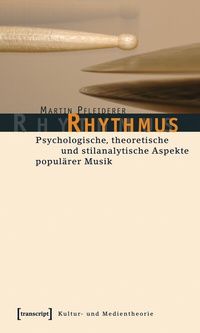
Rhythmus
Psychologische, theoretische und stilanalytische Aspekte populärer Musik
1st Edition
Published on 15. July 2015
390 pages
978-3-8394-0515-4 (ISBN)
Description

Rhythmus steht im Zentrum populärer Musik, denn Rhythmus bindet die Hörer sowohl mental als auch körperlich in das Klanggeschehen ein. Die materialreiche Studie stellt die Eigenheiten der Rhythmusgestaltung in zahlreichen populären Musikstilen (u.a. Ragtime, Blues, Jazz, Rhythm'n'Blues, Rock, Funk, Disco, Techno, Rap Music, Drum'n'Bass) vor. Durch die Verknüpfung von Wahrnehmungspsychologie, Musiktheorie und musikalischen Analysen werden anhand des Rhythmusphänomens zugleich die konzeptionellen Grundlagen für eine Popularmusikforschung gelegt, welche die klanglichen Strukturen populärer Musik ernst nimmt. Das Buch richtet sich an Musik- und Kulturwissenschaftler sowie an Musiker und Musikfans.
Reviews / Votes
»Auch wenn die popmusikalische Landschaftskarte in den letzten Jahren zunehmend Konturen bekommen hat, so gibt es immer noch ein paar hellere Flecken auf ihr. Zu dieser Terra incognita gehörte bislang auch das zeitliche Ordnungs- und Gestaltungsprinzip in der Musik, der Rhythmus.Zwar gibt es Einzeldarstellungen und Aufsätze, die sich dieser Thematik in Ausschnitten widmen, mit der Gesamtdarstellung, die Martin Pfleiderer bei transcript vorgelegt hat, ist jedoch Neuland betreten worden. Das Bielefelder Verlagshaus kann sich damit wieder einmal als kompetenter Partner in Sachen Popularmusik profilieren.«More details
Other editions
Additional editions
Book
07/2016
1st Edition
transcript
€30.80
Available immediately
Person
Content
1 - INHALT [Seite 5]
2 - 1 Einführung [Seite 7]
3 - 2 Populäre Musik und Rhythmus: Fragestellungen, Forschungsansätze, Methoden [Seite 15]
4 - 3 Psychologische Grundlagen der Rhythmuserfahrung [Seite 35]
5 - 4 Rhythmustheorien [Seite 113]
6 - 5 Rhythmus in der populären Musik Europas und Nordamerikas [Seite 165]
7 - 6 Rhythmus im modernen Jazz [Seite 245]
8 - 7 Rhythmus in Funk, Reggae, Electronic Dance Music und Rap Music [Seite 291]
9 - 8 Zusammenfassung und Ausblick [Seite 329]
10 - Anhang [Seite 339]
10.1 - Glossar [Seite 339]
10.2 - Tabelle zur Umrechnung von Tempoangaben [Seite 356]
10.3 - Literatur [Seite 357]
10.4 - Inhaltsübersicht [Seite 384]
2 - 1 Einführung [Seite 7]
3 - 2 Populäre Musik und Rhythmus: Fragestellungen, Forschungsansätze, Methoden [Seite 15]
4 - 3 Psychologische Grundlagen der Rhythmuserfahrung [Seite 35]
5 - 4 Rhythmustheorien [Seite 113]
6 - 5 Rhythmus in der populären Musik Europas und Nordamerikas [Seite 165]
7 - 6 Rhythmus im modernen Jazz [Seite 245]
8 - 7 Rhythmus in Funk, Reggae, Electronic Dance Music und Rap Music [Seite 291]
9 - 8 Zusammenfassung und Ausblick [Seite 329]
10 - Anhang [Seite 339]
10.1 - Glossar [Seite 339]
10.2 - Tabelle zur Umrechnung von Tempoangaben [Seite 356]
10.3 - Literatur [Seite 357]
10.4 - Inhaltsübersicht [Seite 384]
