


Wittgenstein and Beyond
Essays in Honour of Hans-Johann Glock
1st Edition
Published on 28. October 2022
364 pages
978-1-000-75580-0 (ISBN)
Description

This volume celebrates the work of Hans-Johann Glock, a philosopher renowned for both his exegesis of Wittgenstein and his many contributions to debates in contemporary philosophy. It brings together 16 new essays by up-and-coming and distinguished philosophers engaging with Glock's work, and it concludes with a "Reflections and Replies" chapter in which Glock responds to his interlocutors.
Glock's distinctive philosophical voice features a rare combination of a Wittgenstein-inspired approach with a willingness to break away from Wittgenstein to tackle problems in an open-minded way. The broad selection of essays included in this volume reflects Glock's wide-ranging philosophical interests and demonstrates the potential of applying Wittgensteinian insights to advance current systematic debates in philosophy. The chapters discuss Wittgenstein's philosophy, metaphilosophy, truth and language, animal minds and agency, and reasons and normativity.
Wittgenstein and Beyond will appeal to scholars and advanced students working on Wittgenstein, metaphilosophy, philosophy of mind, and philosophy of language.
Glock's distinctive philosophical voice features a rare combination of a Wittgenstein-inspired approach with a willingness to break away from Wittgenstein to tackle problems in an open-minded way. The broad selection of essays included in this volume reflects Glock's wide-ranging philosophical interests and demonstrates the potential of applying Wittgensteinian insights to advance current systematic debates in philosophy. The chapters discuss Wittgenstein's philosophy, metaphilosophy, truth and language, animal minds and agency, and reasons and normativity.
Wittgenstein and Beyond will appeal to scholars and advanced students working on Wittgenstein, metaphilosophy, philosophy of mind, and philosophy of language.
More details
Series
Edition
1. Auflage
Language
English
Place of publication
London
United Kingdom
Publishing group
Taylor & Francis Ltd
Target group
College/higher education
Professional and scholarly
Product notice
Reflowable
Illustrations
1 Tables, black and white; 2 Line drawings, black and white; 2 Illustrations, black and white
ISBN-13
978-1-000-75580-0 (9781000755800)
Copyright in bibliographic data and cover images is held by Nielsen Book Services Limited or by the publishers or by their respective licensors: all rights reserved.
Schweitzer Classification
Other editions
Additional editions
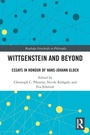
Christoph C. Pfisterer | Nicole Rathgeb | Eva Schmidt
Wittgenstein and Beyond
Essays in Honour of Hans-Johann Glock
Book
08/2024
1st Edition
Routledge
€62.90
Shipment within 10-20 days

Christoph C. Pfisterer | Nicole Rathgeb | Eva Schmidt
Wittgenstein and Beyond
Essays in Honour of Hans-Johann Glock
Book
10/2022
1st Edition
Routledge
€188.10
Shipment within 10-20 days
Persons
Christoph C. Pfisterer is a postdoctoral teaching and research assistant at the University of Zurich. He works on various topics of early analytic philosophy, as well as on contemporary philosophy of perception. He has recently published on Wittgenstein and Frege, and is currently completing a book manuscript on the language of perception.
Nicole Rathgeb is a postdoctoral researcher at the University of Bern and Visiting Research Fellow at the University of Hertfordshire. Her main research interests are in the philosophy of mind (belief, self-knowledge, and first-person authority) and philosophical methodology (conceptual analysis, conceptual engineering, ordinary language philosophy). She is currently co-editing the Metzler Handbook of Philosophy of Mind and writing a book on conceptual analysis.
Eva Schmidt is Assistant Professor of Theoretical Philosophy at TU Dortmund. She works on epistemic reasons and reasons for action, explainable artificial intelligence, and perception. She is the author of Modest Nonconceptualism: Epistemology, Phenomenology, and Content (Springer, 2015); "Where Reasons and Reasoning Come Apart" (2021); and a co-author of "From Responsibility to Reason-Giving Explainable Artificial Intelligence" (2022).
Nicole Rathgeb is a postdoctoral researcher at the University of Bern and Visiting Research Fellow at the University of Hertfordshire. Her main research interests are in the philosophy of mind (belief, self-knowledge, and first-person authority) and philosophical methodology (conceptual analysis, conceptual engineering, ordinary language philosophy). She is currently co-editing the Metzler Handbook of Philosophy of Mind and writing a book on conceptual analysis.
Eva Schmidt is Assistant Professor of Theoretical Philosophy at TU Dortmund. She works on epistemic reasons and reasons for action, explainable artificial intelligence, and perception. She is the author of Modest Nonconceptualism: Epistemology, Phenomenology, and Content (Springer, 2015); "Where Reasons and Reasoning Come Apart" (2021); and a co-author of "From Responsibility to Reason-Giving Explainable Artificial Intelligence" (2022).
Content
Introduction Christoph C. Pfisterer, Nicole Rathgeb, and Eva Schmidt
Part 1: Wittgenstein
1. Farewell to Hinge Propositions Severin Schroeder
2. Wittgenstein and Glock on History and Historicism Joachim Schulte
3. Wittgenstein's Later Nonsense Daniel Whiting
4. On Safari with Glock Constantine Sandis
Part 2: Metaphilosophy, Truth, and Perception
5. The Concept of Truth: A Proposal for a Definition and Its Presuppositions Wolfgang Kuenne
6. What Can We Learn Meta-Philosophically from how Philosophers Actually Proceed in the Philosophy of Religion? Ansgar Beckermann
7. More Good News for the Philosophical Armchair Christian Nimtz
8. Perception, Causation, Disjunction John Hyman
Part 3: Animal Minds
9. Understanding Animal Minds: Between Hermeneutics and Hydraulics Markus Wild
10. Intelligence and Reasons in Animals Maria Alvarez
11. A Conceptual Framework for Empathy in Humans and Nonhuman Animals Albert Newen, Maja Griem, and Simone Pika
12. Plants, Wants, and Agents Helen Steward
13. Logic and the Boundaries of Animal Mentality Hanoch Ben-Yami
14. Two Notions of Creativity Julia Langkau
Part 4: Normativity and Reasons
15. Rationality, Reason, and Rules Brad Hooker
16. No Reason to Be Afraid! On the (Ir)rationality of Emotions Gerhard Ernst
Part 5: Reflections and Replies
17. Reflections and Replies Hans-Johann Glock
Hans-Johann Glock: A Bibliography
Part 1: Wittgenstein
1. Farewell to Hinge Propositions Severin Schroeder
2. Wittgenstein and Glock on History and Historicism Joachim Schulte
3. Wittgenstein's Later Nonsense Daniel Whiting
4. On Safari with Glock Constantine Sandis
Part 2: Metaphilosophy, Truth, and Perception
5. The Concept of Truth: A Proposal for a Definition and Its Presuppositions Wolfgang Kuenne
6. What Can We Learn Meta-Philosophically from how Philosophers Actually Proceed in the Philosophy of Religion? Ansgar Beckermann
7. More Good News for the Philosophical Armchair Christian Nimtz
8. Perception, Causation, Disjunction John Hyman
Part 3: Animal Minds
9. Understanding Animal Minds: Between Hermeneutics and Hydraulics Markus Wild
10. Intelligence and Reasons in Animals Maria Alvarez
11. A Conceptual Framework for Empathy in Humans and Nonhuman Animals Albert Newen, Maja Griem, and Simone Pika
12. Plants, Wants, and Agents Helen Steward
13. Logic and the Boundaries of Animal Mentality Hanoch Ben-Yami
14. Two Notions of Creativity Julia Langkau
Part 4: Normativity and Reasons
15. Rationality, Reason, and Rules Brad Hooker
16. No Reason to Be Afraid! On the (Ir)rationality of Emotions Gerhard Ernst
Part 5: Reflections and Replies
17. Reflections and Replies Hans-Johann Glock
Hans-Johann Glock: A Bibliography
