

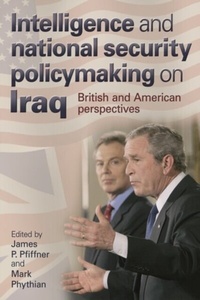
Intelligence and National Security Policymaking on Iraq
British and American Perspectives
1st Edition
Published on 30. July 2018
320 pages
978-1-5261-3096-9 (ISBN)
Description

The decision to go to war in Iraq has had historic repercussions throughout the world. The editors of this volume bring together scholarly analysis of the decision-making in the U.S and U.K. that led to the war, inside accounts of CIA decision-making, and key speeches and documents related to going to war. The book presents a fascinating case study of decision-making at the highest levels in the United States and Britain as their leaders planned to go to war in Iraq. Just as the Cuban Missile Crisis has been used for decades as a case study in good decision-making, the decision to go to war in Iraq will be analysed for years to come for lessons about what can go wrong in decisions about war.
The book presents a fascinating and truly comparative perspective on how President Bush and Prime Minister Blair took their countries to war in Iraq. Each had to convince his legislature and public that war was necessary, and both used intelligence in questionable ways to do so. This book brings together some of the best scholarship and most relevant documents on these important decisions that will reverberate for decades to come. -- .
The book presents a fascinating and truly comparative perspective on how President Bush and Prime Minister Blair took their countries to war in Iraq. Each had to convince his legislature and public that war was necessary, and both used intelligence in questionable ways to do so. This book brings together some of the best scholarship and most relevant documents on these important decisions that will reverberate for decades to come. -- .
All prices
More details
Language
English
Place of publication
Manchester
United Kingdom
Target group
College/higher education
Edition type
Digital original
Illustrations
Figures|Tables, black & white
Figures|Tables, black & white
ISBN-13
978-1-5261-3096-9 (9781526130969)
Copyright in bibliographic data and cover images is held by Nielsen Book Services Limited or by the publishers or by their respective licensors: all rights reserved.
Schweitzer Classification
Other editions
Additional editions
James Pfiffner | Mark Phythian
Intelligence and National Security Policymaking on Iraq
British and American Perspectives
Book
08/2008
Manchester University Press
€131.50
Shipment within 15-20 days
James Pfiffner | Mark Phythian
Intelligence and National Security Policymaking on Iraq
British and American Perspectives
Book
08/2008
Manchester University Press
€30.10
Shipment within 15-20 days
Persons
James P. Pfiffner is University Professor in the School of Public Policy at George Mason University. Mark Phythian is Professor of Politics in the Department of Politics and International Relations at the University of Leicester -- .
Content
List of tables and figures
Acknowledgements
Contributors
1. Introduction: policy-making and intelligence on Iraq - James P. Pfiffner and Mark Phythian
Part I: Intellectual antecedents of the Iraq War
2. The neoconservative roots of the war in Iraq - John Dumbrell
3. The origins of the British decision to go to war: Tony Blair, humanitarian intervention and the 'New Doctrine of the International Community' - Jim Whitman
Part II: The public case for war
4. Did President Bush mislead the country in his arguments for war with Iraq? - James P. Pfiffner
5. The British road to war: decision-making, intelligence and the case for war in Iraq - Mark Phythian
6. Australian use of intelligence and the case for war in Iraq - Rodney Tiffen
7. The Iraq War and the management of American public opinion - John Mueller
Part III: Intelligence failure
8. Intelligence collection and analysis on Iraq: issues for the intelligence community - Richard Kerr, Thomas Wolfe, Rebecca Donegan, and Aris Pappas
9. The politics and psychology of intelligence and intelligence reform - Robert Jervis
10. Congress, the Iraq War, and the failures of intelligence oversight - Loch K. Johnson
11. Flawed intelligence, limited oversight: official inquiries into pre-war UK intelligence on Iraq - Mark Phythian
Part IV: Policy failure
12. Decision-making, intelligence, and the Iraq War - James P. Pfiffner
13. Intelligence, policy, and the war in Iraq - Paul R. Pillar
Part V: Excerpts from key speeches and documents concerning the war
Appendix A: Excerpts from key U.S. speeches before the war in Iraq
Appendix B: Excerpts from key UK speeches and documents before the war in Iraq
Appendix C: October 2002 National Intelligence estimate: key judgments (excerpts)
Appendix D: Excerpts from post-war U.S. investigations
Appendix E: Letter to George Tenet from U.S. intelligence professionals, 28 April 2007 -- .
Acknowledgements
Contributors
1. Introduction: policy-making and intelligence on Iraq - James P. Pfiffner and Mark Phythian
Part I: Intellectual antecedents of the Iraq War
2. The neoconservative roots of the war in Iraq - John Dumbrell
3. The origins of the British decision to go to war: Tony Blair, humanitarian intervention and the 'New Doctrine of the International Community' - Jim Whitman
Part II: The public case for war
4. Did President Bush mislead the country in his arguments for war with Iraq? - James P. Pfiffner
5. The British road to war: decision-making, intelligence and the case for war in Iraq - Mark Phythian
6. Australian use of intelligence and the case for war in Iraq - Rodney Tiffen
7. The Iraq War and the management of American public opinion - John Mueller
Part III: Intelligence failure
8. Intelligence collection and analysis on Iraq: issues for the intelligence community - Richard Kerr, Thomas Wolfe, Rebecca Donegan, and Aris Pappas
9. The politics and psychology of intelligence and intelligence reform - Robert Jervis
10. Congress, the Iraq War, and the failures of intelligence oversight - Loch K. Johnson
11. Flawed intelligence, limited oversight: official inquiries into pre-war UK intelligence on Iraq - Mark Phythian
Part IV: Policy failure
12. Decision-making, intelligence, and the Iraq War - James P. Pfiffner
13. Intelligence, policy, and the war in Iraq - Paul R. Pillar
Part V: Excerpts from key speeches and documents concerning the war
Appendix A: Excerpts from key U.S. speeches before the war in Iraq
Appendix B: Excerpts from key UK speeches and documents before the war in Iraq
Appendix C: October 2002 National Intelligence estimate: key judgments (excerpts)
Appendix D: Excerpts from post-war U.S. investigations
Appendix E: Letter to George Tenet from U.S. intelligence professionals, 28 April 2007 -- .
