

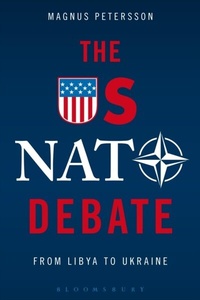
The US NATO Debate
From Libya to Ukraine
1st Edition
Published on 30. July 2015
240 pages
978-1-62892-454-1 (ISBN)
Description

Since the Libya War in 2011 it has been widely suggested that NATO's role in US security policy has diminished, because Washington gives Europe less and Asia more strategic priority (a tendency that is reinforced by budget restraints), and because the US is no longer interested in always leading NATO activities that mainly concern European conditions.
Several experts have suggested that the US expect that the European security challenges primarily should be handled by NATO's European allies in a new transatlantic burden sharing model, and that the US role should principally be Article V-focused. This book investigates to what extent these claims are valid, and what consequences they may have for European and international security.
Several experts have suggested that the US expect that the European security challenges primarily should be handled by NATO's European allies in a new transatlantic burden sharing model, and that the US role should principally be Article V-focused. This book investigates to what extent these claims are valid, and what consequences they may have for European and international security.
Reviews / Votes
In this important book, Magnus Petersson examines whether the reemergence of Europe as a primary security concern for the United States represents a return to the normal state of affairs, or whether it is more transitory, destined to fade away after the crisis in eastern Ukraine abates.This is a vitally important question for the transatlantic community, with significant practical implications for Europe's foreign, defense, and fiscal policies. Petersson brings a particularly clear-eyed perspective to bear, adeptly assessing the political, policy, and scholarly levels of debate, and providing a thorough examination and critique of the discussion within the United States on the purpose, relevance, and importance of NATO. * John R. Deni, Research Professor of Security Studies, Strategic Studies Institute, U.S. Army War College, USA * Magnus Petersson's The US NATO Debate is a compelling and first-rate analysis of how the North Atlantic Treaty Organization is viewed across the American political spectrum. By focusing on major events in NATO's life, including its recent summits in Chicago and Wales, its bombings in Libya, and the crisis in Ukraine, Petersson provides original insights on how American foreign policy makers view this alliance, making this book a must read for students and scholars of NATO. * Ryan C. Hendrickson, Professor, Department of Political Science, Eastern Illinois University, USA * The U.S. NATO Debate by Magnus Petersson could not come at a better time. How America's relationship with Europe evolves is an essential element of its efforts to realign its global position to make it durable for this still young 21st century. Magnus Petersson has written a lucid detailing of the range of debate in the United States over NATO that is a must read for scholars, students, and practitioners alike. * Sean Kay, Professor, Department of Politics and Government, Ohio Wesleyan University, USA * An exhaustively researched analysis of constantly evolving and diverse U.S. perspectives regarding both NATO's mission and its role in U.S. national security policy. The U.S. NATO Debate is important reading for anyone who cares about the future of the transatlantic relationship. * Rebecca Moore, Professor, Department of Political Science, Concordia College, Moorhead, USA *More details
Edition
1. Auflage
Language
English
Place of publication
New York
United States
Publishing group
Bloomsbury Publishing PLC (Digital)
ISBN-13
978-1-62892-454-1 (9781628924541)
Copyright in bibliographic data and cover images is held by Nielsen Book Services Limited or by the publishers or by their respective licensors: all rights reserved.
Schweitzer Classification
Other editions
Additional editions
Book
09/2015
Bloomsbury Academic USA
€52.80
Shipment within 3-4 weeks
Person
Magnus Petersson is Professor of Modern History at the Norwegian Institute for Defence Studies, Oslo, Norway.
Content
Contents
Foreword
1. Where is the US going with NATO?
1.1 NATO's changed role in US security policy
1.2 Analyzing the US NATO debate
1.3 The actors in the US NATO debate
1.4 Limitations and the structure of the book
2. 2011: The Libya War
2.1 The political debate in Congress
2.2 The political debate in the Administration
2.3 The policy debate in the think tank and elite media environment
2.4 Summary and reflections
3. 2012-2013: The Chicago Summit and the Syria Conflict
3.1 The political debate in Congress
3.2 The political debate in the Administration
3.3 The policy debate in the think tank and elite media environment
3.4 Summary and reflections
4. 2014: The Ukraine Crisis and the Wales Summit
4.1 The political debate in Congress
4.2 The political debate in the Administration
4.3 The policy debate in the think tank and elite media environment
4.4 Summary and reflections
5. Conclusions
5.1 The results of the analysis
5.2 The wider implications of the results
Name Index of Actors
List of Abbreviations
Bibliography
Index
Foreword
1. Where is the US going with NATO?
1.1 NATO's changed role in US security policy
1.2 Analyzing the US NATO debate
1.3 The actors in the US NATO debate
1.4 Limitations and the structure of the book
2. 2011: The Libya War
2.1 The political debate in Congress
2.2 The political debate in the Administration
2.3 The policy debate in the think tank and elite media environment
2.4 Summary and reflections
3. 2012-2013: The Chicago Summit and the Syria Conflict
3.1 The political debate in Congress
3.2 The political debate in the Administration
3.3 The policy debate in the think tank and elite media environment
3.4 Summary and reflections
4. 2014: The Ukraine Crisis and the Wales Summit
4.1 The political debate in Congress
4.2 The political debate in the Administration
4.3 The policy debate in the think tank and elite media environment
4.4 Summary and reflections
5. Conclusions
5.1 The results of the analysis
5.2 The wider implications of the results
Name Index of Actors
List of Abbreviations
Bibliography
Index
