

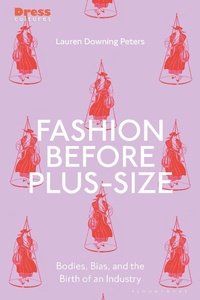
Fashion Before Plus-Size
Bodies, Bias, and the Birth of an Industry
1st Edition
Published on 15. June 2023
216 pages
978-1-350-17255-5 (ISBN)
Description

Shortlisted for the Association of Dress Historians Book of the Year Award, 2024
In 2022, it was reported that plus-sizes accounted for nearly twenty percent of all women's apparel sales in the United States and was one of the industry's few growth sectors. For many, this news seemed to herald a remarkably inclusive turn for an industry that long bartered in exclusivity. Yet the recent success of plus-size fashion obscures a rather complicated history-one that can be traced back over a century, and which illuminates the fraught relationship between fashion, fat, and weight bias in American culture.
Although many regard fat as a malady of the present, in the early twentieth century it was estimated that more than one-third of American women classified as "overweight." While modern weight bias had yet to fully cement itself in the American imaginary, the limitations of mass garment manufacturing coupled with the ascendent slender beauty ideal had already relegated larger women to fashion's peripheries. By 1915, however, fashion forecasters predicted that so-called "stoutwear" was well positioned to become one of the most lucrative subsectors of the burgeoning ready-to-wear trade. In the years that followed, stoutwear manufacturers set out to create more space for the fat woman in fashion but, in doing so, revealed an ancillary motivation: that of how to design fat out of existence altogether.
Fashion Before Plus-Size considers what came "before" plus-size fashion while also shedding new light on the ways that the fashion industry not only perpetuates but produces weight bias. By situating stoutwear at the confluence of mass manufacturing, beauty ideals, standardized sizing, health discourse, and consumer culture, this book exposes the flawed foundations upon which the contemporary plus-size fashion industry has been built.
In 2022, it was reported that plus-sizes accounted for nearly twenty percent of all women's apparel sales in the United States and was one of the industry's few growth sectors. For many, this news seemed to herald a remarkably inclusive turn for an industry that long bartered in exclusivity. Yet the recent success of plus-size fashion obscures a rather complicated history-one that can be traced back over a century, and which illuminates the fraught relationship between fashion, fat, and weight bias in American culture.
Although many regard fat as a malady of the present, in the early twentieth century it was estimated that more than one-third of American women classified as "overweight." While modern weight bias had yet to fully cement itself in the American imaginary, the limitations of mass garment manufacturing coupled with the ascendent slender beauty ideal had already relegated larger women to fashion's peripheries. By 1915, however, fashion forecasters predicted that so-called "stoutwear" was well positioned to become one of the most lucrative subsectors of the burgeoning ready-to-wear trade. In the years that followed, stoutwear manufacturers set out to create more space for the fat woman in fashion but, in doing so, revealed an ancillary motivation: that of how to design fat out of existence altogether.
Fashion Before Plus-Size considers what came "before" plus-size fashion while also shedding new light on the ways that the fashion industry not only perpetuates but produces weight bias. By situating stoutwear at the confluence of mass manufacturing, beauty ideals, standardized sizing, health discourse, and consumer culture, this book exposes the flawed foundations upon which the contemporary plus-size fashion industry has been built.
More details
Series
Edition
1. Auflage
Language
English
Place of publication
London
United Kingdom
Publishing group
Bloomsbury Publishing PLC
Target group
College/higher education
Illustrations
42 bw illus
ISBN-13
978-1-350-17255-5 (9781350172555)
Copyright in bibliographic data and cover images is held by Nielsen Book Services Limited or by the publishers or by their respective licensors: all rights reserved.
Schweitzer Classification
Other editions
Additional editions
Book
04/2025
Bloomsbury Visual Arts
€35.50
Shipment within 15-20 days
Book
07/2023
Bloomsbury Visual Arts
€121.50
Shipment within 15-20 days
Person
Lauren Downing Peters is Assistant Professor of Fashion Studies and Director of the Fashion Study Collection at Columbia College Chicago. Her interdisciplinary research broadly explores the entanglements of dress, the body, and identity; histories of American fashion and style; and the past, present, and future of plus-size fashion.
Content
List of Figures
Acknowledgments
Introduction
Fashion Before Plus-Size
Re-fashioning Fat History
The Slender Ideal, Fat Stigma & Weight Bias
A History of Fashion Without Fashion
A Note on Terminology
Chapter Outline
1. Creating Consumers
The New Normal
Sizing Up Stoutness
Beyond the "Perfect 36"
The Problem With Fat
2. Designing for Disorder
Building Better Bodies
Modernist Fashions, Modernist Bodies
Body-as-Canvas
The Art & Science of Looking Slender
3. Fitting the Mind
The Psychology of Selling
Fat Bodies, Thin Skin
Fat, Large or Stout?
Small Advertisements for Large Sizes
4. Parables of Overweight
The Parable of the Deluded
The Parable of the Matron
The Parable of the Domestic
The Parable of the Style Blind
5. The Forgotten Woman
The Everywoman: Jane Warren Wells
The Vaudevillian: Sophie Tucker
The Mother of the Blues: Gertrude "Ma" Rainey
Conclusion
Fashion's Slenderness Imperative
A Provocation: Toward and Epistemology of "Fat Clothes"
Notes
Bibliography
Index
Acknowledgments
Introduction
Fashion Before Plus-Size
Re-fashioning Fat History
The Slender Ideal, Fat Stigma & Weight Bias
A History of Fashion Without Fashion
A Note on Terminology
Chapter Outline
1. Creating Consumers
The New Normal
Sizing Up Stoutness
Beyond the "Perfect 36"
The Problem With Fat
2. Designing for Disorder
Building Better Bodies
Modernist Fashions, Modernist Bodies
Body-as-Canvas
The Art & Science of Looking Slender
3. Fitting the Mind
The Psychology of Selling
Fat Bodies, Thin Skin
Fat, Large or Stout?
Small Advertisements for Large Sizes
4. Parables of Overweight
The Parable of the Deluded
The Parable of the Matron
The Parable of the Domestic
The Parable of the Style Blind
5. The Forgotten Woman
The Everywoman: Jane Warren Wells
The Vaudevillian: Sophie Tucker
The Mother of the Blues: Gertrude "Ma" Rainey
Conclusion
Fashion's Slenderness Imperative
A Provocation: Toward and Epistemology of "Fat Clothes"
Notes
Bibliography
Index
