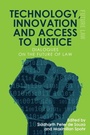
Technology, Innovation and Access to Justice
Description

Asks how technology can help people to access justice across the legal industry
- Brings together leading judges, academics, practitioners, policy makers and educators from countries including India, Canada, Germany, United Kingdom South Africa and Nigeria
- Offers a dialogue between theory and practice by presenting practical and reflective essays on the nature of changes in the legal sector
- Analyses technological changes taking place in the legal sector, situates where these developments have taken place, who has brought it about and what impact has it had on society
While legal technology may bring efficiency and economy to business, where are the people in this process and what does it mean for their lives?
Around five billion people globally are unable to address their everyday legal problems and do not have the security, opportunity or protection to redress their grievances and injustices. Courts and legal institutions can often be out of reach because of costs, distance or a lack of knowledge of rights and entitlements and judicial institutions may be under-funded leading to poor judicial infrastructure, inadequate staff, and limited resources to meet the needs of those who require such services.
This book sets out to embed access to justice into mainstream discussions on the future of law and to explore how this can be addressed in different parts of the legal industry. It examines what changes in technology mean for the end user, whether an ordinary citizen, a client or a student. It looks at the everyday practice of law through a sector-wide analysis of law firms, universities, startups and civil society organisations. In doing so, the book provides a roadmap on how to address sector-specific access to justice questions and to draw lessons for the future. The book draws on experiences from judges, academics, practitioners, policy makers and educators and presents perspectives from both the Global South and the Global North.
More details
Other editions
Additional editions