

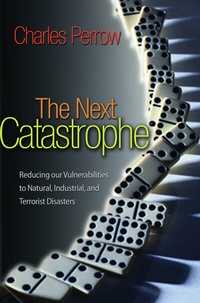
The Next Catastrophe
Reducing Our Vulnerabilities to Natural, Industrial, and Terrorist Disasters
1st Edition
Published on 6. May 2019
432 pages
978-1-4008-3851-6 (ISBN)
Description

Charles Perrow is famous worldwide for his ideas about normal accidents, the notion that multiple and unexpected failures--catastrophes waiting to happen--are built into our society's complex systems. In The Next Catastrophe, he offers crucial insights into how to make us safer, proposing a bold new way of thinking about disaster preparedness.
Perrow argues that rather than laying exclusive emphasis on protecting targets, we should reduce their size to minimize damage and diminish their attractiveness to terrorists. He focuses on three causes of disaster--natural, organizational, and deliberate--and shows that our best hope lies in the deconcentration of high-risk populations, corporate power, and critical infrastructures such as electric energy, computer systems, and the chemical and food industries. Perrow reveals how the threat of catastrophe is on the rise, whether from terrorism, natural disasters, or industrial accidents. Along the way, he gives us the first comprehensive history of FEMA and the Department of Homeland Security and examines why these agencies are so ill equipped to protect us.
The Next Catastrophe is a penetrating reassessment of the very real dangers we face today and what we must do to confront them. Written in a highly accessible style by a renowned systems-behavior expert, this book is essential reading for the twenty-first century. The events of September 11 and Hurricane Katrina--and the devastating human toll they wrought--were only the beginning. When the next big disaster comes, will we be ready? In a new preface to the paperback edition, Perrow examines the recent (and ongoing) catastrophes of the financial crisis, the BP oil spill, and global warming.
Perrow argues that rather than laying exclusive emphasis on protecting targets, we should reduce their size to minimize damage and diminish their attractiveness to terrorists. He focuses on three causes of disaster--natural, organizational, and deliberate--and shows that our best hope lies in the deconcentration of high-risk populations, corporate power, and critical infrastructures such as electric energy, computer systems, and the chemical and food industries. Perrow reveals how the threat of catastrophe is on the rise, whether from terrorism, natural disasters, or industrial accidents. Along the way, he gives us the first comprehensive history of FEMA and the Department of Homeland Security and examines why these agencies are so ill equipped to protect us.
The Next Catastrophe is a penetrating reassessment of the very real dangers we face today and what we must do to confront them. Written in a highly accessible style by a renowned systems-behavior expert, this book is essential reading for the twenty-first century. The events of September 11 and Hurricane Katrina--and the devastating human toll they wrought--were only the beginning. When the next big disaster comes, will we be ready? In a new preface to the paperback edition, Perrow examines the recent (and ongoing) catastrophes of the financial crisis, the BP oil spill, and global warming.
More details
Other editions
Additional editions
Charles Perrow
The Next Catastrophe
Reducing Our Vulnerabilities to Natural, Industrial, and Terrorist Disasters
Book
02/2011
Princeton University Press
€23.20
Shipment within 10-20 days
Charles Perrow
The Next Catastrophe
Reducing Our Vulnerabilities to Natural, Industrial, and Terrorist Disasters
Book
04/2007
Princeton University Press
€29.71
Article exhausted; check different version
Person
Charles Perrow is professor emeritus of sociology at Yale University. He has worked as a consultant for the U.S. military, the White House, and the nuclear-power industry.
Content
Preface to the Paperback Edition vii
Acknowledgments xlix
Part One: Introduction and Natural Disasters li
Chapter 1 Shrink the Targets 1
Chapter 2 "Natural" Disasters? 14
Part Two: Can Government Help? 41
Chapter 3 The Government Response: The First FEMA 43
Chapter 4 The Disaster after 9/11: The Department of Homeland Security and a New FEMA 68
Part Three: The Disastrous Private Sector 131
Chapter 5 Are Terrorists as Dangerous as Management? The Nuclear Plant Threat 133
Chapter 6 Better Vulnerability through Chemistry 174
Chapter 7 Disastrous Concentration in the National Power Grid 211
Chapter 8 Concentration and Terror on the Internet 248
Part Four: What Is to Be Done? 289
Chapter 9 The Enduring Sources of Failure: Organizational, Executive, and Regulatory 291
Appendix A Three Types of Redundancy 327
Appendix B Networks of Small Firms 331
Bibliography 335
Index 355
Acknowledgments xlix
Part One: Introduction and Natural Disasters li
Chapter 1 Shrink the Targets 1
Chapter 2 "Natural" Disasters? 14
Part Two: Can Government Help? 41
Chapter 3 The Government Response: The First FEMA 43
Chapter 4 The Disaster after 9/11: The Department of Homeland Security and a New FEMA 68
Part Three: The Disastrous Private Sector 131
Chapter 5 Are Terrorists as Dangerous as Management? The Nuclear Plant Threat 133
Chapter 6 Better Vulnerability through Chemistry 174
Chapter 7 Disastrous Concentration in the National Power Grid 211
Chapter 8 Concentration and Terror on the Internet 248
Part Four: What Is to Be Done? 289
Chapter 9 The Enduring Sources of Failure: Organizational, Executive, and Regulatory 291
Appendix A Three Types of Redundancy 327
Appendix B Networks of Small Firms 331
Bibliography 335
Index 355
