


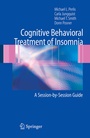
Cognitive Behavioral Treatment of Insomnia
Description

Cognitive behavior therapy which has been adapted to treat so many problems, has also brought data-driven and data-yielding treatment to insomnia. Focusing on this evidence-based modality, Cognitive Behavioral Treatment of Insomnia is a much-needed treatment manual that provides clinicians with the why's and how's of this approach in concise and practical terms.
This book, which is written as a reader-friendly guide, is intended for clinical trainees, non-insomnia sleep specialists, and for expert CBT clinicians from outside the sleep medicine field who wish to begin the process of learning to provide empirically validated CBT-I.
The Book is organized into seven parts: definition of insomnia; review of the conceptual; framework for treatment; overview of the components of therapy; session-by-session guide; dialogues; assessment and eligibility for CBT-I; and sample documentation. The organizing principles for the guide can best be expressed as two seemingly simple questions:
"Who is appropriate for CBT-I?"
"What does one need to know to set up a Behavioral Sleep Medicine service?"
The guide provides all that one needs to confidently answer these questions.
More details
Other editions
Additional editions

Persons
Michael L. Perlis, PhD
Dr. Perlis is an Associate Professor of Psychiatry and URMC Neurosciences Program at the University of Rochester and is the Director of the UR Sleep Research Laboratory. His clinical expertise is in the area of Behavioral Sleep Medicine. His research interests include sleep in psychiatric disorders and neurocognitive phenomena in insomnia, the mechanisms of action of sedative hypnotics, and the development of alternative treatments for insomnia. He was a founding member of the AASM's Behavioral Sleep Medicine Committee and of the editorial board for the Journal of Behavioral Sleep Medicine. He currently serves on the editorial boards of the Journal of Sleep Research and the Journal SLEEP and he hosts an annual seminar on CBT-I for those interested in learning the techniques.
