

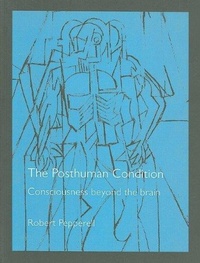
The Posthuman Condition
Consciousness Beyond the Brain
Published on 1. December 1995
218 pages
978-1-84150-883-2 (ISBN)
Description

"Where humanists saw themselves as distinct beings in an antagonistic relationship with their surroundings, posthumans regard their own being as embodied in an extended technological world."
Synthetic creativity, organic computers, genetic modification, intelligent machines--such ideas are deeply challenging to many of our traditional assumptions about human uniqueness and superiority. But, ironically, it is our very capacity for technological invention that has secured us so dominant a position in the world which may lead ultimately to (as some have put it) 'The End of Man'. If we are really capable of creating entities that exceed our own skills and intellect then the consequences for humanity are almost inconceivable. Nevertheless, we must now face up to the possibility that attributes like intelligence and consciousness may be synthesised in non-human entities--perhaps within our lifetime. Would such entities have human-like emotions; would they have a sense of their own being?
The Posthuman Condition argues that such questions are difficult to tackle given the concepts of human existence that we have inherited from humanism, many of which can no longer be sustained. New theories about nature and the operation of the universe arising from sophisticated computer modelling are starting to demonstrate the profound interconnections between all things in reality where previously we had seen only separations. This has implications for traditional views of the human condition, consciousness, the way we look at art, and for some of the oldest problems in philosophy.
First published in the 1990s, this important text has been completely revised by the author with the addition of new sections and illustrations.
For further information see: www.post-human.net
Synthetic creativity, organic computers, genetic modification, intelligent machines--such ideas are deeply challenging to many of our traditional assumptions about human uniqueness and superiority. But, ironically, it is our very capacity for technological invention that has secured us so dominant a position in the world which may lead ultimately to (as some have put it) 'The End of Man'. If we are really capable of creating entities that exceed our own skills and intellect then the consequences for humanity are almost inconceivable. Nevertheless, we must now face up to the possibility that attributes like intelligence and consciousness may be synthesised in non-human entities--perhaps within our lifetime. Would such entities have human-like emotions; would they have a sense of their own being?
The Posthuman Condition argues that such questions are difficult to tackle given the concepts of human existence that we have inherited from humanism, many of which can no longer be sustained. New theories about nature and the operation of the universe arising from sophisticated computer modelling are starting to demonstrate the profound interconnections between all things in reality where previously we had seen only separations. This has implications for traditional views of the human condition, consciousness, the way we look at art, and for some of the oldest problems in philosophy.
First published in the 1990s, this important text has been completely revised by the author with the addition of new sections and illustrations.
For further information see: www.post-human.net
More details
Edition
Digital original
Language
English
Place of publication
Bristol
United Kingdom
Publishing group
Intellect
Target group
Professional and scholarly
Edition type
Digital original
ISBN-13
978-1-84150-883-2 (9781841508832)
Copyright in bibliographic data and cover images is held by Nielsen Book Services Limited or by the publishers or by their respective licensors: all rights reserved.
Schweitzer Classification
Other editions
Additional editions
Book
06/2009
Intellect Books
€32.80
Shipment within 3-4 weeks
Book
01/2003
Intellect Books
€56.80
Article exhausted; check different version
Person
Julian Pepperell, PhD, is one of the best-known marine biologists in the world and a leading authority on marlin, sailfish, tuna, and sharks. He has conducted research on these fishes in partnership with governments across the globe for over thirty years and is an adjunct professor at a number of universities. He is past president of the Australian Society for Fish Biology and recipient of the prestigious Conservation Award from the International Game Fish Association. Guy Harvey is a unique blend of artist, scientist, diver, angler, and conservationist. In 1999 he collaborated with the Oceanographic Center of Nova Southeastern University to create the Guy Harvey Research Institute, providing scientific information for effective conservation and restoration of fish biodiversity.
Content
- FRONT COVER
- PRELIMINARY PAGES
- CONTENTS
- PREFACE TO THE NEW EDITION
- FOREWORD
- A NOTE ON THE TERM 'POSTHUMAN'
- INTRODUCTION TO THE TECHNOLOGICAL CLIMATE OF POSTHUMANISM
- CHAPTER ONE: CONSCIOUSNESS, HUMANS AND COMPLEXITY
- CHAPTER TWO: SCIENCE, KNOWLEDGE AND ENERGY
- CHAPTER THREE: ORDER AND DISORDER, CONTINUITY AND DISCONTINUITY
- CHAPTER FOUR: BEING, LANGUAGE AND THOUGHT
- CHAPTER FIVE: ART, AESTHETICS AND CREATIVITY
- CHAPTER SIX: AUTOMATING CREATIVITY
- CHAPTER SEVEN: SYNTHETIC BEINGS
- CHAPTER EIGHT: WHAT IS POSTHUMANISM?
- APPENDIX I
- APPENDIX II
- POSTSCRIPT
- BIBLIOGRAPHY
- INDEX
- BACK COVER
