

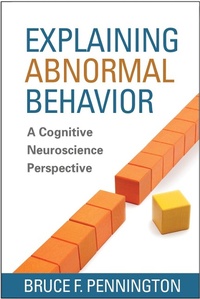
Explaining Abnormal Behavior
A Cognitive Neuroscience Perspective
Published on 1. January 2014
272 pages
978-1-4625-1385-7 (ISBN)
Description

Neuropsychologists, neuroscientists, clinical and developmental psychologists, and psychiatrists. May serve as a supplemental text in graduate-level courses.
More details
Other editions
Additional editions
Book
03/2014
1st Edition
Guilford Press
€58.00
Shipment within 15-20 days
Person
Bruce F. Pennington, PhD, is John Evans Professor of Psychology at the University of Denver, where he heads the Developmental Cognitive Neuroscience program. His research focuses on dyslexia, attention-deficit/hyperactivity disorder, and autism, with particular interests in using genetic and neuropsychological methods to understand comorbidity among disorders. In addition to being a researcher and research mentor, he is also a child clinical neuropsychologist, and has been active in clinical practice and training throughout his career. Dr. Pennington is a recipient of Research Scientist, MERIT, and Fogarty awards from the National Institutes of Health; the Samuel T. Orton Award from the International Dyslexia Association; and the Emanuel Miller Memorial Lecture from the British Association for Child and Adolescent Mental Health. He is also a Fellow of the American Association for the Advancement of Science and the Association for Psychological Science. He is the author of Diagnosing Learning Disorders, Second Edition, and coeditor (with Keith Owen Yeates et al.) of Pediatric Neuropsychology, Second Edition.
Content
I. What Explanations Are Possible?
1. Scientific Explanation
2. Placing Neuroscience in the History of Science and Philosophy
3. History of the Localization of Function Debate
4. How Does the Brain Compute?
5. Classical and Contemporary Models of Abnormal Behavior
II. What Are the Disorders?
6. Disorders of Perception
7. Disorders of Attention
8. Disorders of Language
9. Disorders of Memory
10. Disorders of Action Selection
11. Disorders of State Regulation
12. Global Disorders
III. What Becomes of the Self?
13. How to Relate Self to Brain
Appendix A. Human Neocortical Regions
Appendix B. Online Resources
Glossary
1. Scientific Explanation
2. Placing Neuroscience in the History of Science and Philosophy
3. History of the Localization of Function Debate
4. How Does the Brain Compute?
5. Classical and Contemporary Models of Abnormal Behavior
II. What Are the Disorders?
6. Disorders of Perception
7. Disorders of Attention
8. Disorders of Language
9. Disorders of Memory
10. Disorders of Action Selection
11. Disorders of State Regulation
12. Global Disorders
III. What Becomes of the Self?
13. How to Relate Self to Brain
Appendix A. Human Neocortical Regions
Appendix B. Online Resources
Glossary
