

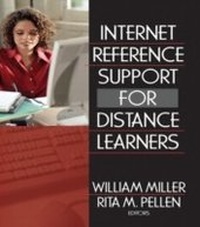
Internet Reference Support for Distance Learners
1st Edition
Published on 19. December 2013
228 pages
978-1-317-82493-0 (ISBN)
Description

Make separate library services for distance learners a thing of the past
Internet Reference Support for Distance Learners takes a comprehensive look at efforts by librarians and information specialists to provide distance learners with effective services that match those already available on campus. With the development of the World Wide Web and the evolution of Web-based services, reference librarians are adding a human element to the virtual library, blurring the difference between distance learners and traditional users. This unique book examines how they deal with a wide range of related topics, including standards and guidelines, copyright issues, streaming media, and chat and digital references, and presents a historical overview of how reference and instructional services have been delivered to distance usersbefore and after the creation of the Internet.
Internet Reference Support for Distance Learners reveals that librarians do not make a sharp distinction between reference and instruction within the context of distance learning, and that there is no clear boundary between true distance learners and more traditional students who might use services designed for nontraditional users. Online capabilities have allowed reference librarians to approximate services advocated by published guidelines and standards, including the ACRL Distance Learning Section's Guidelines for Distance Learning Library Services, to provide a framework for librarians to plan services for off-campus students.
Internet Reference Support for Distance Learners provides practical information on:
how librarians can keep IT simple when designing methods to access reference support
why library Web sites are vital sources of communication between the distance learning student and the reference-based instructional component
how to set up a university chat service, including software selection, staff training and assessment
how to provide students services beyond traditional provision of resources, including advising, enrollment, and payment of fees
how to create an online assistance site that incorporates online versions of traditional print handouts, FAQs, subject guides, course-specific guides, learning modules, and instructional videos in one central location
how to work with faculty to create online support for students in Blackboard courses
the pros and cons of using open-source software
how to create an online library assistance site
how to create online information literacy course to teach independent research skills to remote students
how to avoid copyright infringement and how to educate library personnel about copyright law
how to use Camtasia Studio, a screen capture program to create audio and video for online presentations
Internet Reference Support for Distance Learners is an invaluable resource for librarians working in academic, school, special, and public settings, and for library science faculty and students.
Internet Reference Support for Distance Learners takes a comprehensive look at efforts by librarians and information specialists to provide distance learners with effective services that match those already available on campus. With the development of the World Wide Web and the evolution of Web-based services, reference librarians are adding a human element to the virtual library, blurring the difference between distance learners and traditional users. This unique book examines how they deal with a wide range of related topics, including standards and guidelines, copyright issues, streaming media, and chat and digital references, and presents a historical overview of how reference and instructional services have been delivered to distance usersbefore and after the creation of the Internet.
Internet Reference Support for Distance Learners reveals that librarians do not make a sharp distinction between reference and instruction within the context of distance learning, and that there is no clear boundary between true distance learners and more traditional students who might use services designed for nontraditional users. Online capabilities have allowed reference librarians to approximate services advocated by published guidelines and standards, including the ACRL Distance Learning Section's Guidelines for Distance Learning Library Services, to provide a framework for librarians to plan services for off-campus students.
Internet Reference Support for Distance Learners provides practical information on:
how librarians can keep IT simple when designing methods to access reference support
why library Web sites are vital sources of communication between the distance learning student and the reference-based instructional component
how to set up a university chat service, including software selection, staff training and assessment
how to provide students services beyond traditional provision of resources, including advising, enrollment, and payment of fees
how to create an online assistance site that incorporates online versions of traditional print handouts, FAQs, subject guides, course-specific guides, learning modules, and instructional videos in one central location
how to work with faculty to create online support for students in Blackboard courses
the pros and cons of using open-source software
how to create an online library assistance site
how to create online information literacy course to teach independent research skills to remote students
how to avoid copyright infringement and how to educate library personnel about copyright law
how to use Camtasia Studio, a screen capture program to create audio and video for online presentations
Internet Reference Support for Distance Learners is an invaluable resource for librarians working in academic, school, special, and public settings, and for library science faculty and students.
More details
Language
English
Place of publication
London
United Kingdom
Publishing group
Taylor & Francis Ltd
Target group
College/higher education
File size
2,70 MB
ISBN-13
978-1-317-82493-0 (9781317824930)
Copyright in bibliographic data and cover images is held by Nielsen Book Services Limited or by the publishers or by their respective licensors: all rights reserved.
Schweitzer Classification
Other editions
Additional editions
Rita Pellen | William Miller
Internet Reference Support for Distance Learners
Book
09/2005
1st Edition
Routledge
€69.51
Shipment within 10-20 days
Rita Pellen | William Miller
Internet Reference Support for Distance Learners
Book
09/2005
1st Edition
Routledge
€44.75
Article not available at the moment
Persons
Pellen, Rita; Miller, William
Content
Introduction: Providing Distance Learners with Reference Services Online (William Miller)
A Historical Overview of Internet Reference Services for Distance Learners (Anne Marie Casey)
Internet Reference Services for Distance Education: Guidelines Comparison and Implementation (Marie F. Jones)
Academic Library Web Sites for Distance Learners in Greater Western Library Alliance Member Institutions (Mary Cassner and Kate E. Adams)
Keep IT Simple: Internet Reference Support for Distance Learners (Marthea Turnage, Wade Carter, and Randy McDonald)
Ask a UT System Librarian: A Multi-Campus Chat Initiative Supporting Students at a Distance (Kimberly Chapman and Darcy Del Bosque)
HawkHelp: From Chat to a Student Services Portal (Nancy J. Burich and Frances A. Devlin)
One School's Experience with Virtual Reference (Carol J. Tipton and Vanessa J. Earp)
Does Anyone Need Help Out There? Lessons from Designing Online Help (Judith M. Arnold, Floyd Csir, Jennifer Sias, and Jingping Zhang)
If You Build It, They Will Come, but Then What: A Look at Issues Related to Using Online Course Software to Provide Specialized Reference Services (Linda L. Lillard and Mollie Dinwiddie)
Open Source Software to Support Distance Learning Library Services (H. Frank Cervone)
Integrating Library Reference Services in an Online Information Literacy Course: The Internet Navigator as a Model (Amy Brunvand)
Copyright and the Delivery of Library Services to Distance Learners (Irmin Allner)
From Cameras to Camtasia: Streaming Media Without the Stress (Christopher Cox)
Index
Reference Notes Included
A Historical Overview of Internet Reference Services for Distance Learners (Anne Marie Casey)
Internet Reference Services for Distance Education: Guidelines Comparison and Implementation (Marie F. Jones)
Academic Library Web Sites for Distance Learners in Greater Western Library Alliance Member Institutions (Mary Cassner and Kate E. Adams)
Keep IT Simple: Internet Reference Support for Distance Learners (Marthea Turnage, Wade Carter, and Randy McDonald)
Ask a UT System Librarian: A Multi-Campus Chat Initiative Supporting Students at a Distance (Kimberly Chapman and Darcy Del Bosque)
HawkHelp: From Chat to a Student Services Portal (Nancy J. Burich and Frances A. Devlin)
One School's Experience with Virtual Reference (Carol J. Tipton and Vanessa J. Earp)
Does Anyone Need Help Out There? Lessons from Designing Online Help (Judith M. Arnold, Floyd Csir, Jennifer Sias, and Jingping Zhang)
If You Build It, They Will Come, but Then What: A Look at Issues Related to Using Online Course Software to Provide Specialized Reference Services (Linda L. Lillard and Mollie Dinwiddie)
Open Source Software to Support Distance Learning Library Services (H. Frank Cervone)
Integrating Library Reference Services in an Online Information Literacy Course: The Internet Navigator as a Model (Amy Brunvand)
Copyright and the Delivery of Library Services to Distance Learners (Irmin Allner)
From Cameras to Camtasia: Streaming Media Without the Stress (Christopher Cox)
Index
Reference Notes Included
