

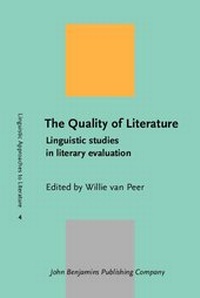
The Quality of Literature
Linguistic studies in literary evaluation
1st Edition
Published on 19. March 2008
IX, 243 pages
978-90-272-9151-6 (ISBN)
Description

Evaluation is central to literary studies and has led to an impressive list of publications on the status and history of the canon. Yet it is remarkable how little attention has been given to the role of textual properties in evaluative processes. Most of the chapters in The Quality of Literature redress this issue by dealing with texts or genres ranging from classical antiquity, via Renaissance to twentieth century. They provide a rich textual and historical panorama of how critical debate over literary quality has influenced our modes of thinking and feeling about literature, and how they continue to shape the current literary landscape. Four theoretical chapters reflect on the general state of literary evaluation while the introduction weaves the different threads together aiming at further conceptual clarification. This book thus contributes to a deeper understanding of the problems that are at the heart of past and present debates over literary quality.
More details
Other editions
Additional editions
Book
03/2008
John Benjamins Publishing Co
€104.94
Shipment within 10-15 days
Person
Content
- The Quality of Literature
- Editorial page
- Title page
- LCC data
- Table of contents
- Acknowledgments
- Foreword
- The evaluation of literary texts
- References
- Textual and generic comparisons
- Canon formation
- I
- II
- III
- Acknowledgments
- References
- Why Hugh Maccoll is not, and will never be, part of any literary canon
- I
- II
- III
- IV
- V
- Popular / Canonical
- 1. Introduction
- 2. A tale of two Europes
- 3. Spy fiction as modern chivalry
- 4. Nasty greatness
- References
- Literary evaluation and poetic form
- The villanelle
- Conclusion
- References
- Poetic value
- I
- II
- III
- ``Too soon transplanted''
- 1. Introduction
- 2. Rhetoric and figurative structures
- 3. Structures of sound
- Engaging the reader
- References
- Evaluation and stylistic analysis
- 1. Introduction
- 2. The relation between evaluation and interpretation, and different domains of evaluation
- 3. Stylistics and evaluation in poetry
- 4. Stylistics and evaluation in prose fiction: A comparison of two versions of the same scene from the two editions of John Fowles's The Magus
- 4.1. Nicholas is overpowered
- 4.2. Conchis drugs Nicholas
- 4.3. Overall comments
- 5. Concluding remarks
- References
- The value of Juvenal
- I
- II
- III
- IV
- V
- References
- Theoretical reflections
- Some correlates of literary eminence
- References
- Macbeth through the computer
- 1. Introduction
- 2. Some theoretical assumptions: The literary text and value
- 3. Criteria for literary evaluation: Predictability and function
- 4. What can corpus analysis do?
- 5. The experiment
- 6. Pedagogical application
- Conclusion
- References
- Appendix I
- Collocations of time
- How scientific can literary evaluation be?
- References
- Philosophical perspectives on literary value
- 1. Contrasts and options
- 2. Assessing the options
- 3. Cognitivism and non-cognitivism about literary value
- References
- The qualities of literatures
- 1. A model of literary evaluation
- 1.1. Basic concepts
- 1.2. Types of evaluative action
- 1.3. Collective dimensions of evaluation
- 2. Advantages of the model
- 2.1. Model-based analyses of historical examples
- 2.2. Canon formation: Perspectives of explanation and normative considerations
- 3. Issues for further study
- References
- Author index
- Subject index
- The series Linguistic Approaches to Literature
