

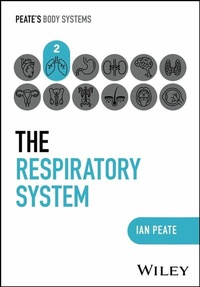
The Respiratory System
Description

PEATE'S BODY SYSTEMS THE RESPIRATORY SYSTEM
A CONCISE, ILLUSTRATED, AND ACCESSIBLE GUIDE TO THE RESPIRATORY SYSTEM
Each of the twelve volumes in Peate's Body Systems series is rooted in the belief that a deep and thorough understanding of the human body is essential for providing the highest standard of care. Offering clear, accessible and up-to-date information on different body systems, this series bridges the gap between complex scientific concepts and practical, everyday applications in health and care settings. This series makes for an invaluable resource for those committed to understanding the intricacies of human biology, physiology and the various systems that sustain life.
The Respiratory System is the perfect companion for students and newly registered practitioners across nursing and allied health fields with an interest in respiratory care, providing a comprehensive yet easy-to-digest guide for both academic and clinical application.
- Equips healthcare students and practitioners with the necessary information to provide safe and competent care
- Features colourful illustrations to aid comprehension, clarify complicated concepts, and render content more engaging and accessible
- Empowers readers to adapt to a rapidly evolving healthcare landscape, preparing them for the future of healthcare delivery
- Contains information necessary for effective patient care of those with Chronic Obstructive Pulmonary Disease (COPD), asthma, lung cancer and other respiratory diseases and conditions
More details
Other editions
Additional editions
Person
IAN PEATE is a Visiting Professor at Northumbria University, a Senior Clinical Fellow at the University of Hertfordshire, and a Professorial Fellow at the University of Roehampton. He is also the Editor-in-Chief of the British Journal of Nursing and the Consultant Editor of the Journal of Paramedic Practice and the International Journal of Advancing Practice.
Content
Preface viii
Acknowledgements x
1 Anatomy and Physiology: The Respiratory System 1
The Respiratory System 1
The Upper Respiratory Tract 2
The Lower Respiratory Tract 3
Blood Supply 7
Respiration 8
Pulmonary Ventilation 8
External Respiration 11
Ventilation and Perfusion 12
Transportation of Gases 12
Internal Respiration 14
Conclusion 14
Glossary of Terms 15
Multiple Choice Questions 16
References 17
2 Respiratory Assessment 18
Airway Obstruction 18
Rapid Breathing Assessment 18
Objective and Subjective Data 22
Vital Signs 22
Assessing Respirations 23
Oxygen Saturations 24
The Patient History 25
Cough 26
The Physical Examination 27
Interpretation of the Findings 37
Conclusion 37
Glossary of Terms 37
Multiple Choice Questions 38
References 39
3 Chronic Obstructive Pulmonary Disease 41
Pathophysiological Changes Associated with Chronic Obstructive Pulmonary Disease 41
Epidemiology 43
Risk Factors 44
Clinical Presentation 45
Clinical Investigations and Diagnosis 46
Management 49
Health Teaching 51
Conclusion 53
Glossary of Terms 53
Multiple Choice Questions 54
References 55
4 Asthma 57
Pathophysiological Changes Associated with Asthma 57
Asthma Triggers 60
Epidemiology 62
Risk Factors 62
Clinical Presentation 63
Clinical Investigations and Diagnosis 65
Management 68
Status Asthmaticus 69
Health Teaching 71
Inhalers 72
Spacers (Aerosol Holding Chambers) 73
Conclusion 74
Glossary of Terms 74
Multiple Choice Questions 75
References 76
5 Pneumonia 78
Pathophysiological Changes Associated with Pneumonia 78
Community-Acquired Pneumonia 79
Hospital-Acquired Pneumonia 79
Pathophysiology 79
Epidemiology 81
Risk Factors 81
Hospital-Acquired Pneumonia 83
Clinical Presentation 84
Clinical Investigations and Diagnosis 85
Management 86
Risk Stratification 86
Supportive Measures 87
Hospital-Acquired Pneumonia 87
Nebulisers 88
Advising Patients on Nebuliser Use 91
Care Provision 92
Health Teaching 93
Conclusion 93
Glossary of Terms 93
Multiple Choice Questions 94
References 96
6 Lung Cancer 97
Pathophysiological Changes Associated with Lung Cancer 97
Small-Cell Lung Carcinoma and Non-Small Cell Lung Carcinoma 97
Epidemiology 98
Risk Factors 99
Clinical Presentation 100
Clinical Investigations and Diagnosis 101
Staging and Grading 103
Tumour, Node and Metastasis Staging 104
Management 106
Rapid Diagnostic Centres 107
Surgery 108
Radiation Therapy with Curative Intent 108
Palliative Radiation Treatment 108
Chemotherapy, Targeted Therapy and Immunotherapy 108
Laser Therapy, Cryotherapy and Tracheobronchial Stents 108
Palliative Care 109
Health Teaching 109
Conclusion 109
Glossary of Terms 110
Multiple Choice Questions 111
References 112
7 Tuberculosis 114
Notifiable Diseases 114
Pathophysiological Changes Associated with TB 115
Aetiology of TB 116
Stages or Forms of TB 117
Primary TB infection 117
Latent TB 117
Active TB Disease 118
Reactivation of TB 118
Epidemiology 119
Risk Factors 119
Clinical Presentation 121
Clinical Investigations and Diagnosis 121
Management 123
Health Teaching 125
BCG Immunisation Programme 126
Conclusion 126
Glossary of Terms 127
Multiple Choice Questions 127
References 128
8 Pulmonary Embolism 130
Deep Vein Thrombosis 130
Venous Thromboembolism 130
Virchow's Triad 130
Thrombogenesis 131
Pathophysiological Changes Associated with PE 133
Prognosis 135
Epidemiology 135
Risk Factors 136
Clinical Presentation 136
Clinical Investigations and Diagnosis 138
Management 140
Urgent Care 140
General Management 140
Anticoagulants 141
Health Teaching 142
Conclusion 143
Glossary of Terms 143
Multiple Choice Questions 144
References 145
MCQ Answers 147
Index 148
Chapter 1
Anatomy and Physiology: The Respiratory System
The respiratory system is a complex and vital component of the human body responsible for the exchange of gases between the external environment and our internal environment. The respiratory system plays a crucial role in maintaining the body's homeostasis by ensuring an adequate supply of oxygen to cells and removing waste carbon dioxide.
It is essential to understand the fundamentals to assess and care for patients with respiratory conditions effectively. This chapter explores the anatomy and physiology of the respiratory system, providing readers with a foundational understanding of its structure and function. In the following chapters, respiratory assessments, common disorders and interventions to provide comprehensive, holistic, respiratory care are outlined.
Cells can only survive if they receive a continuous supply of oxygen. As cells use oxygen, a waste gas, carbon dioxide, is produced. If this gas is allowed to build up, carbon dioxide can disrupt cellular activity and interrupt homeostasis. The key function of the respiratory system, therefore, is to ensure that the body extracts sufficient oxygen from the atmosphere and disposes of the excess carbon dioxide. The collection of oxygen and removal of carbon dioxide is known as respiration. Respiration involves the following four distinct processes:
- Pulmonary ventilation
- External respiration
- Transport of gases
- Internal respiration
All four are examined in this chapter; only pulmonary ventilation and external respiration are the sole responsibility of the respiratory system. As oxygen and carbon dioxide are transported around the body in blood, effective respiration is also reliant upon a fully functioning cardiovascular system.
The Respiratory System
The respiratory system is separated into the upper and lower respiratory tract (see Figure 1.1). Those structures found below the larynx are part of the lower respiratory tract. The respiratory system can also be said to be divided into conduction and respiratory regions. The upper respiratory tract and the uppermost section of the lower respiratory tract form the conduction region, where air is conducted through a series of tubes and vessels. The respiratory region is the functional part of the lungs, where the oxygen diffuses into blood. The structures within the respiratory region are microscopic, they are very fragile and easily damaged by infection. For this reason, the upper and lower respiratory tracts are fashioned in such a way as to fight off any invading airborne bacterial or viral pathogens.
Figure 1.1 The upper and lower respiratory system
The Upper Respiratory Tract
Air enters the body via the nasal and oral cavities. The nasal cavity is divided into two equal sections, separated by the nasal septum, which is a structure formed out of the ethmoid bones and the vomer of the skull. The space where air enters the nasal cavity just inside the nostrils is called the vestibule. Beyond each vestibule, the nasal cavities are subdivided into three air passageways, the meatuses, these are three shelf-like projections called the superior, middle and inferior nasal conchae (see Figure 1.2). The region around the superior conchae and upper septum contains olfactory receptors, which are responsible for the sense of smell. The pharynx connects the nasal and oral cavity with the larynx. The pharynx is divided into three regions called the nasopharynx, the oropharynx and the laryngopharynx. The nasopharynx is located behind the nasal cavity and contains two openings that lead to the auditory (eustachian) tubes. The oropharynx and laryngopharynx are found underneath the nasopharynx and behind the oral cavity. The oropharynx and oral cavity are divided by the fauces. Both the oropharynx and the laryngopharynx are passageways for food and drink and also air. To protect these structures from abrasion by food particles and to prevent moisture loss, they are lined with non-keratinised stratified squamous epithelium.
Figure 1.2 Structures of the upper respiratory system
As well as providing the sense of smell, another function of the upper respiratory tract is to ensure that air entering the lower respiratory tract is warm, damp and clean. The vestibule is lined with coarse hairs (cilia) that filter incoming air, ensuring large dust particles do not enter the airways. The conchae are lined with a mucous membrane made of pseudostratified ciliated columnar epithelium, which contains a network of capillaries and a plentiful supply of mucus-secreting goblet cells. The blood flowing through the capillaries warms the passing air, while the mucus moistens it and traps any passing dust particles. The mucus-covered dust particles are propelled by the cilia towards the pharynx, where they are swallowed or expectorated.
To provide further protection, the upper respiratory tract is lined with irritant receptors. When they are stimulated by invading particles (for example, dust or pollen), they force a sneeze, ensuring the offending material is ejected through the nose or mouth. The pharynx contains five tonsils. The two tonsils visible when the mouth is open are the palatine tonsils; located behind the tongue are the lingual tonsils and the pharyngeal tonsil or adenoid sits on the upper back wall of the pharynx. Tonsils are lymph nodules and part of the body's defence system. The epithelial lining of their surface has deep folds, known as crypts. Inhaled bacteria or particles become entangled within the crypts, and they are then engulfed and destroyed.
The Lower Respiratory Tract
This aspect of the respiratory tract includes the larynx, the trachea, the right and left primary bronchi and all the constituents of both lungs (see Figure 1.3). The lungs are two cone-shaped organs almost filling the thorax. They are protected by a framework of bones, the thoracic cage, which consists of the ribs, sternum (breastbone) and vertebrae (spine). The tip of each lung, the apex, extends just above the clavicle (collarbone) and their wider bases sit just above a concave muscle known as the diaphragm. The larynx (voice box) connects the trachea and the laryngopharynx. The remainder of the lower respiratory tract divides into branches of airways. For this reason, the structure of the lower respiratory tract is often referred to as the bronchial tree.
Figure 1.3 The lower respiratory tract
Larynx
This is made up of nine pieces of cartilage tissue: three single pieces and three pairs (see Figure 1.4). The single pieces of cartilage are the thyroid cartilage, the epiglottis and the cricoid cartilage. The thyroid cartilage is more commonly known as the Adam's apple and, together with the cricoid cartilage, protects the vocal cords. The cricothyroid ligament, connecting the thyroid and cricoid cartilage, is the landmark of an emergency airway or tracheostomy (Wheeldon 2020). The epiglottis is a leaf-shaped piece of elastic cartilage attached to the top of the larynx. It protects the airway from food and liquids entering. On swallowing, the epiglottis blocks entry to the larynx and food and liquids are diverted towards the nearby oesophagus. If foreign substances are inhaled, they can block the lower respiratory tract and cut off the body's supply of oxygen. This is a medical emergency known as aspiration and requires the swift removal of the offending substance.
Figure 1.4 The larynx
The three pairs of cartilage are the arytenoid, cuneiform and corniculate cartilages (see Figure 1.4). The arytenoid cartilages are the most significant as they influence the movement of the mucous membranes (true vocal folds) that generate the voice. Speaking is, therefore, reliant upon a fully functioning respiratory system. Many obstructive lung disorders, for example, asthma, reduce a person's ability to utter a full sentence without having to draw a new breath (Wheatley 2018).
The Trachea
The trachea (or windpipe) is a tubular vessel. It carries air from the larynx down towards the lungs. The trachea is lined with pseudostratified ciliated columnar epithelium, ensuring that any inhaled debris is trapped and propelled upwards towards the oesophagus and pharynx where it is swallowed or expectorated. The trachea and the bronchi also contain irritant receptors, which stimulate a cough, forcing larger invading particles upwards. The outermost layer of the trachea is made up of connective tissue, reinforced by a series of 16-20 C-shaped cartilage rings. These rings stop the trachea from collapsing during an active breathing cycle.
The Lungs
The lungs are divided into distinct regions called lobes. There are three lobes in the right lung and two in the left. The heart, along with its major blood vessels, occupies a space between the two lungs called the mediastinum. The lungs are surrounded by two thin protective membranes called the parietal and visceral pleura (see Figure 1.3). The parietal pleura lines the wall of the thorax and the visceral pleura lines the lungs themselves. The space between the two pleurae is the pleural space or cavity, which is tiny and contains a thin film of lubricating fluid. This reduces friction between the two pleurae, allowing the two layers to slide over one another during breathing. The fluid also helps the visceral and parietal pleura to adhere to each other, in the same way, two pieces of glass stick together when they are wet....
