

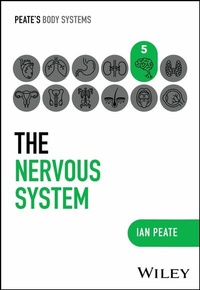
The Nervous System
Description

PEATE'S BODY SYSTEMS THE NERVOUS SYSTEM
A CONCISE, ILLUSTRATED, AND ACCESSIBLE GUIDE TO THE NERVOUS SYSTEM
Each of the twelve volumes in Peate's Body Systems series is rooted in the belief that a deep and thorough understanding of the human body is essential for providing the highest standard of care. Offering clear, accessible and up-to-date information on different body systems, this series bridges the gap between complex scientific concepts and practical, everyday applications in health and care settings. This series makes for an invaluable resource for those committed to understanding the intricacies of human biology, physiology and the various systems that sustain life.
The Nervous System is the perfect companion for students and newly registered practitioners across nursing and allied health fields with an interest in neurological care, providing a comprehensive yet easy-to-digest guide for both academic and clinical application.
- Equips healthcare students and practitioners with the necessary information to provide safe and competent care
- Features colourful illustrations to aid comprehension, clarify complicated concepts, and render content more engaging and accessible
- Empowers readers to adapt to a rapidly evolving healthcare landscape, preparing them for the future of healthcare delivery
- Contains information necessary for effective patient care of those with stroke, dementia, Multiple Sclerosis (MS), and other diseases and conditions of the nervous system
More details
Other editions
Additional editions
Person
IAN PEATE is a Visiting Professor at Northumbria University, a Senior Clinical Fellow at the University of Hertfordshire, and a Professorial Fellow at the University of Roehampton. He is also the Editor-in-Chief of the British Journal of Nursing and the Consultant Editor of the Journal of Paramedic Practice and the International Journal of Advancing Practice.
Content
Preface viii
Acknowledgements x
1 Anatomy and Physiology: The Nervous System 1
Organisation of the Nervous System 1
Sensory Division of the Peripheral Nervous System 1
Central Nervous System 2
Motor Division of the Peripheral Nervous System 2
Neurotransmitters 5
Neuroglia 5
Meninges 7
The Cerebrospinal Fluid 7
Brain 7
The Blood Supply to the Brain 11
Circle of Willis 12
The Peripheral Nervous System 14
The Autonomic Nervous System 17
Sympathetic Division 19
Parasympathetic Division 20
Conclusion 21
Glossary of Terms 22
Multiple Choice Questions 22
References 24
2 Assessment of the Nervous System 25
Assessing Needs 25
Assessing the Level of Consciousness 26
Vital Signs 30
Assessment of Pupillary Reaction 31
Motor and Sensory Assessments 31
The Patient History 32
Physical Examination 40
Assessing Mental Status 41
Cranial Nerve Assessment 41
Evaluating the System: Diagnostic Tests 45
Conclusion 45
Glossary of Terms 45
Multiple Choice Questions 46
References 47
3 Stroke 49
Pathophysiological Changes Associated with Stroke 49
Ischaemic Stroke 50
Haemorrhagic Stroke 51
Cellular and Molecular Events 51
Epidemiology 55
Risk Factors 55
Non-modifiable Risk Factors 56
Modifiable Risk Factors 56
Clinical Presentation 56
Ischaemic Stroke 57
Haemorrhagic Stroke 57
Transient Ischaemic Attacks 57
The FAST Acronym 57
Clinical Investigations and Diagnosis 58
Onset and Duration of Symptoms 58
Nature of Symptoms 59
Previous Strokes or Transient Ischaemic Attacks 59
Medical History 59
Risk Factors 59
Medication and Allergies 59
Social History 59
Psychosocial History 60
Pre-existing Conditions 60
Recent Procedures or Surgeries 60
Timing of Presentation to Healthcare Provider 60
Patient's Perspective 60
Management 63
Post-acute and Long-term Management 66
Health Teaching 67
Conclusion 69
Glossary of Terms 69
Multiple Choice Questions 70
References 71
Other Risk Factors 80
Clinical Presentation 80
Clinical Investigations and Diagnosis 84
Management 87
Caregiver Support 88
Symptom Management 88
Health Teaching 88
Conclusion 90
Glossary of Terms 90
Multiple Choice Questions 91
References 92
5 Multiple Sclerosis 94
Pathophysiological Changes Associated with Acute Multiple Sclerosis 94
Prognosis 96
Epidemiology 96
Risk Factors 97
Clinical Presentation 97
Clinical Investigations and Diagnosis 101
Management 106
Supportive Care 108
Health Teaching 108
Conclusion 110
Glossary of Terms 110
Multiple Choice Questions 111
References 112
4 Dementia 73
Pathophysiological Changes Associated with Dementia 73
Confusion 78
Mild Cognitive Impairment 78
Prognosis 78
Epidemiology 78
Risk Factors 80
6 Epilepsy 114
Equality and Law 114
Pathophysiological Changes Associated with Epilepsy 115
Epidemiology 117
Risk Factors 117
Clinical Presentation 118
Clinical Investigations and Diagnosis 119
Management 123
Seizure First Aid 123
Mental Health and Well-being 124
Equality and Diversity 124
Treatment Goals 125
Health Teaching 126
Conclusion 128
Glossary of Terms 128
Multiple Choice Questions 129
References 130
7 Raised Intracranial Pressure 132
Idiopathic Intracranial Hypertension 132
Pathophysiological Changes Associated with Raised Intracranial Pressure 133
Consequences of Raised Intracranial Pressure 135
Epidemiology 136
Socioeconomic Factors 136
Risk Factors 137
Clinical Presentation 138
Clinical Investigations and Diagnosis 140
Management 142
Monitoring 142
Medical Management 142
Ventilation Management 143
Surgical Interventions 143
Cerebrospinal Fluid Drainage 143
Psychological and Emotional Needs 144
Multidisciplinary Approach 144
Prognosis and Follow-up 145
Health Teaching 145
Conclusion 146
Glossary of Terms 146
Multiple Choice Questions 147
References 148
8 Traumatic Brain Injury 150
Head Injury 150
Pathophysiological Changes Associated with Traumatic Brain Injury 151
Mechanisms of Injury 151
Location of the Injury 151
Open Versus Closed Brain Injuries 152
Secondary Injuries 152
Epidemiology 152
Risk Factors 153
Clinical Presentation 153
Severity of Symptoms 154
Symptoms of Specific Types of Traumatic Brain Injury 154
Clinical Investigations and Diagnosis 154
Management 160
Health Teaching 161
Understanding the Injury and Its Effects 161
Medication Management 162
Cognitive and Physical Rehabilitation 162
Emotional and Psychological Support 163
Preventing Complications 163
Safety Measures 163
Conclusion 163
Glossary of Terms 164
Multiple Choice Questions 165
References 166
MCQ Answers 167
Index 168
Chapter 1
Anatomy and Physiology: The Nervous System
Understanding the anatomy and physiology of the nervous system is essential as it forms the basis for comprehending various health conditions, conducting assessments and delivering quality patient care. Care providers have contact with a number of patients who are living with neurological disorders who may be at home following acute neurosurgical interventions or with long-term neurological conditions or being cared for in a hospital setting as a result of a brain injury.
The nervous system is one of the main communicating and control systems within the body. It works closely with the endocrine system to control many body functions. The nervous system provides a rapid and short-acting response and the endocrine system provides a slower but often more sustained response. The two systems work together to maintain homeostasis (McErlean and Migliozzi 2020).
The nervous system interacts with all other body systems. This is a large and complex system. In order to enable understanding of the nervous system, it has to be divided into smaller functional and anatomical parts. This chapter outlines the divisions of the nervous system; it discusses the structure and function of the nervous system and how it influences other structures of the body.
Organisation of the Nervous System
The nervous system is divided into two parts: the central nervous system and the peripheral nervous system. The central nervous system is made up of the brain and spinal cord, which is the control and integration centre for many body functions. The peripheral nervous system carries sensory information to the central nervous system and motor information out of the central nervous system. The direction of information flow to and from the nervous system is shown in Figure 1.1.
Figure 1.1 Organisation of the nervous system
Sensory Division of the Peripheral Nervous System
Sensory information (called stimuli) is gathered from inside and outside of the body. This sensory input is delivered to the central nervous system via the peripheral nerves. Sensory nerve fibres are also called afferent fibres. Sensory information always travels from the peripheral nervous system towards the central nervous system. There are many kinds of sensory information, including pain, pressure, temperature, chemical levels and more. McErlean and Migliozzi (2020) consider the maintenance of body temperature; it is important that body temperature is maintained between 36.5 and 37.5 °C. Temperature receptors in the skin, known as thermoreceptors, detect changes in temperature, as temperature changes have the potential to cause damage to cells and tissues; this information has to be relayed to the central nervous system and if needed, it is acted upon.
Central Nervous System
The central nervous system consists of the brain and spinal cord. The central nervous system processes and integrates sensory information. The information received has to be interpreted, which can either be stored to be dealt with later or can be acted upon immediately with one or more motor responses. For example, the sensation of a temperature change would be received and interpreted by the hypothalamus (a structure of the central nervous system) and an appropriate action would be initiated.
Motor Division of the Peripheral Nervous System
The motor division of the peripheral nervous system always carries impulses away from the central nervous system, usually to effector organs (these respond to signals from the nervous system or hormonal system by producing a specific effect). Motor nerve fibres are also called efferent fibres. There are two types of motor information: motor information to the somatic nervous system or to the autonomic nervous system.
Somatic Nervous System
The somatic nervous system is under voluntary control and the effector (tissue or organ responding to instruction from the central nervous system) is skeletal (voluntary) muscle.
The central nervous system's response to sensory information may be to activate the somatic nervous system, prompting a voluntary response that involves skeletal muscle movement. For example, if an increase in temperature is detected, then it may require the removal of a coat or the opening of a window. This is the motor response that involves the somatic nervous system. This is a voluntary activity the person has chosen to take.
Autonomic Nervous System
The central nervous system's response to sensory information may be to activate the autonomic nervous system. This would lead to an involuntary action. The autonomic nervous system is responsible for involuntary motor responses. The effector may be smooth or cardiac muscle (they are both involuntary muscles) or a gland.
In the example of increased temperature, the involuntary response is to lose heat through the skin-so warm blood is directed to the skin when peripheral blood vessels vasodilate. Vasodilatation is an example of an involuntary autonomic nervous system response. The individual cannot control this response.
The autonomic nervous system is further divided into the sympathetic (fight or flight) and the parasympathetic (rest and digest) divisions. A fine balance between both of these divisions is required for the maintenance of homeostasis.
Neurones
The functional unit of the nervous system is the neurone or nerve cell. It has several features in common with other cells, including a nucleus and mitochondria. As a result of its vital role, it is well protected and has some specialist modifications. Two specialist characteristics of neurones are:
- Irritability, in response to a stimulus - the ability to initiate a nerve impulse.
- Conductivity - the ability to conduct an impulse.
Neurones comprise an axon, dendrites and a cell body. Their function is to transmit nerve impulses. Nerve impulses only travel in one direction: from the receptive area - the dendrites - to the cell body and down the length of the axon (see Figure 1.2).
Figure 1.2 Motor neurone
Axons bundled together are known as nerves. Neurones depend on a constant supply of oxygen and glucose. Once the neurones of the brain and spinal cord have matured after birth, they are not replaced or regenerated if they become damaged. Peripheral neurones can regenerate if the cell body is not damaged and the alignment of the neurone has not been disrupted.
Dendrites
These are short branching processes that receive information and conduct it towards the cell body. Their branching processes provide a large surface area for this function. In sensory neurones, dendrites may form a part of the sensory receptors, and in motor neurones, they can form part of the synapse between one neurone and the next.
Cell Body
Most neurone cell bodies are located inside the central nervous system, forming the grey matter. When clusters of cell bodies are grouped together in the central nervous system, they are known as nuclei. Cell bodies located in the peripheral nervous system are called ganglia.
Axons
Each neurone has only one axon conducting information away from the cell body. The axon can branch to form an axon collateral and will also branch at its terminal into many axon terminals (see Figure 1.1). The axon delivers the impulse to another neurone or a gland or a muscle. Axon length can vary significantly from very short to 100 cm long (Marieb and Hoehn 2019).
Myelin Sheath
Peripheral nerve axons and long or large axons are covered in a myelin sheath, a fatty material protecting the neurone and electrically insulating it, speeding up impulse transmission. Within the peripheral nervous system, Schwann cells are wrapped in layers around the neurone from the myelin sheath. The outermost part of the Schwann cell is its plasma membrane, which is called the neurilemma. There is a regular gap (about 1 mm) between adjacent Schwann cells. The gaps are called the nodes of Ranvier. Collateral axons can occur at the node (see Figure 1.2). Some nerve fibres are unmyelinated, which makes nerve impulse transmission significantly slower.
Sensory (Afferent) Nerves
Dendrites of sensory neurones are often sensory receptors; when stimulated, the impulse generated travels towards the spinal cord and brain. There are different types of sensory receptors:
- Special senses.
- Somatic sensory receptors, located in the skin, such as touch, temperature and pain.
- Autonomic nervous system receptors, located throughout the body, such as baroreceptors monitoring blood pressure, chemoreceptors monitoring blood pH and visceral pain receptors.
- Proprioceptors, monitoring muscle movement, stretch and pain.
Motor (Efferent) Nerves
Information from the central nervous system is delivered to the peripheral nervous system via the motor nerves. Information transmitted through a voluntary somatic nerve can cause skeletal muscle contraction or the information may be autonomic in nature, not under voluntary control, and may lead to smooth muscle contraction or release of the products of a gland.
The Action Potential
The nervous system is a vast communicating network sending information from the internal and external environment to the central nervous system and from the central nervous system to the muscles and glands. The way the functional unit, the neurone, achieves this is by the generation...
