

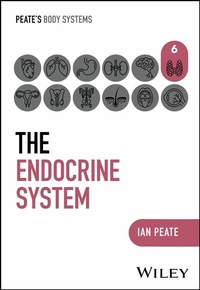
The Endocrine System
Description

PEATE'S BODY SYSTEMS THE ENDOCRINE SYSTEM
A CONCISE, ILLUSTRATED, AND ACCESSIBLE GUIDE TO THE ENDOCRINE SYSTEM
Each of the twelve volumes in Peate's Body Systems series is rooted in the belief that a deep and thorough understanding of the human body is essential for providing the highest standard of care. Offering clear, accessible and up-to-date information on different body systems, this series bridges the gap between complex scientific concepts and practical, everyday applications in health and care settings. This series makes for an invaluable resource for those committed to understanding the intricacies of human biology, physiology and the various systems that sustain life.
The Endocrine System is the perfect companion for students and newly registered practitioners across nursing and allied health fields with an interest in endocrinology, providing a comprehensive yet easy-to-digest guide for both academic and clinical application.
- Equips healthcare students and practitioners with the necessary information to provide safe and competent care
- Features colourful illustrations to aid comprehension, clarify complicated concepts, and render content more engaging and accessible
- Empowers readers to adapt to a rapidly evolving healthcare landscape, preparing them for the future of healthcare delivery
- Contains information necessary for effective patient care of those with hyper- and hypothyroidism, diabetes, and other diseases and conditions affecting the endocrine system
More details
Other editions
Additional editions
Person
IAN PEATE is a Visiting Professor at Northumbria University, a Senior Clinical Fellow at the University of Hertfordshire, and a Professorial Fellow at the University of Roehampton. He is also the Editor-in-Chief of the British Journal of Nursing and the Consultant Editor of the Journal of Paramedic Practice and the International Journal of Advancing Practice.
Content
Preface viii
Acknowledgements x
1 Anatomy and Physiology: The Endocrine System 1
Homeostasis 1
The Endocrine Organs 2
Endocrine, Paracrine, Exocrine and Autocrine Signalling 4
Hormones 5
The Transportation of Hormones 5
Control of Hormone Release 6
The Physiology of the Endocrine Organs 6
The Hypothalamus and the Pituitary Gland 6
Growth Hormone 8
Prolactin 9
Follicle-stimulating Hormone and Luteinising Hormone (Gonadotrophins) 9
Thyroid-stimulating Hormone 9
Adrenocorticotrophic Hormone 9
The Thyroid Gland 10
Parathyroid Glands 12
The Adrenal Glands 13
The Pancreas 13
The Gonads 15
Other Endocrine Glands 16
Conclusion 17
Glossary of Terms 17
Multiple Choice Questions 18
References 20
2 Assessment of the Endocrine System 21
Assessing Needs 22
The Patient History 23
Empathy 23
A Focused Endocrine Assessment 26
Assessing the Thyroid Gland 32
Conclusion 33
Glossary of Terms 33
Multiple Choice Questions 34
References 35
3 Hyperthyroidism 36
The Thyroid Gland 36
Thyroxine and Triiodothyronine 36
Pathophysiological Changes Associated with Hyperthyroidism 37
Epidemiology 39
Risk Factors 39
Clinical Presentation 41
Clinical Investigations and Diagnosis 43
Management 47
Health Teaching 48
Understanding Hyperthyroidism 49
Treatment Options 49
Long-term Management and Follow-up 50
Conclusion 50
Glossary of Terms 50
Multiple Choice Questions 51
References 52
4 Hypothyroidism 54
Total Thyroxine and Free Thyroxine 54
Pathophysiological Changes Associated with Hypothyroidism 55
Myxoedema 55
Primary and Secondary Hypothyroidism 56
Epidemiology 57
Risk Factors 58
Clinical Presentation 61
Clinical Investigations and Diagnosis 63
Management 67
Health Teaching 68
Conclusion 69
Glossary of Terms 69
Multiple Choice Questions 70
References 71
5 Diabetes Mellitus 73
Type 1 Diabetes 73
Type 2 Diabetes 73
Gestational Diabetes 73
Diabetes Insipidus 73
Blood Glucose Regulation 74
Insulin 74
Glucagon 75
Other Factors Influencing Blood Glucose Regulation 75
Pathophysiological Changes Associated with Diabetes Mellitus 77
Epidemiology 80
Risk Factors 82
Clinical Presentation 83
Clinical Investigations and Diagnosis 85
Management 87
Dietary Therapy 87
Non-insulin Therapy 88
Insulin Therapy 88
Monitoring Response to Therapy 91
Physical Activity 93
Education and Self-management Skills 95
Regular Medical Follow-up 96
Psychosocial Support 96
Complications, Screening and Prevention 96
Health Teaching 96
Conclusion 97
Glossary of Terms 98
Multiple Choice Questions 99
References 100
6 Cushing's Syndrome 101
Pathophysiological Changes Associated with Cushing's Syndrome 101
Epidemiology 103
Risk Factors 104
Clinical Presentation 105
Clinical Investigations and Diagnosis 108
Management 114
Health Teaching 114
Conclusion 116
Glossary of Terms 116
Multiple Choice Questions 117
References 118
7 Polycystic Ovarian Syndrome 119
Pathophysiological Changes Associated with Polycystic Ovarian Syndrome 119
Epidemiology 120
Risk Factors 122
Clinical Presentation 124
Clinical Investigations and Diagnosis 125
Diagnostic Criteria 129
Management 129
Health Teaching 130
Conclusion 132
Glossary of Terms 133
Multiple Choice Questions 134
References 135
Hypopituitarism and Hyperpituitarism 139
Epidemiology 140
Risk Factors 141
Clinical Presentation 143
Clinical Investigations and Diagnosis 144
Management 148
Observation and Monitoring 149
Medication Therapy 149
Surgery 149
Radiation Therapy 150
Combination Therapy 150
Pituitary Carcinoma 150
Follow-up Care 150
Health Teaching 150
Conclusion 152
Glossary of Terms 152
Multiple Choice Questions 153
References 154
MCQ Answers 155
Index 156
8 Pituitary Tumours 136
The Pituitary Gland: An Overview 136
Pituitary Tumours 137
Pathophysiological Changes Associated with Pituitary Tumours 138
Chapter 1
Anatomy and Physiology: The Endocrine System
Understanding the detailed functions of the endocrine system is key to comprehending various health conditions, how they manifest and the pharmacological interventions that may be used in the delivery of patient care. This chapter provides a comprehensive overview of the anatomy and physiology of the endocrine system, providing the reader with a fundamental knowledge base that is necessary for practice.
Homeostasis
Homeostasis refers to the process of maintaining a stable internal environment. In other words, homeostasis refers to the maintenance of normal physiological balance and functioning within the body (Clare 2020). Every cell in the human body is influenced by the endocrine system (Fitzgerald-O'Connor and Long 2020). There are two key systems in the body that play important roles in maintaining homeostasis:
- The nervous system
- The endocrine system
While both the endocrine and nervous systems are essential for coordinating physiological processes and maintaining homeostasis in the body, they differ in several key aspects. Table 1.1 outlines the differences between these two systems.
Table 1.1 The differences between the nervous system and endocrine system
Nervous system Endocrine system Speed of actionSeconds
Responses mediated by the nervous system are rapid and short lived. Nerve impulses travel quickly along neurones, allowing for immediate responses to stimuli, but these responses are typically brief.
Minutes to hours (may even be days)
Responses mediated by the endocrine system tend to be slower and more prolonged. Hormones travel through the bloodstream, which may take time to reach target tissues and their effects may persist for longer durations.
Duration of actionSeconds to minutes
Nerve impulses trigger rapid but short-lived responses. Once the stimulus ceases, the nerve impulse stops and the response subsides relatively quickly.
Minutes to days
Hormonal effects often have a longer duration of action due to the slower onset and degradation of hormones in the bloodstream. Changes initiated by hormones may persist for hours, days or even longer.
Methods of transmitting messagesElectrical
Neural signalling is electrical and chemical, involving the generation and propagation of action potentials along neurones and the release of neurotransmitters at synapses to transmit signals between neurones or from neurones to target cells.
Chemical
Hormonal signalling is chemical and involves the release of hormones into the bloodstream, which then bind to specific receptors on target cells to initiate a response.
Transportation methodNeurones
The nervous system communicates through electrochemical impulses along neurones. Neurones transmit nerve impulses or action potentials, to specific target cells or tissues, allowing for rapid and precise communication.
Hormones
The endocrine system communicates through the secretion of hormones into the bloodstream. Hormones are chemical messengers that travel to target cells or tissues throughout the body, exerting their effects.
Source: Adapted from Clare (2020); Chandler, Wood, and Hyde (2023).
The nervous system reacts rapidly to stimuli and affects its changes over a period of seconds or minutes; thus, it is involved in the immediate and short-term maintenance of homeostasis. Owing to its rapid onset of action, the nervous system is responsible for the control of rapid bodily processes such as breathing and movement. The endocrine system is often responsible for the regulation of longer term processes.
The endocrine system, however, typically oversees longer term processes, regulating physiological functions over extended periods. The major functions it manages are:
- Homeostasis, maintenance of the internal body environment
- Storage and use of energy substrates (carbohydrates, proteins and fats)
- Regulation of growth and reproduction
- Control of the body's responses to external stimuli (particularly stress)
It is important to note, that while these two systems are separate, they often work together, complementing each other in the maintenance of homeostasis.
The Endocrine Organs
The endocrine system is composed of glands that produce and secrete hormones. These hormones regulate the activity of cells or organs. Hormones control metabolism and sexual development and function (Peate 2019).
The endocrine system is the name given to a collection of small organs that are scattered throughout the body, each of which releases hormones. Hormones are chemical substances released into the blood by the endocrine system exerting physiological control over the function of cells or organs other than those that created them. The purpose of each hormone varies. Their common primary role, however, is to maintain homeostasis.
Figure 1.1 shows the endocrine organs and their position in the body. Each of these organs will usually have a rich blood supply that is delivered by numerous blood vessels. The hormone-producing cells within the organ are arranged into branching networks around this blood supply. This arrangement of blood vessels and hormone-producing cells ensures that hormones enter the bloodstream rapidly and are then transported throughout the body to the target cells (see Figure 1.2).
Figure 1.1 The endocrine organs and their location in the body
Figure 1.2 The transportation of hormones in the blood
Endocrine, Paracrine, Exocrine and Autocrine Signalling
Understanding the concepts of endocrine, paracrine, exocrine and autocrine signalling is essential as it relates to how cells communicate and how physiological processes are regulated within the body.
Endocrine Signalling
Endocrine signalling involves the release of hormones by specialised glands directly into the bloodstream. These hormones travel to distant target cells or tissues, where they exert their effects by binding to specific receptors.
Understanding the role of hormones in regulating various bodily functions, including metabolism, growth, reproduction and stress response are important concepts so as to offer people care that is safe and effective. Healthcare workers may care for patients with endocrine disorders such as diabetes, thyroid disorders or adrenal insufficiency, where hormone regulation is disrupted.
Paracrine Signalling
Paracrine signalling occurs when signalling molecules are released by one cell and act on nearby target cells or tissues within the same tissue or organ. Paracrine refers to hormones that act locally and diffuse to the cells in the immediate neighbourhood to produce their action.
Consideration must be given to paracrine signalling's role in regulating local cellular activities and maintaining tissue homeostasis. Inflammation, for example, involves paracrine signalling as it coordinates immune responses and tissue repair.
Exocrine Signalling
Exocrine signalling involves the secretion of signalling molecules, such as enzymes or mucus, into ducts or body cavities that lead to external surfaces or internal organs other than the bloodstream. Exocrine refers to glands/organs that secrete substances into ducts that eventually lead to the outside of the body (for instance, the sweat glands, the part of the pancreas that secretes digestive juices and the gallbladder).
The function of exocrine glands will be encountered in various healthcare settings, such as assessing patients with conditions affecting sweat glands, salivary glands or mammary glands. Understanding exocrine signalling helps in comprehending the functions of these glands and how their dysfunction may impact patients' health.
Autocrine Signalling
Autocrine signalling occurs when a cell secretes signalling molecules that bind to receptors on the same cell or neighbouring cells of the same type, leading to self-stimulation or stimulation of nearby cells. Autocrine refers to hormones that act on the cells that produce it.
Recognising autocrine signalling's role in regulating cellular processes such as growth, proliferation and differentiation promotes understanding. Cancer cells, for example, may use autocrine signalling pathways to promote their own growth and survival, contributing to tumour progression.
Understanding endocrine, paracrine, exocrine and autocrine signalling is key for knowing how cells communicate and regulate physiological processes in health and disease. This knowledge enables the assessment, diagnosis and management of patients with various endocrine disorders, inflammatory conditions, exocrine gland dysfunction and cancer. Developing further insight into these signalling mechanisms can enhance holistic care and enable healthcare providers to support patients safely and effectively.
Hormones
Hormones act as chemical messengers that are released into the bloodstream or extracellular fluid by one cell, influencing the functioning of other cells. Unlike the nervous system, which relies on wired connections (neurones) similar to a telegraph, the endocrine system operates more like a radio...
