

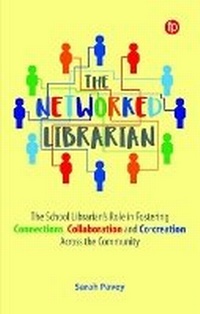
The Networked Librarian
Description

The role of the school librarian is varied, extending far beyond resource management and collection curation, to include collaboration and partnerships with internal and external stakeholders for both curriculum support and leisure time. Whether working individually, as part of a library team, or as part of a broader team within the school, local or global community, building and maintaining relationships has become an essential skill.
The Networked Librarian is an invaluable guide to working effectively with the whole school and beyond. Bringing together the author's extensive experience in school libraries and education, it provides a means for school librarians to engage with their communities to create real impact.
Although packed with practical examples and vignettes, the book goes beyond a 'how-to' guide and considers the pedagogical evidence that leads to the success of team membership and leadership. Opening chapters consider what constitutes a team, introducing key elements of the theory of group dynamics, change management and effective communication. Separate chapters then outline how school librarians might engage with different people, both within school and in the wider community, from students and teachers; through support staff from IT departments to caterers; and from governors and parents to public and university librarians. The book also delves into how team working can enhance motivation, the development of self-esteem and how to deal with more challenging situations for amicable resolution. Finally, consideration is given to how networking can be used to promote library resources and services for impact, whether that is within school or in the local or global community. Overall, this book demonstrates the importance of creating networks to underpin practical applications of forming connections, collaborating with colleagues and co-creating and developing ideas to enhance the school library services.
More details
Other editions
Additional editions
Person
Sarah Pavey has worked as a school librarian for over 20 years and is founder of the education training company and consultancy SP4IL. She holds degrees in biochemistry and information science and is an established author and regular speaker at conferences for school libraries as well as on wider education issues. Sarah is a Fellow of CILIP and the Royal Society of Arts and is part of an Erasmus project team researching digital and information literacy in Europe. Her training courses, both home and abroad, on a range of topics including behaviour management and personal management, are practical and acclaimed for being rooted in theory.
Content
Introduction
Acknowledgements
-
Understanding the dynamics of working relationships
Defining teams Preparing to work as a team in practice Applying theoretical models in practice
-
Working through change
Adapting to change
Change curve
Implementing change
-
Communication
Choosing the correct communication channel
Encoding and decoding
Verbal communication
Tone of voice and listening skills
Body language
Cultural differences
Understanding the dynamics of conversation
Communication styles
-
Dealing with difficult people
What is challenging behaviour and why does it arise?
Working through conflict
Managing a difficult meeting
Being assertive
-
Librarians as leaders
What is leadership?
Why is leadership important?
Leadership in practice
Leading a library team
Leading other teams
-
Working with students
Adapting communication style for student interaction
Ensuring a safe and welcoming environment
Working with student library helpers
Behaviour management
-
Working with teachers
Why is collaboration with teaching staff important?
Overcoming barriers to collaboration with teachers
Teacher-librarian collaboration in practice
-
Working with senior leaders, school governors and the inspection team
Senior leadership teams
School governors
School inspectors
-
Working with parents, guardians and carers
Why is it important to work with parents, guardians, and carers?
How can we be involved with parents, guardians, and carers?
Parents as volunteers
Parents as advocates
How can we communicate with parents?
Dealing with difficult parents
Effective parent teams
-
Working other members of the school community
Working with support staff for student achievement and wellbeing
Working with support staff for effective library management
-
Building networks
Competencies for networking
Creating networks within our schools
Creating and using external networks
