

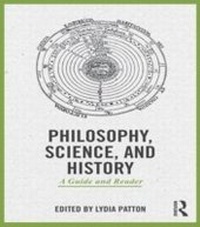
Philosophy, Science, and History
A Guide and Reader
1st Edition
Published on 27. June 2014
482 pages
978-1-136-62689-0 (ISBN)
Description

Philosophy, Science, and History: A Guide and Reader is a compact overview of the history and philosophy of science that aims to introduce students to the groundwork of the field, and to stimulate innovative research. The general introduction focuses on scientific theory change, assessment, discovery, and pursuit. Part I of the Reader begins with classic texts in the history of logical empiricism, including Reichenbach's discovery-justification distinction. With careful reference to Kuhn's analysis of scientific revolutions, the section provides key texts analyzing the relationship of HOPOS to the history of science, including texts by Santayana, Rudwick, and Shapin and Schaffer. Part II provides texts illuminating central debates in the history of science and its philosophy. These include the history of natural philosophy (Descartes, Newton, Leibniz, Kant, Hume, and du Chatelet in a new translation); induction and the logic of discovery (including the Mill-Whewell debate, Duhem, and Hanson); and catastrophism versus uniformitarianism in natural history (Playfair on Hutton and Lyell; de Buffon, Cuvier, and Darwin).
The editor's introductions to each section provide a broader perspective informed by contemporary research in each area, including related topics. Each introduction furnishes proposals, including thematic bibliographies, for innovative research questions and projects in the classroom and in the field.
The editor's introductions to each section provide a broader perspective informed by contemporary research in each area, including related topics. Each introduction furnishes proposals, including thematic bibliographies, for innovative research questions and projects in the classroom and in the field.
Reviews / Votes
"This innovative anthology is a must for all those who have been puzzled and delighted at the crossroads of philosophy, history, and science. Rooted in the recent flourishing of scholarship in HOPOS (history of philosophy of science), this unique collection addresses many far-reaching questions concerning the nature and development of knowledge. The various general programmatic statements in the opening section of the book are enriched and sharpened by articles embodying the history of three specific philosophical-scientific debates. Lydia Patton has admirably shaped this collection into a lively resource to aid further research and debate, going well beyond providing a static repository of great works."-Hasok Chang, University of Cambridge "This innovative anthology is a must for all those who have been puzzled and delighted at the crossroads of philosophy, history, and science. Rooted in the recent flourishing of scholarship in HOPOS (history of philosophy of science), this unique collection addresses many far-reaching questions concerning the nature and development of knowledge. The various general programmatic statements in the opening section of the book are enriched and sharpened by articles embodying the history of three specific philosophical-scientific debates. Lydia Patton has admirably shaped this collection into a lively resource to aid further research and debate, going well beyond providing a static repository of great works."
-Hasok Chang, University of Cambridge
"Philosophy, Science, and History is an anthology, consisting mostly of excerpts from important texts in philosophy of science...the editor's introductions are very good as they provide excellent contexts for the understanding of the texts, debates, and problems, as well as indications for further reading and research, along with brief comments on current literature about the themes presented. The introduction to Part II-B is particularly outstanding in this aspect: more than just contextualizing the remarkable sample of the natural philosophy texts presented, the editor also suggests, in a quite precise manner, three more debates that could figure in tha section as well. Hence, with this book, someone who begins to explore HOPOS has not only a solid starting point, but also a clear prospect of continuation."
-Ivan Ferreira da Cunha, Science& Education
More details
Edition
1. Auflage
Language
English
Place of publication
London
United Kingdom
Publishing group
Taylor & Francis Ltd
Target group
College/higher education
File size
5,93 MB
ISBN-13
978-1-136-62689-0 (9781136626890)
Copyright in bibliographic data and cover images is held by Nielsen Book Services Limited or by the publishers or by their respective licensors: all rights reserved.
Schweitzer Classification
Other editions
Additional editions
Book
05/2014
1st Edition
Routledge
€243.50
Shipment within 15-20 days
Book
05/2014
1st Edition
Routledge
€78.10
Shipment within 15-20 days
Person
Lydia Patton is Associate Professor in the Department of Philosophy, Virginia Tech. Dr. Patton's research centers on the history and philosophy of science and epistemology. Recent work includes "Methodology of the Sciences," forthcoming, Oxford Handbook of Nineteenth Century German Philosophy; "Experiment and Theory Building" (Synthese); "Hermann Von Helmholtz" (Stanford Encyclopedia of Philosophy); and "Signs, Toy Models, and the A Priori" (Studies in History and Philosophy of Science).
Content
1. Editor's Introduction
Part One Approaches to the History and Philosophy of Science
Introduction to "Approaches to the History and Philosophy of Science"
"Reason in Science," George Santayana.
"The Function of General Laws in History," Carl Hempel.
"The Three Tasks of Epistemology," Hans Reichenbach.
"What are Scientific Revolutions?" Thomas Kuhn.
"Falsification and the Methodology of Scientific Research Programmes," Imre Lakatos.
"The Relations between the History and the Philosophy of Science," Thomas Kuhn.
"The History of Science," Thomas Kuhn.
"Scientific Research under a Historical Microscope," Martin Rudwick.
"The Polity of Science," Steven Shapin and Simon Schaffer.
Part Two Debates in History and Philosophy of Science
A. Hypotheses in Scientific Discovery
Introduction to "Hypotheses in Scientific Discovery"
"Of Inductions Improperly So Called," John Stuart Mill.
"Mr. Mill's Logic," William Whewell.
"Physical Theory and Experiment," Pierre Duhem.
"Is there a Logic of Scientific Discovery?" Norwood Russell Hanson.
B. Force in Natural Philosophy
Introduction to "Force in Natural Philosophy"
Principles of Philosophy (selections), Rene Descartes.
"Critical Thoughts on the General Part of the Principles of Descartes," Gottfried Leibniz.
On the Gravity and Equilibrium of Fluids (slightly abridged), Isaac Newton.
"On the Divisibility and Subtlety of Matter," Emilie du Chatelet.
"Of the Idea of Necessary Connexion," David Hume.
"How is Pure Natural Science Possible?" Immanuel Kant.
C. Natural History: Catastrophism and Uniformitarianism
Introduction to "Catastrophism and Uniformitarianism"
"Initial Discourse," George-Louis de Buffon.
"Preliminary Observations to the Essay on the Theory of the Earth," Georges Cuvier.
"Prejudices relating to the Theory of the Earth," John Playfair.
"On the Geological Succession of Organic Beings," Charles Darwin.
"Of the Doctrine of Catastrophes and the Doctrine of Uniformity," William Whewell.
Part One Approaches to the History and Philosophy of Science
Introduction to "Approaches to the History and Philosophy of Science"
"Reason in Science," George Santayana.
"The Function of General Laws in History," Carl Hempel.
"The Three Tasks of Epistemology," Hans Reichenbach.
"What are Scientific Revolutions?" Thomas Kuhn.
"Falsification and the Methodology of Scientific Research Programmes," Imre Lakatos.
"The Relations between the History and the Philosophy of Science," Thomas Kuhn.
"The History of Science," Thomas Kuhn.
"Scientific Research under a Historical Microscope," Martin Rudwick.
"The Polity of Science," Steven Shapin and Simon Schaffer.
Part Two Debates in History and Philosophy of Science
A. Hypotheses in Scientific Discovery
Introduction to "Hypotheses in Scientific Discovery"
"Of Inductions Improperly So Called," John Stuart Mill.
"Mr. Mill's Logic," William Whewell.
"Physical Theory and Experiment," Pierre Duhem.
"Is there a Logic of Scientific Discovery?" Norwood Russell Hanson.
B. Force in Natural Philosophy
Introduction to "Force in Natural Philosophy"
Principles of Philosophy (selections), Rene Descartes.
"Critical Thoughts on the General Part of the Principles of Descartes," Gottfried Leibniz.
On the Gravity and Equilibrium of Fluids (slightly abridged), Isaac Newton.
"On the Divisibility and Subtlety of Matter," Emilie du Chatelet.
"Of the Idea of Necessary Connexion," David Hume.
"How is Pure Natural Science Possible?" Immanuel Kant.
C. Natural History: Catastrophism and Uniformitarianism
Introduction to "Catastrophism and Uniformitarianism"
"Initial Discourse," George-Louis de Buffon.
"Preliminary Observations to the Essay on the Theory of the Earth," Georges Cuvier.
"Prejudices relating to the Theory of the Earth," John Playfair.
"On the Geological Succession of Organic Beings," Charles Darwin.
"Of the Doctrine of Catastrophes and the Doctrine of Uniformity," William Whewell.
