


The Challenge of Nation-Building
Implementing Effective Innovation in the U.S. Army from World War II to the Iraq War
1st Edition
Published on 17. September 2014
268 pages
979-8-216-31600-8 (ISBN)
Description

In the last decades, the United States Army has often been involved in missions other than conventional warfare. These include low-intensity conflicts, counterinsurgency operations, and nation-building efforts. Although non-conventional warfare represents the majority of missions executed in the past sixty years, the Army still primarily plans, organizes, and trains to fight conventional ground wars. Consequently, in the last ten years, there has been considerable criticism regarding the military's inability to accomplish tasks other than conventional war. Failed states and the threat they represent cannot be ignored or solved with conventional military might. In order to adapt to this new reality, the U.S. Army must innovate.
This text examines the conditions that have allowed or prevented the U.S. Army to innovate for nation-building effectively. By doing so, it shows how military leadership and civil-military relations have changed. Nation-building refers to a type of military occupation where the goal is regime change or survival, a large number of ground troops are deployed, and both military and civilian personnel are used in the political administration of an occupied country, with the goals of establishing a productive economy and a stable government. Such tasks have always been a challenge for the U.S. military, which is not normally equipped or trained to undertake them.
Using military effectiveness as the measurement of innovative success, the book analyzes several U.S. nation-building cases, including post World War II Germany, South Korea from 1945-1950, the Vietnam War, and Operation Iraqi Freedom. By doing so, it reveals the conditions that enabled military innovation in one unique case (Germany) while explaining what prevented it in the others. This variation of effectiveness leads to examine prevailing military innovation theories, threat-based accounts, quality of military organizations, and civil-military relations. This text comes at a critical time as the U.S. military faces dwindling resources and tough choices about its force structure and mission orientation. It will add to the growing debate about the role of civilians, military reformers, and institutional factors in military innovation and effectiveness.
This text examines the conditions that have allowed or prevented the U.S. Army to innovate for nation-building effectively. By doing so, it shows how military leadership and civil-military relations have changed. Nation-building refers to a type of military occupation where the goal is regime change or survival, a large number of ground troops are deployed, and both military and civilian personnel are used in the political administration of an occupied country, with the goals of establishing a productive economy and a stable government. Such tasks have always been a challenge for the U.S. military, which is not normally equipped or trained to undertake them.
Using military effectiveness as the measurement of innovative success, the book analyzes several U.S. nation-building cases, including post World War II Germany, South Korea from 1945-1950, the Vietnam War, and Operation Iraqi Freedom. By doing so, it reveals the conditions that enabled military innovation in one unique case (Germany) while explaining what prevented it in the others. This variation of effectiveness leads to examine prevailing military innovation theories, threat-based accounts, quality of military organizations, and civil-military relations. This text comes at a critical time as the U.S. military faces dwindling resources and tough choices about its force structure and mission orientation. It will add to the growing debate about the role of civilians, military reformers, and institutional factors in military innovation and effectiveness.
More details
Edition
1. Auflage
Language
English
Place of publication
United States
Publishing group
Bloomsbury Publishing Plc
Illustrations
4 Tables
ISBN-13
979-8-216-31600-8 (9798216316008)
Copyright in bibliographic data and cover images is held by Nielsen Book Services Limited or by the publishers or by their respective licensors: all rights reserved.
Schweitzer Classification
Other editions
Additional editions
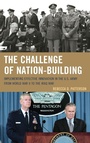
Rebecca Patterson
The Challenge of Nation-Building
Implementing Effective Innovation in the U.S. Army from World War II to the Iraq War
Book
09/2014
Rowman & Littlefield Publishers
€109.50
Shipment within 10-20 days
Person
Rebecca Patterson is an assistant professor at the National Defense University and an active duty lieutenant colonel in the United States Army whose specialty is Strategic Plans and Policy. She was a Strategic Advisor in the Commander's Initiatives Group, Headquarters, International Security Assistance Force, Afghanistan. She also served as Council on Foreign Relations International Affairs Fellow, where she worked at the Ewing Marion Kauffman Foundation and at the World Bank. Her previous military assignments include: Deputy, Director's Initiatives Group, Department of the Army Office of Business Transformation; Staff Officer, Department of the Army Office of Institutional Adaptation; economic advisor to the 1st Armored Division (MND-N) while deployed to Iraq; command of an Army mechanized engineer unit in South Korea; platoon leader and executive officer at Fort Lewis, Washington where she supervised construction projects in Thailand. Patterson also served as an assistant professor of economics at the U.S. Military Academy at West Point, NY (2006-2009) and is a term member of the Council on Foreign Relations.
Content
Chapter 1: Introduction
Chapter 2: Nation-Building and Its Cousins-Choosing Cases
Chapter 3: Effective Innovations for the Nation-Building of Post-World War II Germany
Chapter 4: Ineffective Innovations in Operation Iraqi Freedom
Chapter 5: Explaining the Absence of Innovation in Korea and Vietnam
Chapter 6: Conclusion and Policy Implications
Bibliography
Chapter 2: Nation-Building and Its Cousins-Choosing Cases
Chapter 3: Effective Innovations for the Nation-Building of Post-World War II Germany
Chapter 4: Ineffective Innovations in Operation Iraqi Freedom
Chapter 5: Explaining the Absence of Innovation in Korea and Vietnam
Chapter 6: Conclusion and Policy Implications
Bibliography
