

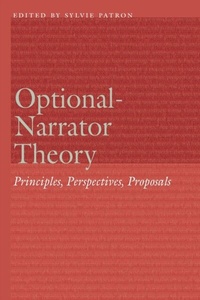
Optional-Narrator Theory
Principles, Perspectives, Proposals
1st Edition
Published on 1. February 2021
336 pages
978-1-4962-2452-1 (ISBN)
Description

Twentieth-century narratology fostered the assumption, which distinguishes narratology from previous narrative theories, that all narratives have a narrator. Since the first formulations of this assumption, however, voices have come forward to denounce oversimplifications and dangerous confusions of issues. Optional-Narrator Theory is the first collection of essays to focus exclusively on the narrator from the perspective of optional-narrator theories.
Sylvie Patron is a prominent advocate of optional-narrator theories, and her collection boasts essays by many prominent scholars-including Jonathan Culler and John Brenkman-and covers a breadth of genres, from biblical narrative to poetry to comics. This volume bolsters the dialogue among optional-narrator and pan-narrator theorists across multiple fields of research. These essays make a strong intervention in narratology, pushing back against the widespread belief among narrative theorists in general and theorists of the novel in particular that the presence of a fictional narrator is a defining feature of fictional narratives. This topic is an important one for narrative theory and thus also for literary practice.
Optional-Narrator Theory advances a range of arguments for dispensing with the narrator, except when it can be said that the author actually "created" a fictional narrator.
Sylvie Patron is a prominent advocate of optional-narrator theories, and her collection boasts essays by many prominent scholars-including Jonathan Culler and John Brenkman-and covers a breadth of genres, from biblical narrative to poetry to comics. This volume bolsters the dialogue among optional-narrator and pan-narrator theorists across multiple fields of research. These essays make a strong intervention in narratology, pushing back against the widespread belief among narrative theorists in general and theorists of the novel in particular that the presence of a fictional narrator is a defining feature of fictional narratives. This topic is an important one for narrative theory and thus also for literary practice.
Optional-Narrator Theory advances a range of arguments for dispensing with the narrator, except when it can be said that the author actually "created" a fictional narrator.
Reviews / Votes
"This is a strong contribution to a centrally important concept of narrative theory. The essays provide quite rich and varied reasons to question the assumption that every narrative has a narrator, and Sylvie Patron gives a detailed account of the background to this debate in her introduction. Her account is clear, thorough, indeed magisterial."-Ann Banfield, author of Unspeakable Sentences: Narration and Representation in the Language of FictionMore details
Series
Language
English
Place of publication
Lincoln
United States
Target group
Professional and scholarly
Illustrations
3 illustrations, index
File size
5,78 MB
ISBN-13
978-1-4962-2452-1 (9781496224521)
Copyright in bibliographic data and cover images is held by Nielsen Book Services Limited or by the publishers or by their respective licensors: all rights reserved.
Schweitzer Classification
Other editions
Additional editions
Book
02/2021
University of Nebraska Press
€84.38
Shipment within 15-20 days
Person
Sylvie Patron is a senior lecturer and research supervisor at UniversitE de Paris. She is the author or editor of several books on narrative theory in French and English, including The Death of the Narrator and Other Essays.
Content
- Cover
- Title Page
- Copyright Page
- Contents
- List of Illustrations
- Acknowledgments
- Introduction
- Part 1
- 1. Some Problems concerning Narrators of Novels and Speakers of Poems
- 2. Implied Authors and Imposed Narrators-or Actual Authors?
- 3. Real Authors, Real Narrators, and the Rhetoric of Fiction
- 4. Voice and Time
- 5. The Narrator
- 6. Biblical Narrative and the Death of the Narrator
- 7. The Narrator in Biblical Narratives
- 8. Narrator Theory and Medieval English Narratives
- 9. Marquis de Sade's Narrative Despotism
- Part 2
- 10. Silent Self and the Deictic Imaginary
- 11. Aesthetic Theory Meets Optional-Narrator Theory
- 12. The Vanishing Narrator Meets the Fundamental Narrator
- 13. A Paradox of Cinematic Narration
- Bibliography
- Contributors
- Index
