

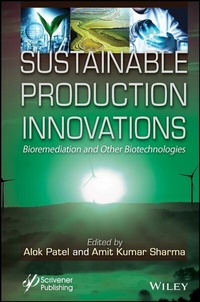
Sustainable Production Innovations
Bioremediation and Other Biotechnologies
1st Edition
Published on 19. July 2023
464 pages
978-1-119-79287-1 (ISBN)
Description

SUSTAINABLE PRODUCTION INNOVATIONS
Presenting the latest technologies and practices in this ever-changing field, this groundbreaking new volume covers the gambit for providing solutionsand practical applications of smart and efficient energy systems.
The global and climate changes we are witnessing are primarily driven by factors such as rising population, economic growth, and industrialization. These changes have led to an increase in atmospheric CO2, pollution, deforestation, water scarcity, and hunger, among other pressing issues. To ensure a green and sustainable future, it is crucial to harness renewable resources for the production of fuels, chemicals, and materials.
The book, Sustainable Production Innovations, addresses several bioprocesses that are integral to our daily lives, tackling important topics such as biofuel production, energy and food security, and wastewater management. The commercial interest in biotechnological processes has grown significantly due to their ability to utilize biocatalysts such as enzymes, bacteria, plant cells, or animal cells in bioreactors for the production of medications, health supplements, foods, biofuels, and chemicals.
Switching to bioproducts offers key benefits such as the sustainability of third-generation biofuels, CO2 sequestration, effective waste utilization, and meeting the increasing demand for clean water. The book explores various procedures used in biomass biorefineries and bioprocessing for the production of biofuels, biobased chemicals, and bioproducts. It also delves into advancements in utilizing oleaginous microorganisms for biofuels and nutraceuticals, biological wastewater treatment, and microplastic detection techniques in water. Additionally, the book covers topics such as biolubricant technologies, bioprocessing of agricultural and forest waste, biotechnological approaches in the cosmetic industry, and large-scale applications of nanomaterials for water treatment.
Authored by experts from leading biotechnology research groups around the world, the book comprises 13 chapters featuring the latest research in each subject. It is a valuable resource for scholars in chemical engineering, applied microbiology, biotechnology, agricultural biotechnology, environmental biotechnology, and related fields, offering new insights into the sustainable use of renewable energy and biochemicals. Professionals, including biochemical engineers, phycologists, bioprocess engineers, chemical engineers, scientists, and researchers in the water, food, pharmaceutical, and renewable energy industries will find this book beneficial. Likewise, students and faculty in the chemical engineering and energy departments will gain valuable knowledge from its contents.
Presenting the latest technologies and practices in this ever-changing field, this groundbreaking new volume covers the gambit for providing solutionsand practical applications of smart and efficient energy systems.
The global and climate changes we are witnessing are primarily driven by factors such as rising population, economic growth, and industrialization. These changes have led to an increase in atmospheric CO2, pollution, deforestation, water scarcity, and hunger, among other pressing issues. To ensure a green and sustainable future, it is crucial to harness renewable resources for the production of fuels, chemicals, and materials.
The book, Sustainable Production Innovations, addresses several bioprocesses that are integral to our daily lives, tackling important topics such as biofuel production, energy and food security, and wastewater management. The commercial interest in biotechnological processes has grown significantly due to their ability to utilize biocatalysts such as enzymes, bacteria, plant cells, or animal cells in bioreactors for the production of medications, health supplements, foods, biofuels, and chemicals.
Switching to bioproducts offers key benefits such as the sustainability of third-generation biofuels, CO2 sequestration, effective waste utilization, and meeting the increasing demand for clean water. The book explores various procedures used in biomass biorefineries and bioprocessing for the production of biofuels, biobased chemicals, and bioproducts. It also delves into advancements in utilizing oleaginous microorganisms for biofuels and nutraceuticals, biological wastewater treatment, and microplastic detection techniques in water. Additionally, the book covers topics such as biolubricant technologies, bioprocessing of agricultural and forest waste, biotechnological approaches in the cosmetic industry, and large-scale applications of nanomaterials for water treatment.
Authored by experts from leading biotechnology research groups around the world, the book comprises 13 chapters featuring the latest research in each subject. It is a valuable resource for scholars in chemical engineering, applied microbiology, biotechnology, agricultural biotechnology, environmental biotechnology, and related fields, offering new insights into the sustainable use of renewable energy and biochemicals. Professionals, including biochemical engineers, phycologists, bioprocess engineers, chemical engineers, scientists, and researchers in the water, food, pharmaceutical, and renewable energy industries will find this book beneficial. Likewise, students and faculty in the chemical engineering and energy departments will gain valuable knowledge from its contents.
More details
Other editions
Additional editions
Alok Kumar Patel | Amit Kumar Sharma | Leonidas Matsakas
Sustainable Production Innovations
Bioremediation and Other Biotechnologies
Book
08/2023
1st Edition
Wiley-Scrivener
€207.50
Shipment within 15-20 days
Content
- Intro
- Series Page
- Title Page
- Copyright Page
- 1 Biolubricant
- 1.1 Introduction
- 1.2 Biolubricant Base Oil
- 1.3 Upgrading Process for Biolubricant Base Oil
- 1.4 Biolubricant Additive
- 1.5 Perspective
- References
- 2 Microbial Degradation of Plastics
- 2.1 Introduction
- 2.2 Plastic Polymers and Their Applications
- 2.3 Challenges in Plastic Waste Management
- 2.4 Environmental Hazards Caused by Plastics
- 2.5 Microbial Plastic Degradation
- 2.6 Identification Methods of Microplastics
- 2.7 Conclusion
- References
- 3 Biotechnological Advances in Cosmetic Industry
- 3.1 Introduction
- 3.2 Polysaccharides from Macroalgae
- 3.3 Polysaccharides from Microalgae
- 3.4 Polyphenols
- 3.5 Pigments
- 3.6 Vitamins
- 3.7 Peptides and Amino Acids
- 3.8 Current Scenario of Use of Algal Bio-Actives in Cosmetics
- 3.9 Other Cosmetic Advances
- 3.10 Conclusion
- References
- 4 Large Scale Applications of Nanomaterials for Water Treatment: Challenges, Future Prospects, and the Visionary Future
- 4.1 Introduction
- 4.2 Vast Scientific Doctrine and the March of Science in Nanomaterials and Engineered Nanomaterials
- 4.3 The Scientific Vision of Bioremediation
- 4.4 Applications of Nanomaterials for Water Treatment
- 4.5 The Scientific Vision Behind Environmental Sustainability, Environmental Remediation, and the Road Ahead
- 4.6 Recent Scientific Advancements in the Field of Nanomaterial Applications in Water Treatment
- 4.7 Recent Scientific Advancements in the Field of Nanotechnology
- 4.8 Arsenic and Heavy Metal Groundwater Remediation, Application of Nanomaterials, and the Road Ahead
- 4.9 Conventional and Non-Conventional Environmental Engineering Techniques, the March of Engineering Science, and the Vast Vision for the Future
- 4.10 The Status of Environmental Engineering Research in the Global Scenario and the Research Forays Ahead
- 4.11 Future Scientific Recommendations and Future Flow of Scientific Thoughts
- 4.12 Conclusion and Scientific and Engineering Perspectives
- References
- 5 Green Technologies for Pesticide Contaminated Soil and Water
- 5.1 Introduction
- 5.2 Effect of Pesticides on Soil and Water Environment
- 5.3 Bacterial Degradation and Bioremediation of Pesticides from Polluted and Contaminated Soil and Water
- 5.4 Phytoremediation: An Effective Alternative Method
- 5.5 Novel Approaches for More Effective Bioremediation
- 5.6 Challenges and Future Prospects
- 5.7 Conclusion
- References
- 6 Microalgae as Source of High Value Compounds
- 6.1 Introduction
- 6.2 Produced Biocompounds and High-Value Products
- 6.3 Conclusions
- Acknowledgements
- References
- 7 Advance Biotechnological, Pharmaceutical, and Medicinal Applications of Chitinases
- Abbreviation
- 7.1 Introduction
- 7.2 Classification of Chitinases
- 7.3 Application of Chitinases
- 7.4 Future Prospects
- Acknowledgements
- References
- 8 Microbial Degradation of Plastics: Current Perspectives and Challenges
- 8.1 Introduction
- 8.2 Biodegradation of Natural Plastics
- 8.3 Biodegradation of Synthetic Plastics
- 8.4 Conclusion and Prospects
- References
- 9 Microbial Application in Food Industry
- 9.1 Introduction
- 9.2 Production of Colouring Agents and Flavours in Food Industry
- 9.3 Microbial Production of Flavour
- 9.4 Production of Polyhydric Alcohols
- 9.5 Production of Vitamins
- 9.6 Production of Lipids and Glycolipids
- 9.7 Microbes as Food
- 9.8 Solid State Fermentation and Its Application in Food Industry
- 9.9 Non-Beneficial or Food Borne Pathogens Detection
- 9.10 Conclusions
- References
- 10 Biotechnological Approaches of Algae
- 10.1 Introduction
- 10.2 Algal Biotechnology: Emerging Areas of Applications
- 10.3 Algal Biotechnology: Emerging Areas of Technology
- 10.4 Conclusion
- References
- 11 Cellulases: An Approach Towards Current Advances in Biofuel Conversion and Future Prospects
- 11.1 Introduction
- 11.2 Source of Cellulases
- 11.3 Cellulase Structure
- 11.4 Cellulase Mechanism
- 11.5 Production of Cellulases
- 11.6 Application of Cellulases
- 11.7 Production of Bioethanol from Lignocellulose
- 11.8 Conclusion
- Acknowledgements
- References
- 12 Extraction of Biofuels and Valuable Products (Essential Fatty Acids) fromMicroalgae: The Greenhouse Gas Emissions
- 12.1 Introduction
- 12.2 Why is Biofuel Necessary?
- 12.3 Biofuel Production Technology
- 12.4 Conversion of Microalgae to Biofuel
- 12.5 Lipid Extraction Techniques
- 12.6 Principal Products Acquired from Microalgae
- 12.7 Conclusion
- References
- 13 Bioprocessing of Agricultural and Forest Waste
- 13.1 Introduction
- 13.2 Agricultural Residues
- 13.3 Forest Waste
- 13.4 Biomass Composition
- 13.5 Anaerobic Digestion
- 13.6 Dark Fermentation
- 13.7 Photofermentation Bio-Processing Technologies
- 13.8 Dark- and Photo-Fermentation Bioprocessing
- 13.9 Conclusions
- References
- Index
- Also of Interest
- End User License Agreement
