

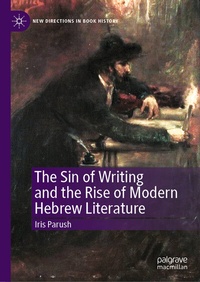
The Sin of Writing and the Rise of Modern Hebrew Literature
Description

The Sin of Writing and the Rise of Modern Hebrew Literature contends that the processes of enlightenment, modernization, and secularization in nineteenth-century Eastern European Jewish society were marked not by a reading revolution but rather by a writing revolution, that is, by a revolutionary change in this society's attitude toward writing. Combining socio-cultural history and literary studies and drawing on a large corpus of autobiographies, memoirs, and literary works of the period, the book sets out to explain the curious absence of writing skills and Hebrew grammar from the curriculum of the traditional Jewish education system in Eastern Europe. It shows that traditional Jewish society maintained a conspicuously oral literacy culture, colored by fears of writing and suspicions toward publication. It is against this background that the young yeshiva students undergoing enlightenment started to "sin by writing," turning writing and publication in Hebrew into the cornerstone of their constitution as autonomous, enlightened, male Jewish subjects, and setting the foundations for the rise of modern Hebrew literature.
Reviews / Votes
"Excellent multidisciplinary book The Sin of Writing and the Rise of Modern Hebrew Literature . . Each chapter approaches, in a bricoleur-like manner, its primary sources with the relevant theories . . Parush's book carefully traces the genealogy of the (manly) ideal of the maskil by, among other things, sketching the training process for writing in the Hebrew language. ." (Yaniv Hagbi, European Journal of Jewish Studies, Vol. 17 (2), 2023)
More details
Other editions
Additional editions
Persons
Iris Parush
is Professor Emerita of Hebrew Literature at Ben-Gurion University of the Negev, Israel. Her current scholarly writing explores the literature and literary criticism of the Jewish enlightenment and national revival periods, examining them within their socio-cultural and ideological context. Her book
Reading Jewish Women
(2004) won the prestigious Zalman Shazar Prize for Jewish History.
