

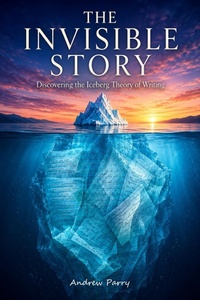
The Invisible Story
Description

Great writing is not always found in what the author explains. Often, its deepest power lives in what remains unsaid. A pause after a question, a suitcase by the door, a second cup on the table, a hand that almost reaches for another hand and then stops?these small visible moments can carry an entire hidden world beneath them. This is the secret at the heart of Ernest Hemingway's famous iceberg theory of writing, and it is the guiding idea behind The Invisible Story.
Hemingway believed that a writer could leave things out if he truly knew them, and the reader would still feel their presence beneath the surface. Like an iceberg floating in the sea, only a small part of the story appears above the waterline, while the greater emotional mass remains hidden below. This does not mean writing should be vague, cold, or empty. It means the writer must know more than he states. He must understand the wound, the memory, the fear, the desire, the guilt, the love, and the silence beneath the scene, then choose the few visible details that allow the reader to feel the rest.
The Invisible Story is a practical guide to this powerful method. It explores how writers can say less while meaning more, how dialogue can hide the real conversation, how silence can become emotionally charged, and how ordinary objects can carry the weight of grief, love, betrayal, trauma, or farewell. It shows how a plain sentence can become profound when supported by hidden depth, and how a quiet scene in a kitchen, car, station, hospital corridor, or bedroom can contain more drama than a loud confrontation. This is writing built not from explanation alone, but from pressure, implication, subtext, and trust.
Inside this book, you will discover how Hemingway used the iceberg principle in stories such as Hills Like White Elephants and novels such as The Old Man and the Sea and A Farewell to Arms. You will also see how later writers such as George Orwell, Joan Didion, J. D. Salinger, and Kurt Vonnegut adapted the same deeper lesson in their own ways. Orwell used plain language to expose the lies hidden beneath political speech. Didion used cool observation to reveal dread beneath social surfaces. Salinger used voice to conceal and reveal wounded innocence. Vonnegut used deadpan understatement to face horror without false nobility.
This book is not about imitating Hemingway's sentences. It is about understanding the deeper craft principle behind them. Whether you write fiction, memoir, essays, screenplays, biography, or literary nonfiction, the iceberg theory can help you create richer scenes, stronger characters, sharper dialogue, and more emotionally resonant prose. You will learn how to build the hidden story beneath the visible story, how to transform explanation into evidence, and how to trust the reader's imagination without leaving the reader lost.
The Invisible Story is for writers who want their work to echo after the final sentence. It is for storytellers who know that the most powerful truths are not always shouted, named, or explained. Sometimes they live in the silence after a line of dialogue. Sometimes they live in the object no one touches. Sometimes they live in the gesture that fails before it is completed. Beneath every strong page is another story waiting to be felt. This book will teach you how to write it.
More details
Person
Andrew Parry is a passionate writer and screenwriter, dedicated to the art of storytelling in both fiction and film. His creative work is deeply influenced by his concerns for the future of humanity, the environment, and the existential challenges that shape our world. Andrew believes that storytelling, whether in novels or on screen, holds the power to inspire change, challenge perceptions, and foster global conversations about the issues that matter most.
Andrew's passion for fiction allows him to explore the complexities of human nature, often weaving themes of survival, cooperation, and conflict resolution into his narratives. He believes that through compelling stories, writers can delve into the darker aspects of society and human behavior, while also offering a vision of hope, where unity and understanding can guide us to a better future. His fiction reflects these themes, creating thought-provoking worlds where characters grapple with moral dilemmas and global crises that mirror real-world concerns.
In addition to his work in fiction, Andrew is an avid screenwriter, using film as a dynamic platform to bring his ideas to life. He is drawn to the visual and emotional impact of storytelling on screen, believing that cinema has a unique ability to engage audiences and spark meaningful dialogue. Whether developing original screenplays or adapting his fictional works for film, Andrew approaches screenwriting with the same depth and dedication that he applies to his novels, ensuring that each story resonates on both intellectual and emotional levels.
Living in Australia, Andrew's creative process is fueled by solitude, allowing him the time and space to focus on his writing. Though he leads a quiet life, his stories connect him with readers and viewers worldwide, engaging them in narratives that explore the most pressing issues of our time. For Andrew Parry, writing fiction and screenplays is not just a creative pursuit?it's a way to influence thought, inspire change, and leave a lasting impact through the power of storytelling.
