

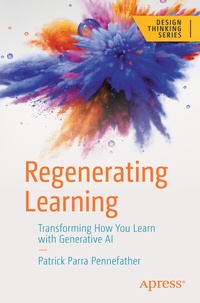
Regenerating Learning
Description

The perfect storm of learning provoked by generative AI is not just about learning how to use the technology to change human patterns of work and life. The technologies are re-orienting how we think we learn, what we learn, what we need to learn, when and where we learn about knowledge production, how humans communicate with each other, the economic, social, political, creative, ethical and technological factors that inform how we navigate human influenced existence on this planet.
The technology empowers you to reimagine and reinvent how you learn while doing your work. Just like you can regenerate content persistently using generative AI systems, so too can you regenerate what and how you learn. Regenerating Learning will help guide the small team you are a part of, or influence leadership to leverage generative AI systems responsibly.
Besides pointing to all the more obvious benefits of learning how to use generative AI systems more effectively, this book provides use cases, research and educational theory to propose that interacting with the technology leads to a number of unanticipated learning outcomes. These outcomes challenge the very way in which we have come to learn, what we have learned, and what we may need to unlearn. As generative AI becomes increasingly integrated within workplace environments at some point or other we will each need to decide if we are going to use the technology and how.
What You will Learn
Methods and techniques to re-learn how you learn through your interactions with different generative AI.
Strategic approaches to integrate generative AI within your workflows.
How to iterate, adapt, prototype and learn continuously with generative AI.
A variety of tools and approaches to reconcile your organization's use of generative AI.
How to develop a road map towards the integration of AI systems within your organization.
Who this Book Is For
Creatives, team leaders, managers and leadership in different organizations; teams in collaborative and creative industries; managers and employees in organizational learning
More details
Other editions
Additional editions
Person
Patrick Parra Pennefather is an Associate Professor and Researcher at the University of British Columbia within the Faculty of Arts and the Emerging Media Lab. His research is focused on Collaborative Learning Practices, Emerging technology development, Research Creations, and GraphRAG research and development within the field of machine learning. Patrick also works with learning organizations and technology companies around the world to adopt generative AI strategically within complex and inter-dependent team environments, and design learning courses that meets the needs of diverse communities to aid the development of the next generation of technology designers and developers.
Content
1: Ready Yourself to Learn From AI.- 2: Reprogram Your Learning Patterns.- 3: Regulate How You Learn.- 4: Re-Learn While Working.-5: Design Your Own Learning.- 6: Re-energize Doing.- 7: Re-Assess with Generative AI.- 8: Re-Adjust with AI.- 9: Prototype Learning.- 10: Re-Iterate How You Learn.- 11:Reconciling Using Generative AI.- 12: Remember the Algorithms.- 13: Continuously Improve and Learn with AI.- 14: Build Your Own Teaching Bots.- 15: Re-Invent Reinforcement.- 16: Learn with Other Bots.- 17: Transform Your Organization.- 18: Reclaim Your Creative Content.- 19: Fill in the Blanks.- 20: An Intelligent Conclusion.
