


Metacognitive Therapy
Modern Approaches for Transdiagnostic Case Formulation and Treatment
1st Edition
Published on 30. June 2025
228 pages
978-1-040-37980-6 (ISBN)
Description

Metacognitive Therapy is an indispensable guide both for experienced and newly trained therapists who sometimes feel stuck or who are looking for a clear roadmap for conceptualizing and treating complex and comorbid problems.
Drawing on the transdiagnostic approach pioneered by Wells in 2009, Goeran Parment uses his extensive clinical experience to guide the reader through the core concepts in MCT, illustrating the theoretical model with clinical examples and references to the latest evidence-based research. The book points out the significant transdiagnostic possibilities across disorders and shows how MCT can be applied to a wide array of common clinical disorders and comorbidities. The case formulation and the therapeutic procedures and applications are illustrated with clinical vignettes and therapist-client dialogues.
The book also discusses common doubts and questions about MCT's application as well as MCT's potential as a paradigm-shifting form of psychotherapy.
Drawing on the transdiagnostic approach pioneered by Wells in 2009, Goeran Parment uses his extensive clinical experience to guide the reader through the core concepts in MCT, illustrating the theoretical model with clinical examples and references to the latest evidence-based research. The book points out the significant transdiagnostic possibilities across disorders and shows how MCT can be applied to a wide array of common clinical disorders and comorbidities. The case formulation and the therapeutic procedures and applications are illustrated with clinical vignettes and therapist-client dialogues.
The book also discusses common doubts and questions about MCT's application as well as MCT's potential as a paradigm-shifting form of psychotherapy.
Reviews / Votes
"Metacognitive therapy (MCT) is based on a psychological model for how humans process information and specify how related psychological processes are affected across mental disorders. The clear scientific foundation, combined with related clinical interventions, is bringing the field of treating mental disorders forward. Goeran Parment's years of clinical experience clearly shine through in his writing, making it an easy read with high relevance for clinical practice across a wide range of mental disorders and psychological problems."Odin Hjemdal, PhD, and specialist in clinical psychology, professor of clinical psychology at NTNU, Norwegian University of Science and Technology, Trondheim, Norway
"Metacognitive therapy (MCT) is a research-oriented psychological treatment, developed from the bottom up based on key psychological processes. Goeran Parment has extensive clinical experience, which is truly evident in this specific book. For clinicians who want to bridge the gap between research and clinical practice in MCT, this is the book to read."
Sverre Urnes Johnson, PhD, professor of clinical psychology at the University of Oslo
"Encompassing both theoretical model and concepts and clinical case examples, this is an excellent introduction to metacognitive therapy, indispensable for everyone interested in this innovative treatment approach-researchers, clinicians, and students alike. The author is especially commended for putting an emphasis on transdiagnostic perspectives."
Benjamin Bohman, PhD, associate professor in clinical psychology at Karolinska Institutet, Stockholm, Sweden
More details
Series
Edition
1. Auflage
Language
English
Place of publication
London
United Kingdom
Publishing group
Taylor & Francis Ltd
Target group
Professional and scholarly
Illustrations
3 Line drawings, black and white; 3 Illustrations, black and white
File size
1,00 MB
ISBN-13
978-1-040-37980-6 (9781040379806)
Copyright in bibliographic data and cover images is held by Nielsen Book Services Limited or by the publishers or by their respective licensors: all rights reserved.
Schweitzer Classification
Other editions
Additional editions
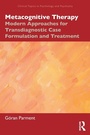
Goeran Parment
Metacognitive Therapy
Modern Approaches for Transdiagnostic Case Formulation and Treatment
Book
06/2025
1st Edition
Routledge
€53.40
Shipment within 10-20 days
Goeran Parment
Metacognitive Therapy
Modern Approaches for Transdiagnostic Case Formulation and Treatment
Book
06/2025
1st Edition
Routledge
€233.10
Shipment within 10-20 days
Person
Goeran Parment is an experienced licensed psychologist, a specialist in clinical psychology, and a MCTI-registered therapist at an advanced level. He is engaged as a supervisor at the Metacognitive Therapy Institute.
Content
Introduction
1. The Field of Psychotherapy: From Disparate Problems to a Unifying Approach 2. Metacognitive Therapy: A Theory-Driven Transdiagnostic Model 3. The Treatment, Part 1: Overview of the Treatment 4. The Treatment, Part 2: Modifying the Metacognitive Beliefs 5. Using MCT With Common Psychological Problems, Part 1: Anxiety and Worry 6. Using MCT With Common Psychological Problems, Part 2: PTSD, OCD, Depression, Sleep Problems, Prolonged Grief, and More 7. The State of Evidence for MCT 8. Some Common Considerations and Doubts About Limited Applicability 9. MCT as a New Paradigm and Looking Ahead References Appendix 1: The Concepts in MCT and Abbreviations Appendix 2: Measuring CAS and Metacognition
1. The Field of Psychotherapy: From Disparate Problems to a Unifying Approach 2. Metacognitive Therapy: A Theory-Driven Transdiagnostic Model 3. The Treatment, Part 1: Overview of the Treatment 4. The Treatment, Part 2: Modifying the Metacognitive Beliefs 5. Using MCT With Common Psychological Problems, Part 1: Anxiety and Worry 6. Using MCT With Common Psychological Problems, Part 2: PTSD, OCD, Depression, Sleep Problems, Prolonged Grief, and More 7. The State of Evidence for MCT 8. Some Common Considerations and Doubts About Limited Applicability 9. MCT as a New Paradigm and Looking Ahead References Appendix 1: The Concepts in MCT and Abbreviations Appendix 2: Measuring CAS and Metacognition
