

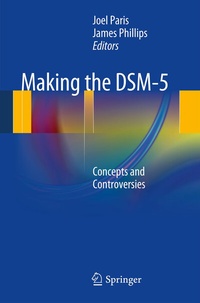
Making the DSM-5
Description

Reviews / Votes
From the reviews:
"Making the DSM-5, is an edited book comprising 11 chapters, eight of which were written by individuals who listed medical school affiliations. . is a consistently engaging and thought-provoking read. . the authors address issues that the leaders of the DSM-5 process generally seemed to ignore. . should be required reading of any task force members who attempt to create the DSM-6." (Roger Blashfield, PsycCRITIQUES, Vol. 59 (14), April, 2014)
"This book addresses the formation of the DSM-5 and the problems with the manual itself. . The audience includes anyone interested in the field of mental health and the DSM-5 in particular. . It will definitely open readers' eyes to how little we still know and how artificial our constructs are for understanding mental illness. It is a short book and I would highly recommend taking the time to read it." (Brett C. Plyler, Doody's Book Reviews, November, 2013)More details
Other editions
Additional editions
Persons
Content
The History of DSM.- Considering the Economy of DSM Alternatives.- The Ideology behind DSM-5.- The Biopolitics of Defining "Mental Disorder".- Establishing Normative Validity for Scientific Psychiatric Nosology: The Significance of Integrating Patient Perspectives.- The Paradox of Professional Success: Grand Ambition, Furious Resistance, and the Derailment of the DSM-5 Revision.- DSM in Philosophyland: Curiouser and Curiouser.- Overdiagnosis, Underdiagnosis, Synthesis: A Dialectic for Psychiatry and the DSM.- What does Phenomenology Contribute to the Debate about DSM-5.- The Conceptual Status of DSM-5 Diagnoses.- Conclusion.
